• Home
  • Concept
  • Business Details
  • Biography
  • Services
  • Projects
  • Members
  • Contact
  • English
  • 日本語
  • 한국어
  • 中文
×
  • Home
  • Concept
  • Business Details
  • Biography
  • Services
  • Projects
  • Members
  • Contact
≡

MENU

  • English
  • 日本語
  • 한국어
  • 中文

In DPRK (North Korea) & Niigata

“You can’t change the past, and you can’t change others.
But you can change the future, and you can change yourself.”
Sep. 11th, 2017 (Mon) - Sep. 15th, 2017 (Fri)
Inspection of DPRK (North), where the nuclear tests don’t stop.
They say that X-day was the most dangerous...

In exchange for 600,000yen, I received a ticket for 4 nights and 5 days.

Will we choose to see a dream...or reality...or...

Sep. 15th, 2017 (Fri) Korea 06:02 | Japan 06:32
25 minutes before the missile launch...

...or what X wants us to see...?

Sep. 20th, 2017 (Wed) - Sep. 21st, 2017 (Thu)
On these two days, I visited Niigata Prefecture to inspect a case that involved the disappearance of a little girl.

In this report, I will be releasing some secrets that even the media cannot speak of, including a few of the latest photos and videos.
First off,

The background history of North Korea (Referred to as DPRK below) has three big problems. It consists of reuniting separated families, problems with nuclear testing, and the unification of Korea. We must focus on these 3 major problems to be able to solve the underlying issues.

The 3 major problems in 2018

(1) Family Reunion

It has been over 40 years since several Japanese citizens were abducted by Korean operatives. Now, it is not a problem of ‘how they were abducted’, but ‘how they grew up’. This changes according to how the abductees feel over time. I thought that if I were able to visit and stay in DPRK, it might be a good idea to try and build a tourist-like diplomatic relationship for a short period of time.

(2)The Problem with Nuclear Tests

The local people said, “To the Koreans who endured the isolation, the missiles are the only high-level technology that they can boast about, and it must not be used for war.”
Looking at it from my perspective, movements in the nuclear testing depends largely on how the rest of the world evaluates the situation.

(3) Problem with Korean Unification

On Friday, October 10th, 1980 at the 6th Korean Labor Party convention, information was proposed that had also been mentioned in President Kim Il-sung’s book; “To achieve peace, unification in the country with the principles of the great unity of all peoples, there are two systems: keep the two governments intact and to create a unified nation-state that represents the interests of all ethnicities. Reality says that there can be no other way. In such a sense, the founding of the Democratic Republic of Korea would be the most correct and rational uniform bill.” Even as a country that has the only remaining wall after the war, the Korean Peninsula can only be truly reunified at the hands of its own citizens.

Table of Contents [Hidden]
Local law Science and Technology Hall of Fame DPRK beauties
(1)How to refer to the country Juche Thought Tower Cuisine of DPRK
(2)Name of the supreme leader Taedong River Snacks of DPRK
Inspection process May Day Stadium Sep. 15th, 2017 (Fri)
Purchasing tickets The Monument to Party Founding 25 minutes before the missile launch...
Sep. 11th, 2017 (Mon) - Sep. 12th, 2017 (Tue) from Japan-China The birthplace of Mangyongdae 2 minutes before the missile launch...
(1)Departing from Haneda Airport Pyongyang Metro We arrived at Pyongyang International Airport
(2)Arrival in Beijing China Mangyongdae Children’s Palace (Video Included) The two guides I am indebted to
Sep. 12th, 2017 (Tue) - Sep. 15th, 2017 (Fri) China-Korea Karaoke 1F Underground (Koryo Hotel) I arrived at Beijing airport
(1)Departing from Beijing Airport China Arch of Reunification One postcard
(2)Arrival to Pyongyang International Airport Pyongyang Reunification Highway (Video Included) Reflecting on what happened.
Guide Map of Pyongyang City Center The place where Korean Armistice Agreement was signed
Triumphal arch Panmunjom History of Japan and DPRK
Ryugyon Hotel 38th Parallel North Tour of Niigata Prefecture
Pyongyang Koryo Hotel(Video Included) Sungkyunkwan (World Heritage Site) 41 years ago...
Morning Cheer Sonjuk Bridge (World heritage site) Arrival at Niigata Station
Mansu Hill Grand Monument War memorial monument Comparison of current Korea and Niigata
Kim Jong-il Square Stamp shop (In front of Sungkyunkwan) Signs standing in Niigata
Future Scientist Street Pyongyang circus (Video Included) Lastly.

Local law

(1) How to refer to the country

Many people mistakenly call it “North Korea”, but the formal name is the Democratic People’s Republic of Korea.
When abbreviating, calling it “Korea” or “Republic” is the local law. Now that it is divided in two, people should be careful when adding “North” and South” before Korea.
In English, it is called ‘’The Democratic People's Republic of Korea’’ or “DPRK.”

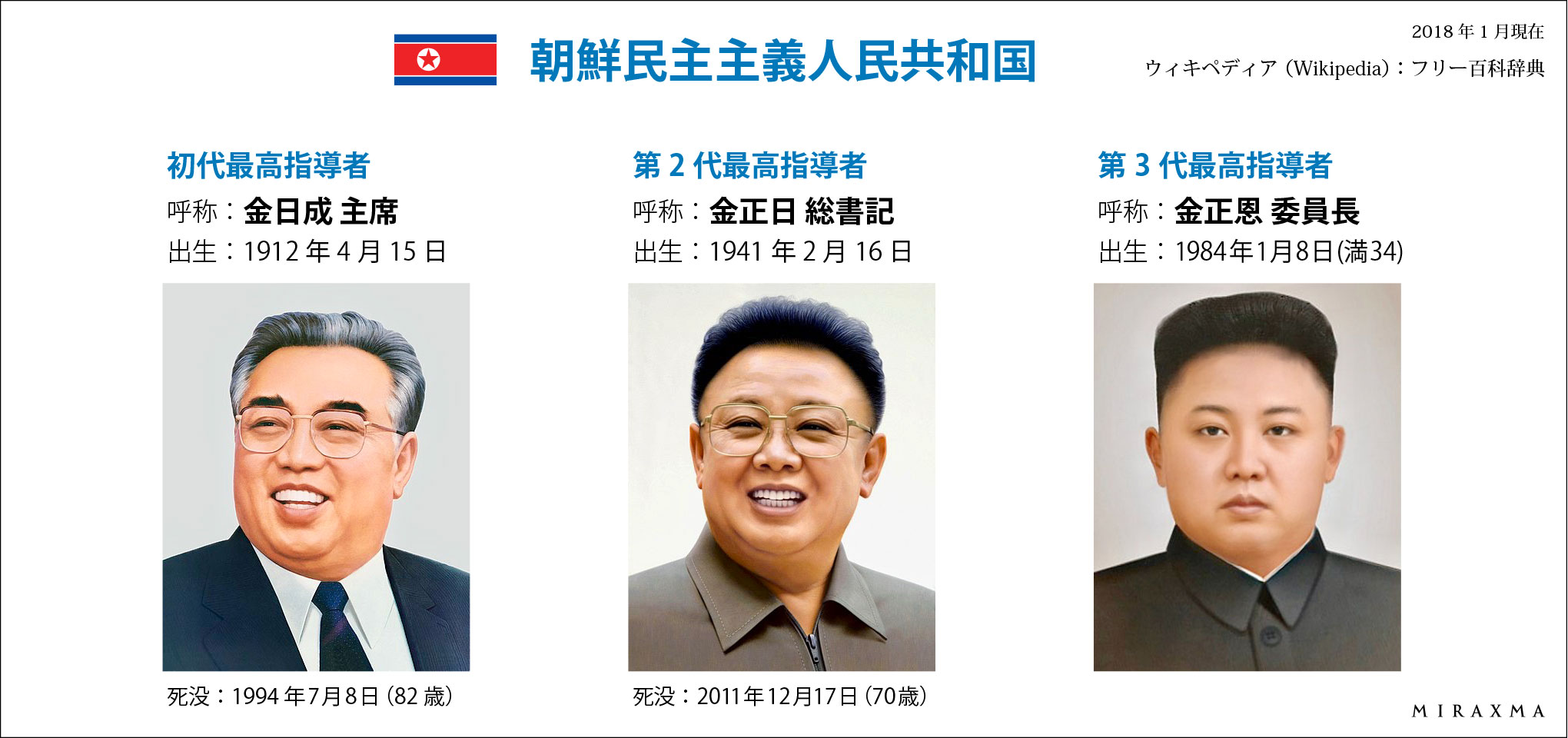
(2) Name of the supreme leader

If the names of the current or former Supreme leaders’ is included in the local people’s conversation, as a principle, it is necessary to use their title, as stated in the picture below.

Inspection process

On Wednesday, August 9th, 2017, the Korean Central News Agency said that they were devising a plan to shoot four intermediate-range ballistic missiles to Guam by the middle of August 2017.

Around this time, I had made my debut in stock investments, investing a total of 1 million yen, but after this announcement was made over the news, stock values plummeted and I had lost nearly 300,000 yen. That’s when I decided to visit DPRK.

I remember that only the military stocks were struggling around this time. When I told the locals about the danger and the worry from the missile passing over Japan, they said: “I’m sorry to have surprised you, but we are just showing off that our country has the technology to be able to fly missiles with such accuracy.”
I was able to understand that our reasoning as Japanese was not getting through. I also realized that I wouldn't have been able to understand their overall national character without physically visiting this place.

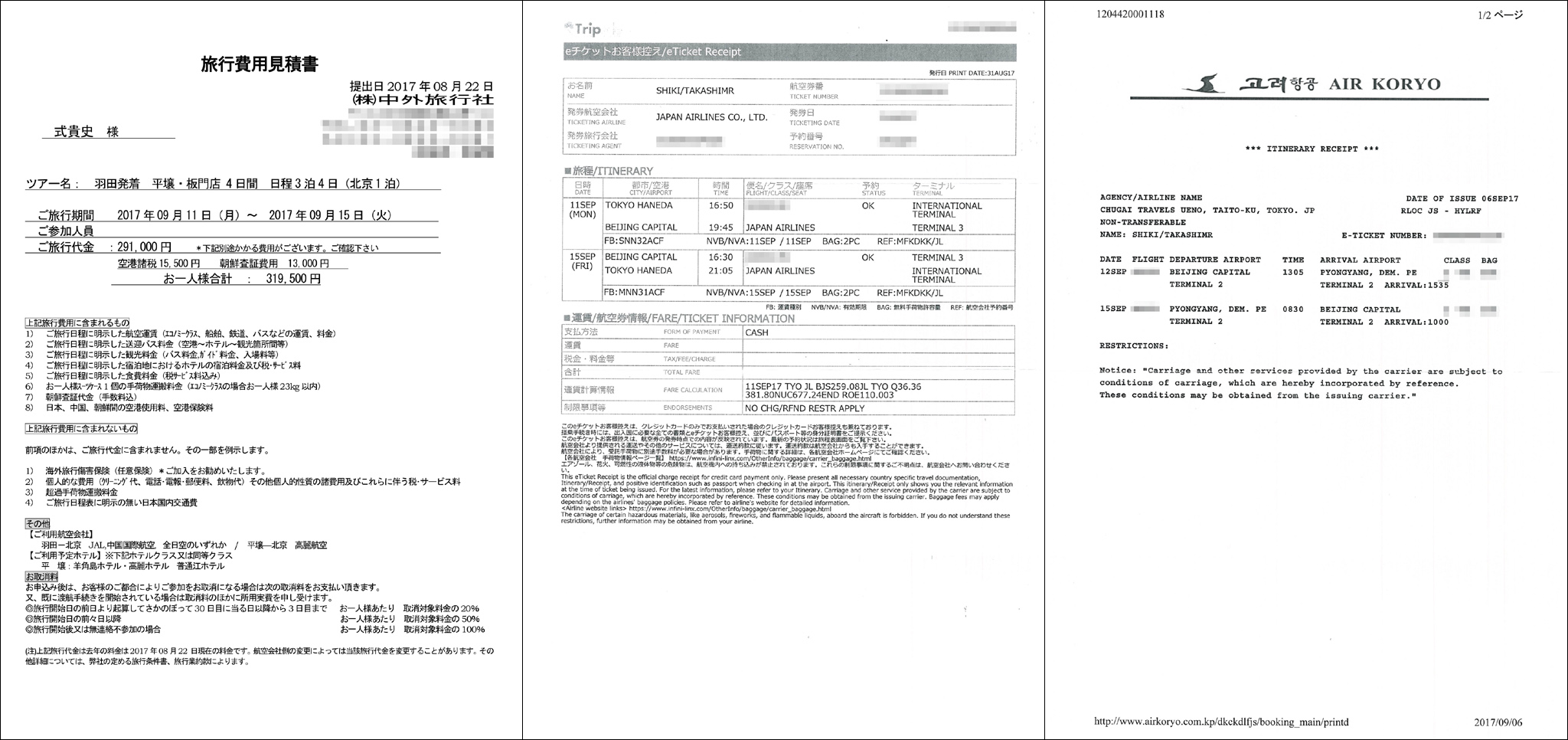
Purchasing tickets

I purchased my airline tickets via Chugai Travel Co., Ltd. The reason I chose to do so was that the agency selling Korea-bound tickets had been running for a long time, plus they had great telephone correspondence. The total came out to be 319,000 yen for five days and four nights. The breakdown of this price includes not only my hotel and food expenses, but also the cost of the Chinese tour guide staying in Beijing for 1 night, the living expenses for the 2 Korean tour guides who can speak Japanese, and a driver for 3 days. The condition for this tour was for them to accompany me.

The money I used in the local area was about 20,000 yen. There was a wide range of available currencies, including Japanese yen, Chinese yuan, Euros, dollars, and others, that could be used to make payments in. Credit cards were not accepted.

Sep. 11th, 2017 (Mon) - Sep. 12th, 2017 (Tue) from Japan-China

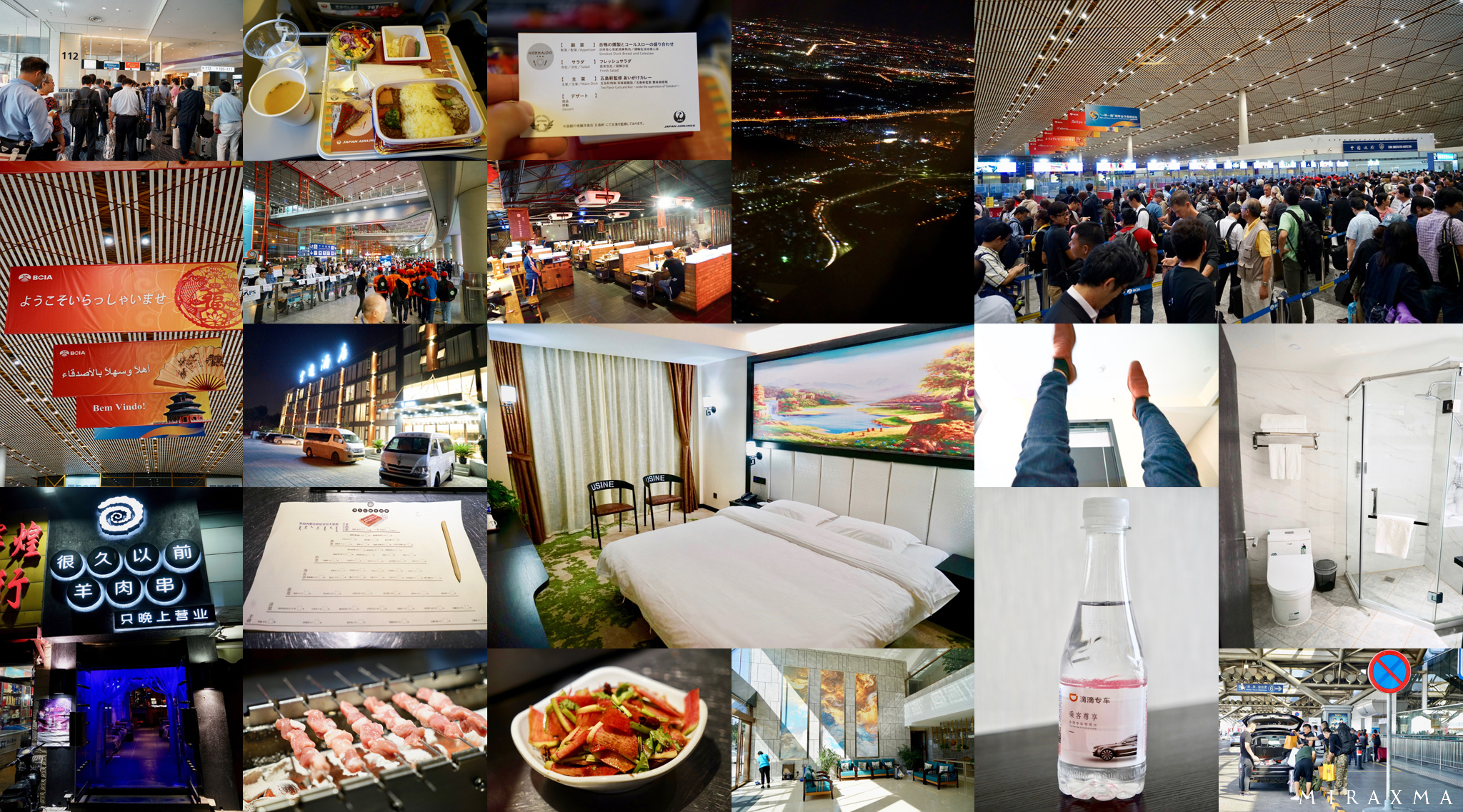
(1)Departing from Haneda Airport. Japan 16:30

Having your heart swayed by others is more painful than hurtful. If you build a family, you have a place to return to and a place at which to wait for loved ones. Most Japanese, however, regardless of their lack of faith in a God, are always afraid of how they appear to others.
Unless you realize that what you see with your eyes is not everything, then you will not understand the state of mind of others.

(2)Arrival in Beijing. China 19:30 | Japan 20:30

The first day I stayed in Beijing, China. I had dinner with a very kind and gentle Chinese tour guide. We had red turnip, coriander salad, and then exquisite lamb meat skewer.

Sep. 12th, 2017 (Tue) - Sep. 15th, 2017 (Fri) China-Korea

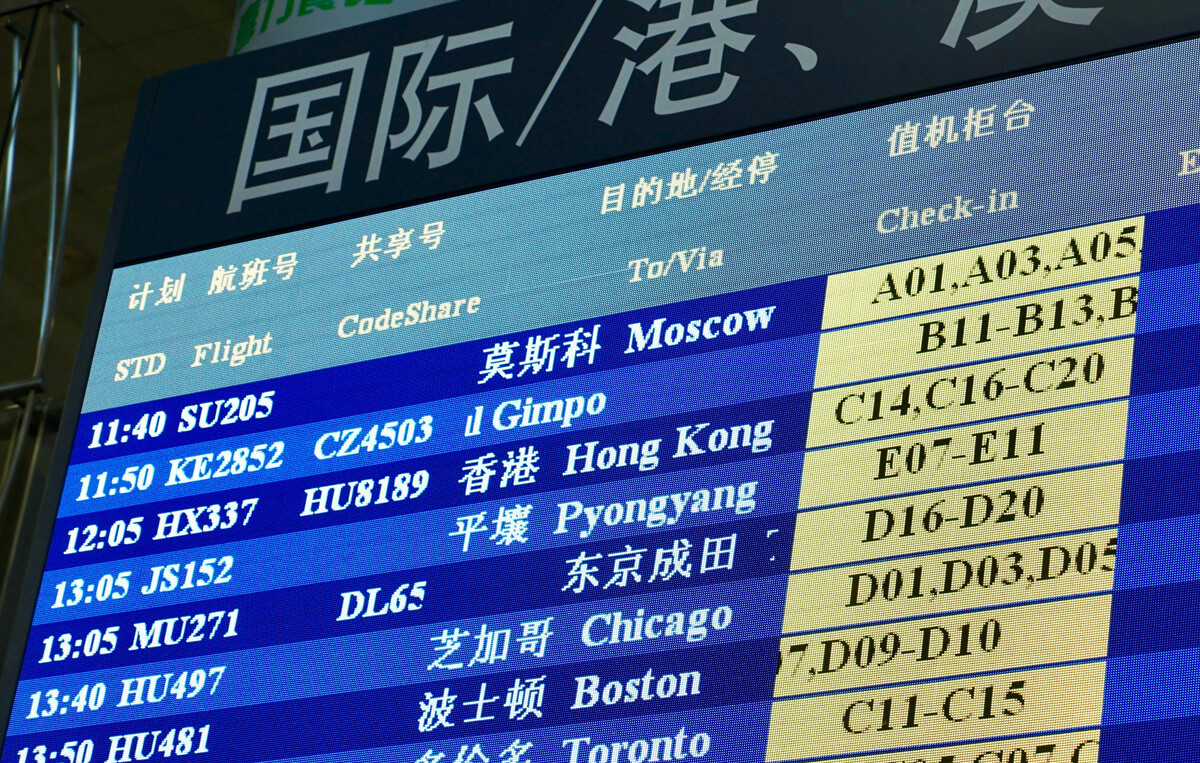
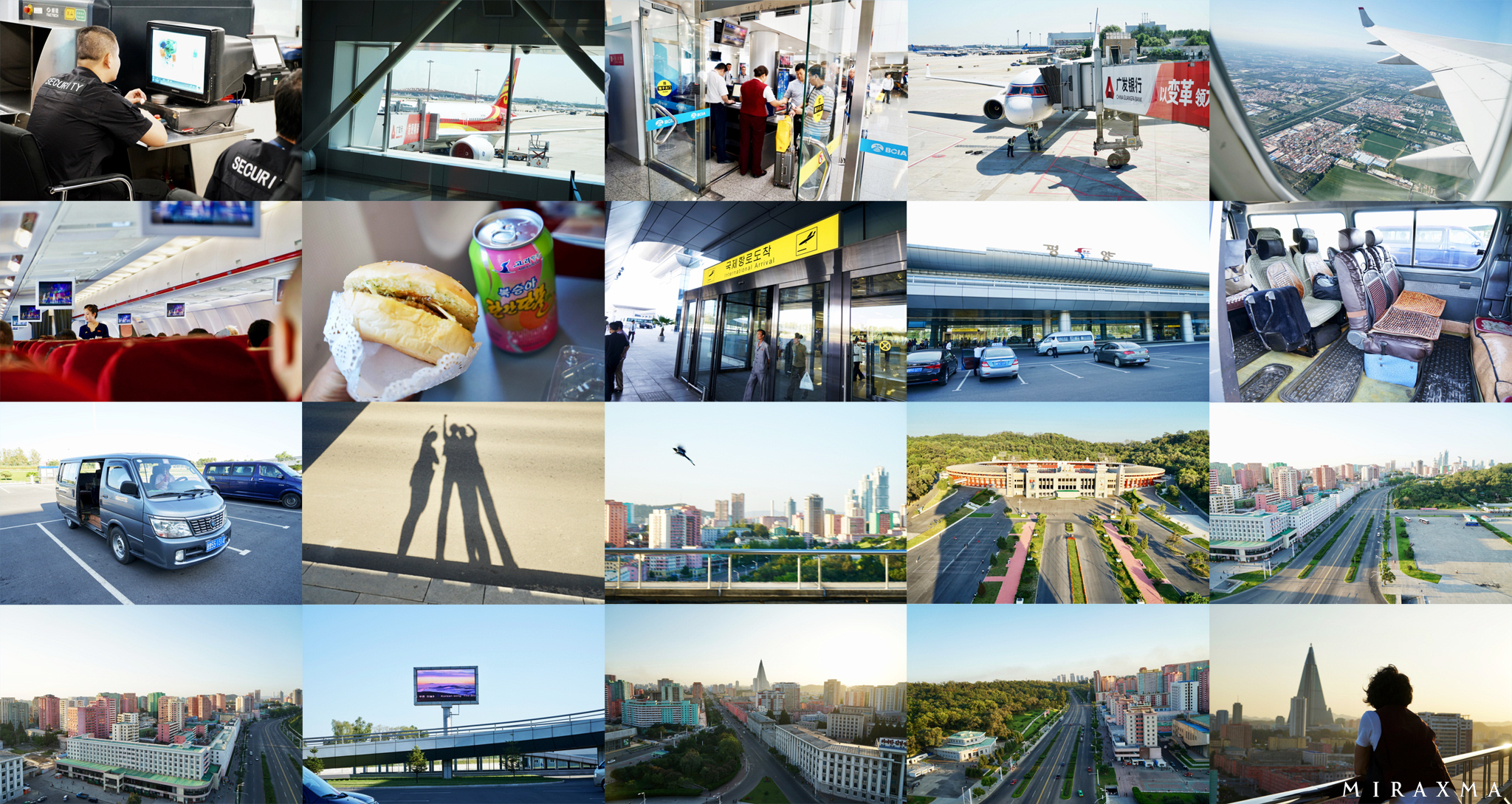
(1)Departing from Beijing Airport. China 13:05 | Japan 14:05

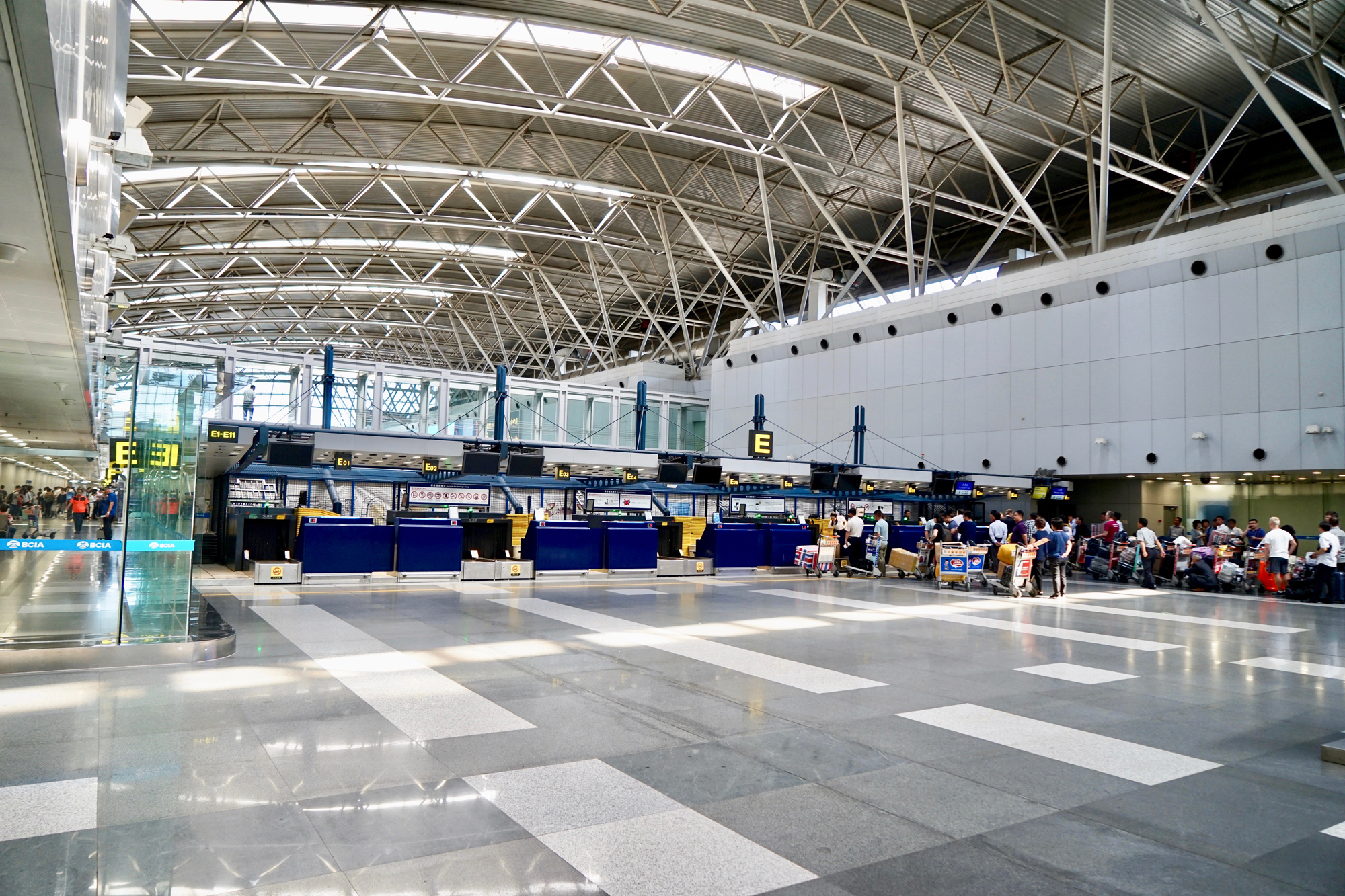
When I took a photo at the check-in line in Korean, a man with a Korean badge came towards me with a stern expression, asking me why I was taking a photo. After telling him that I was going to Korea, he walked away as he nodded at me with a cheerful smile.

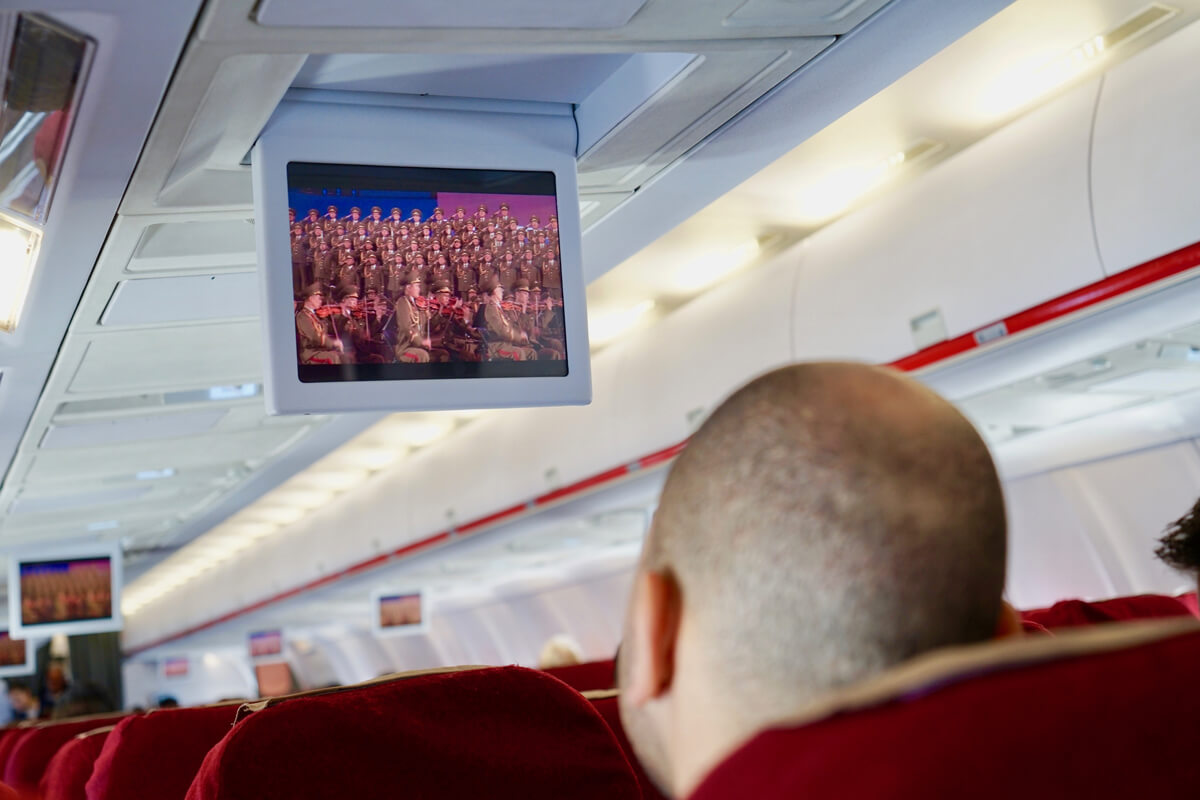
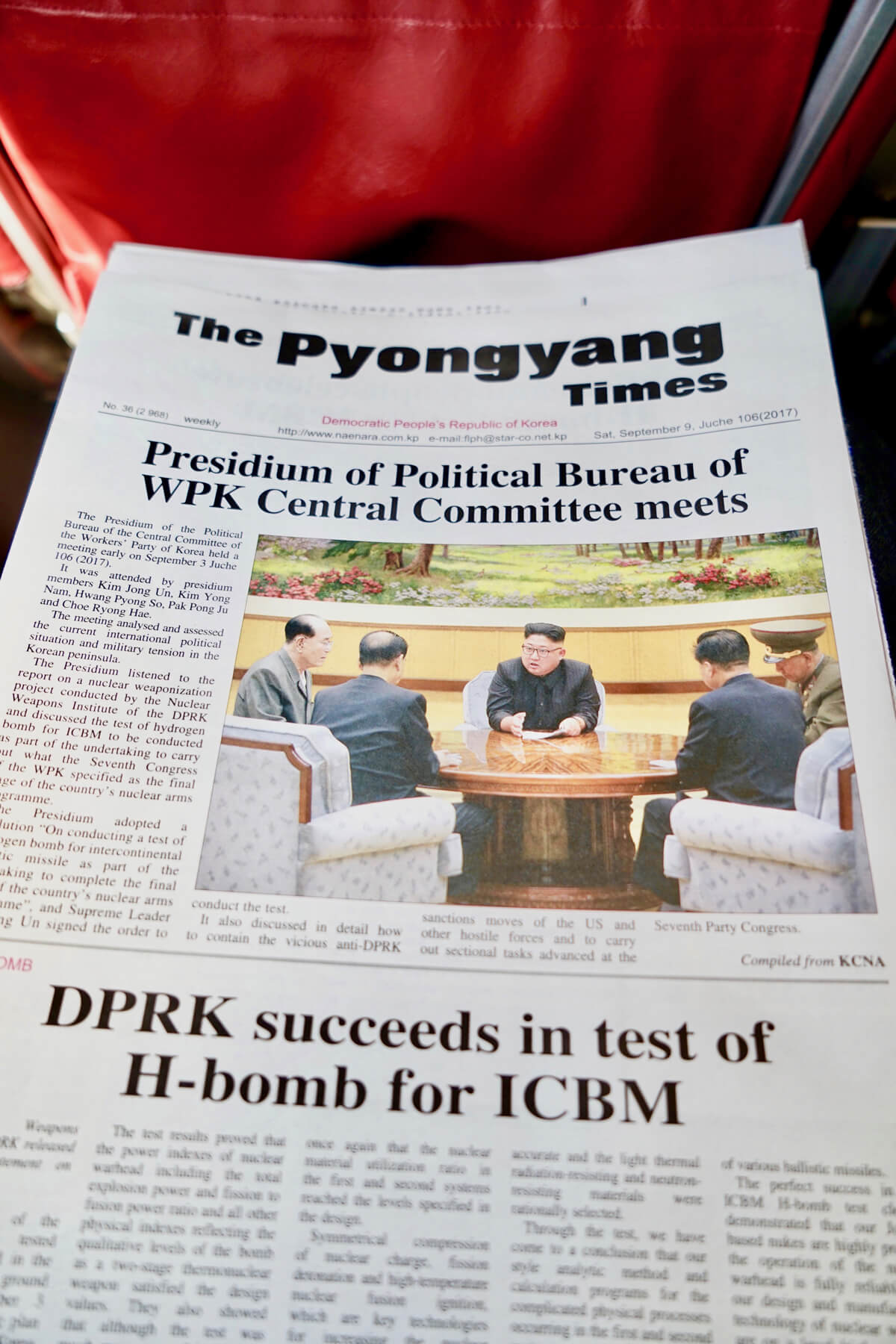
You can watch music programs during the flight, as well as read the newspaper.

There was a not a big difference between this airline and other ones.

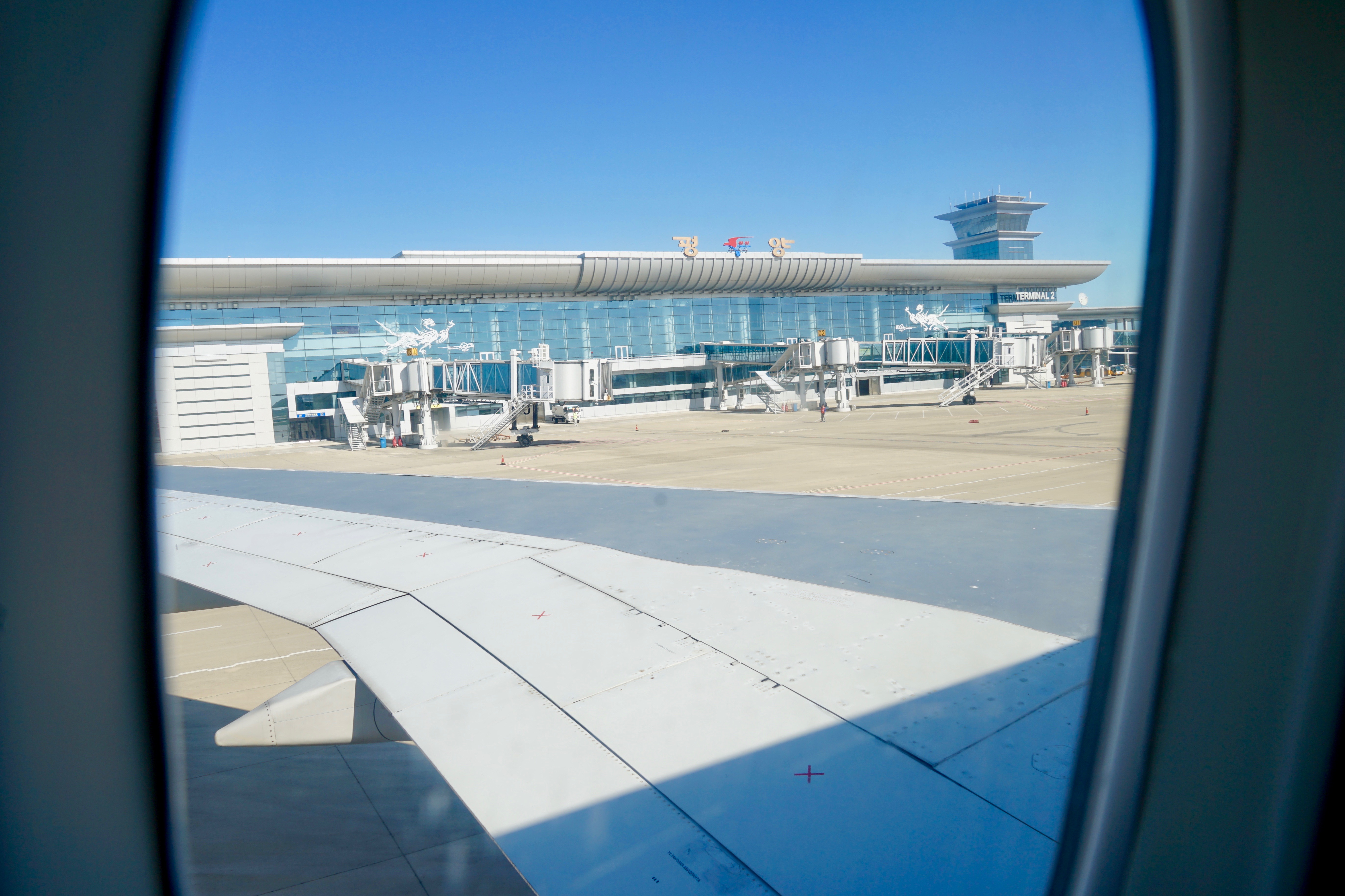
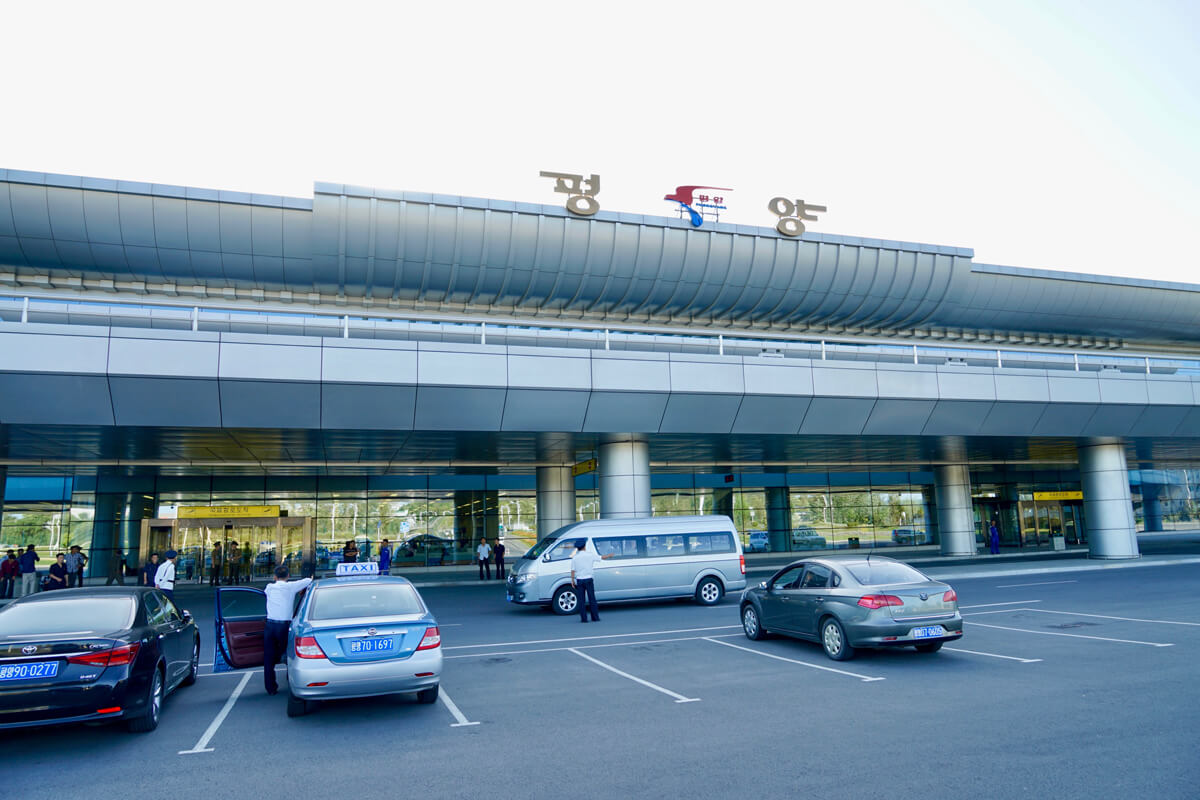
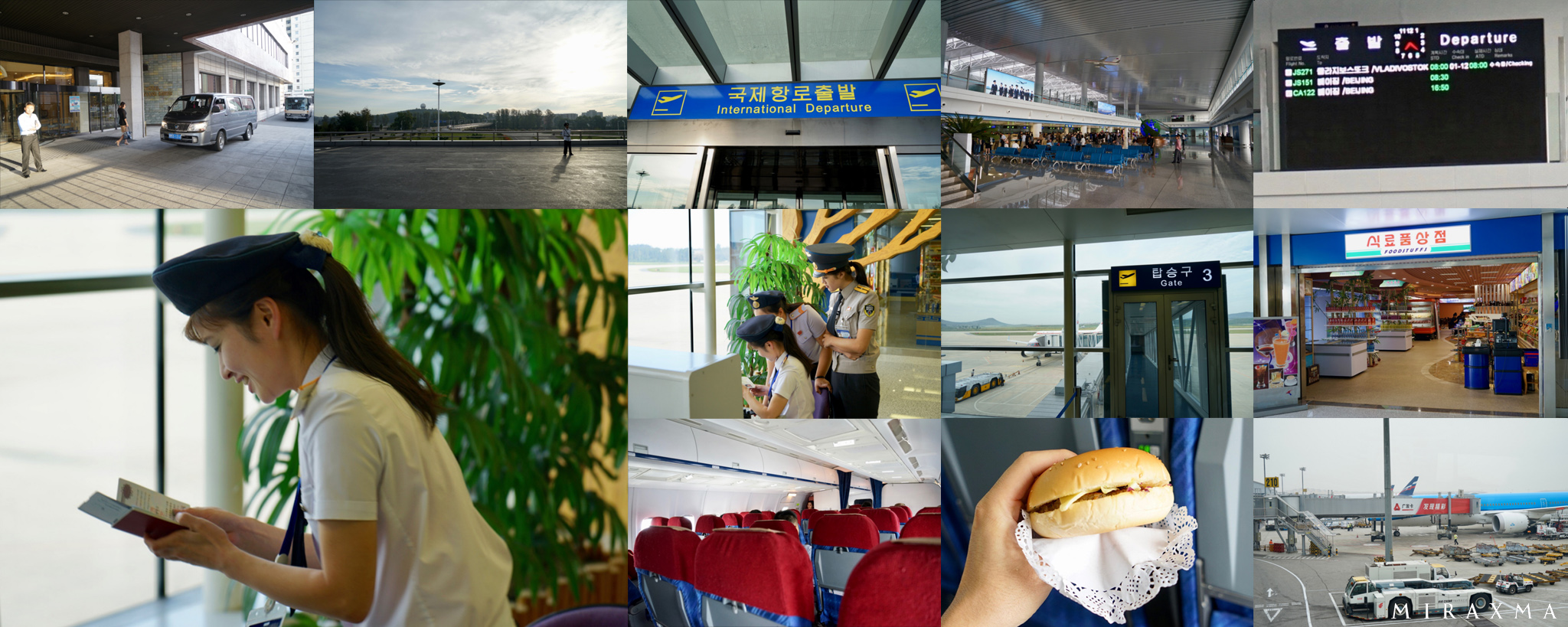
(2)Arrival to Pyongyang International Airport (Sunan International Airport) Korea 15:35 | Japan 16:05

When I stepped into the emigration/immigration examination counter, the atmosphere was so quiet and filled with tension. One thing I noticed, was that everyone there was staring at the camera that was hanging around my neck.

There was a very detailed inspection at the Pyongyang Airport. Rather than checking electronics, they went through every page of every book and manga, making sure there was nothing inside. The rule was that the airport would hold on to Wi-FI transmitters and return them to the passengers on the day they would go back home."

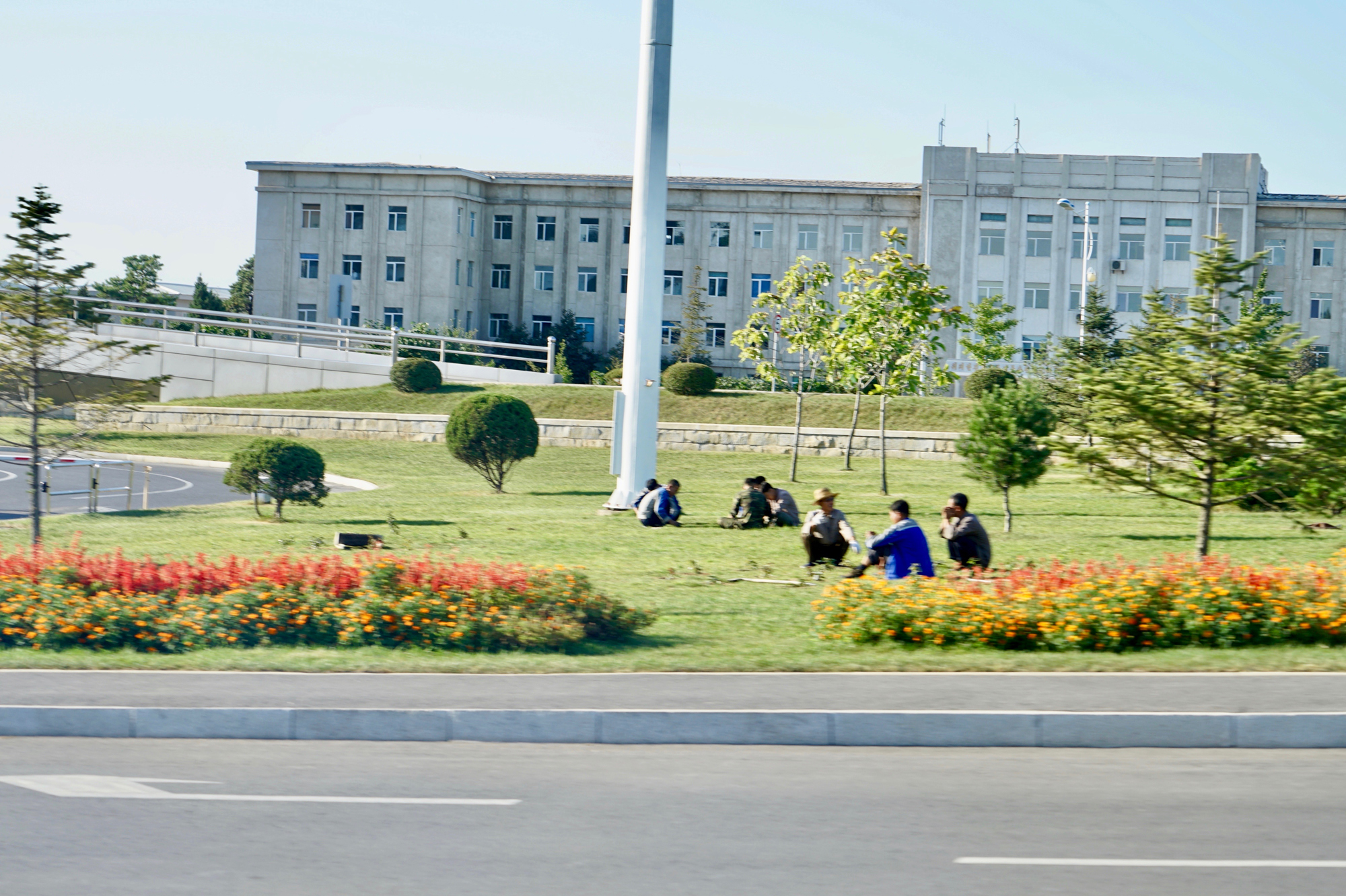
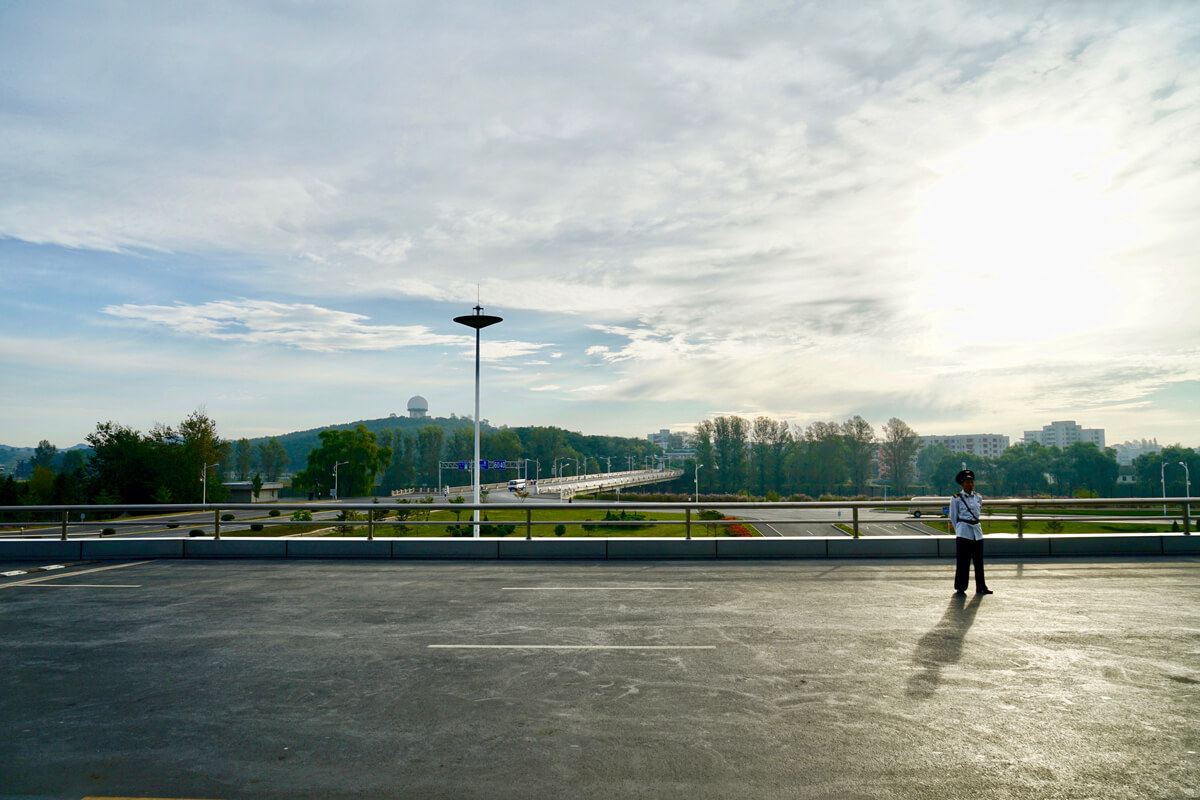
Locals made sure that the airport area was full of color and clean. We headed first to place the locals said was a famous landmark in Pyongyang. It was a 15-minute drive from the airport.

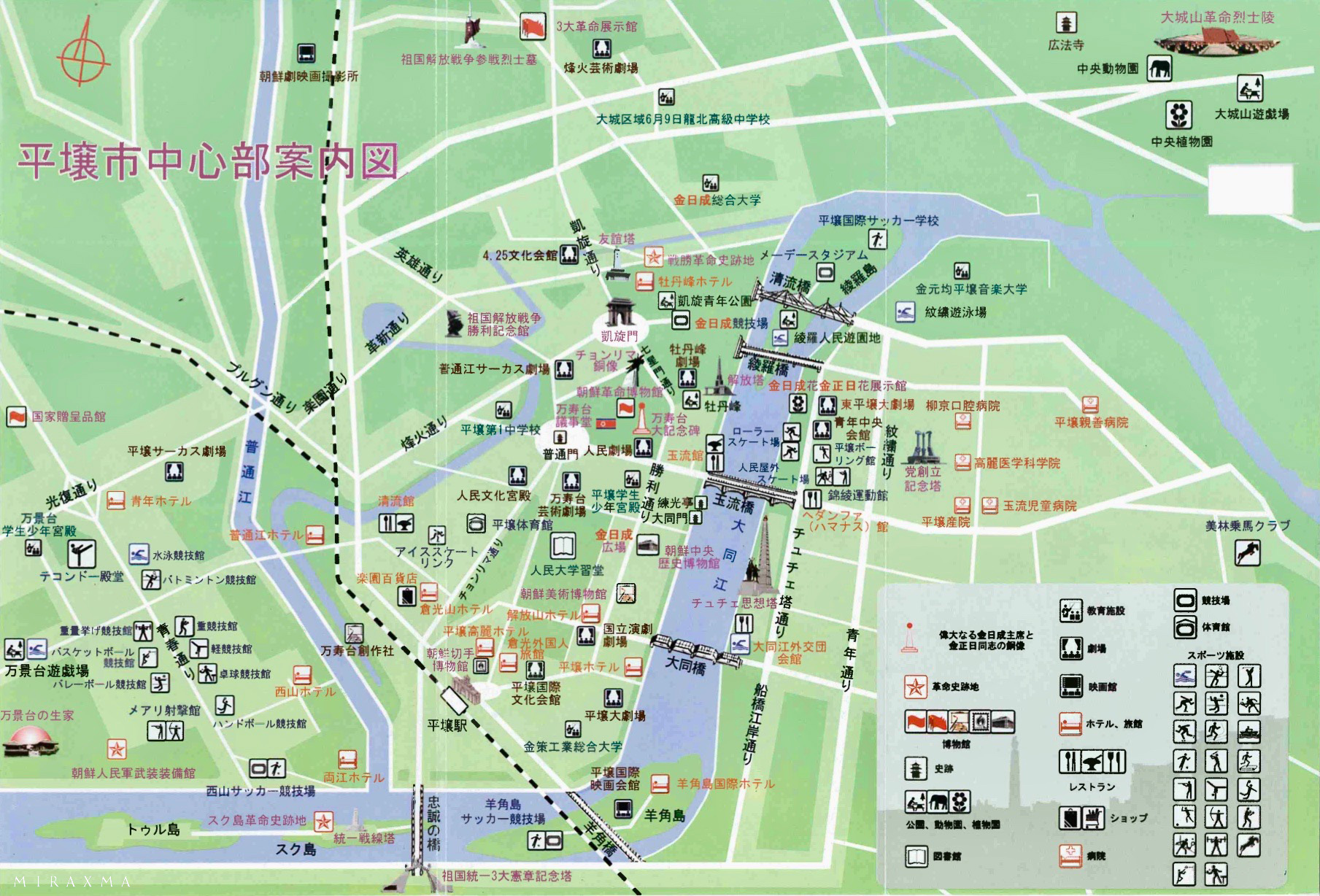
Guide Map of Pyongyang City Center

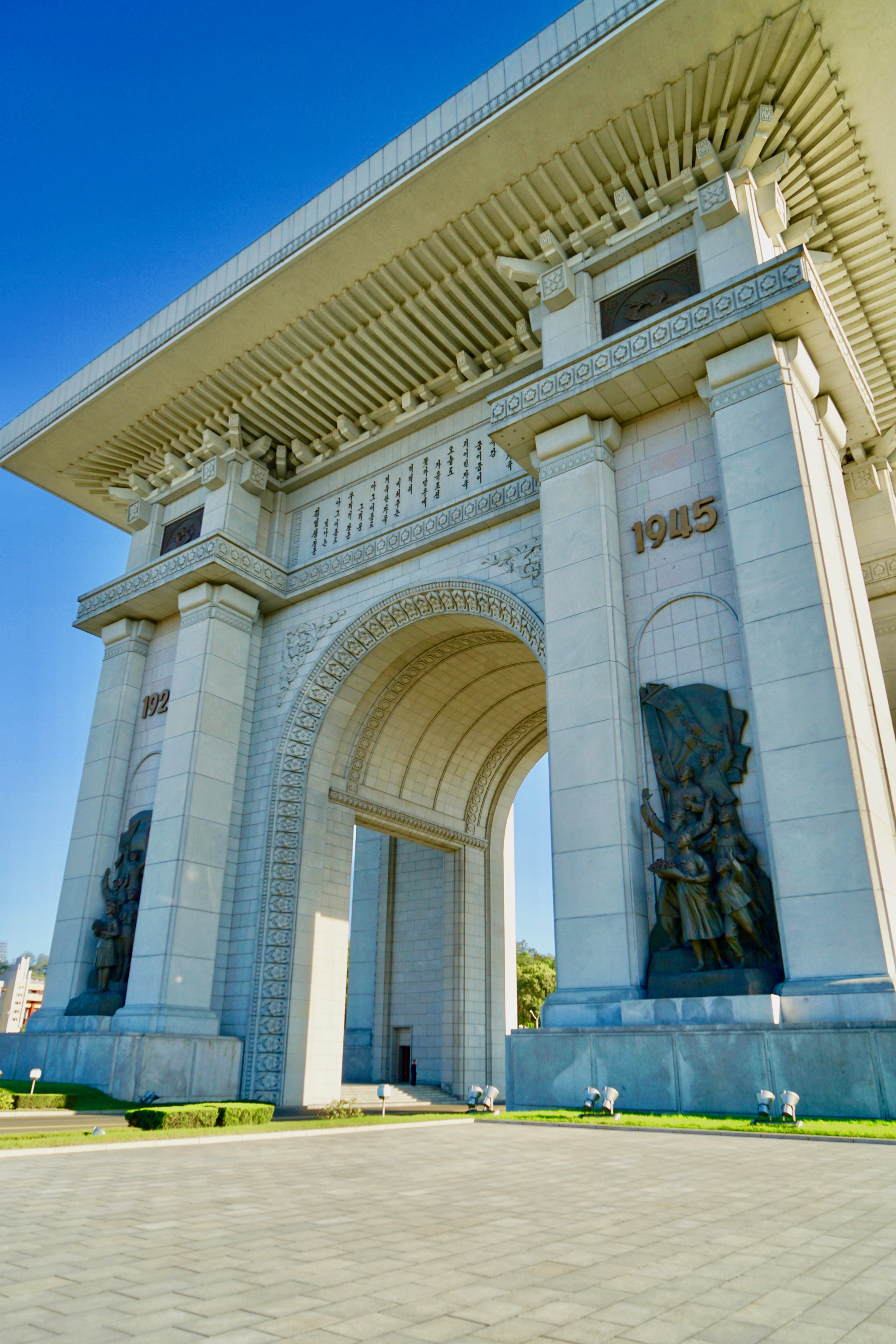
Triumphal arch -Apr. 15th, 1985(Mon)-

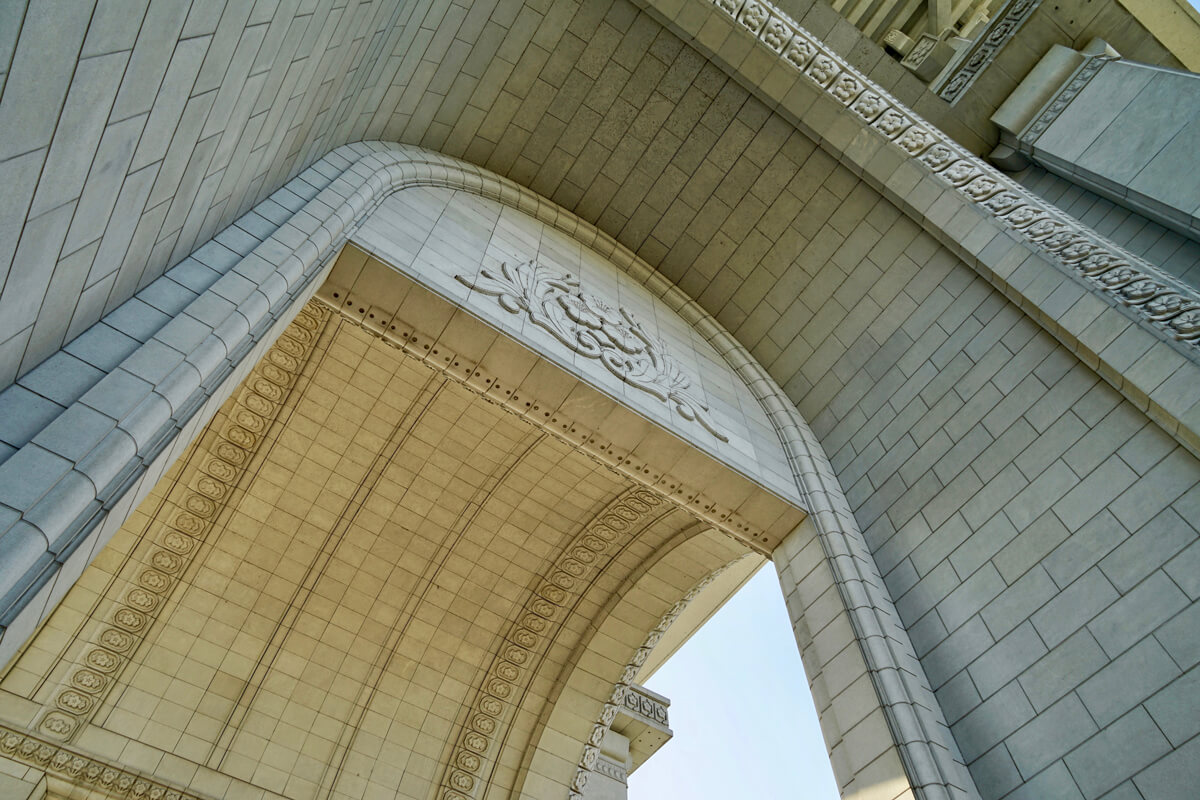
This arch was built at the foot of Moranbong (Peony peak), to honor President Kim Il-sung's role in the military resistance for Korean independence. On the four pillars were the years “1925” and “1945” which represents the chairman’s revolutionary journey from when it began until he successfully achieved liberation, as well as the “Song of General Kim Il-Sung.”

It is the second tallest Triumphal Arche in the world, at a height of 60m. The width is 52.5m, lateral width 36.2m, the height of the arch being 27m, the width of the arch 18.6m. It is built with more than 10500 slabs of granite.

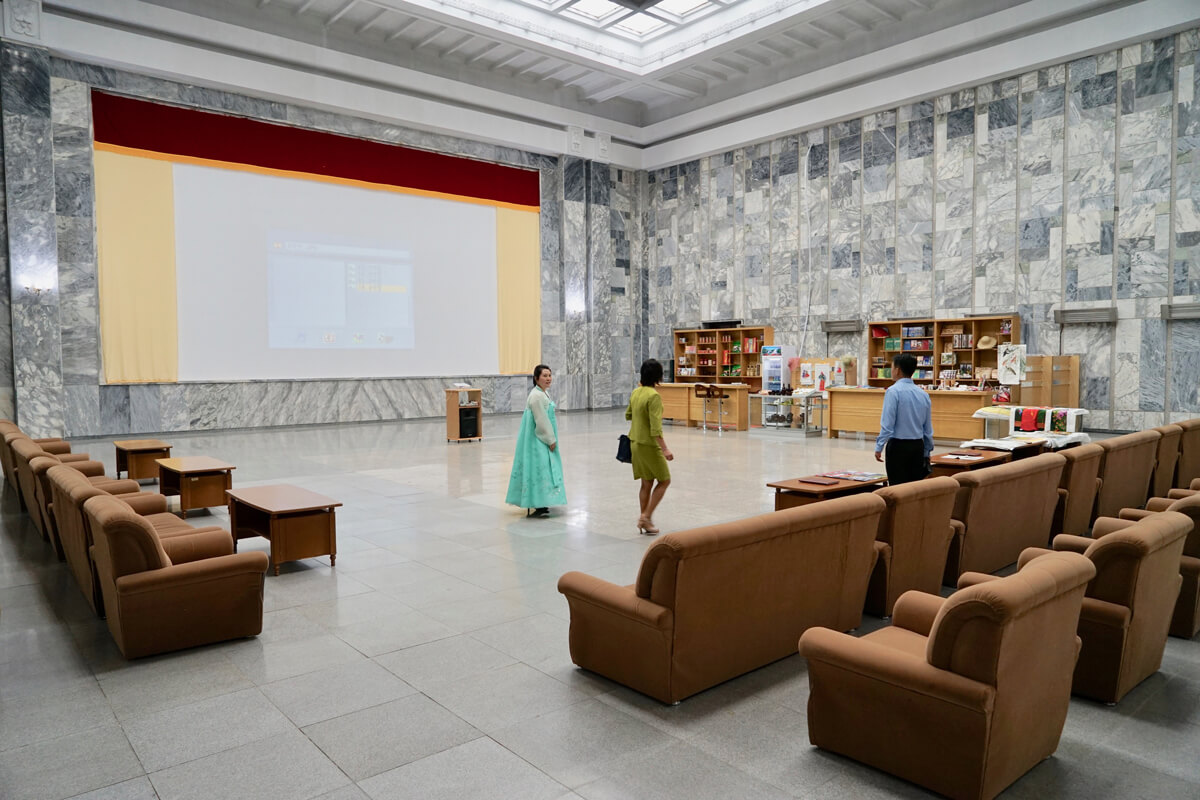
Before going to the observatory, visitors first watch a 5-minute video to understand the history of the arch.

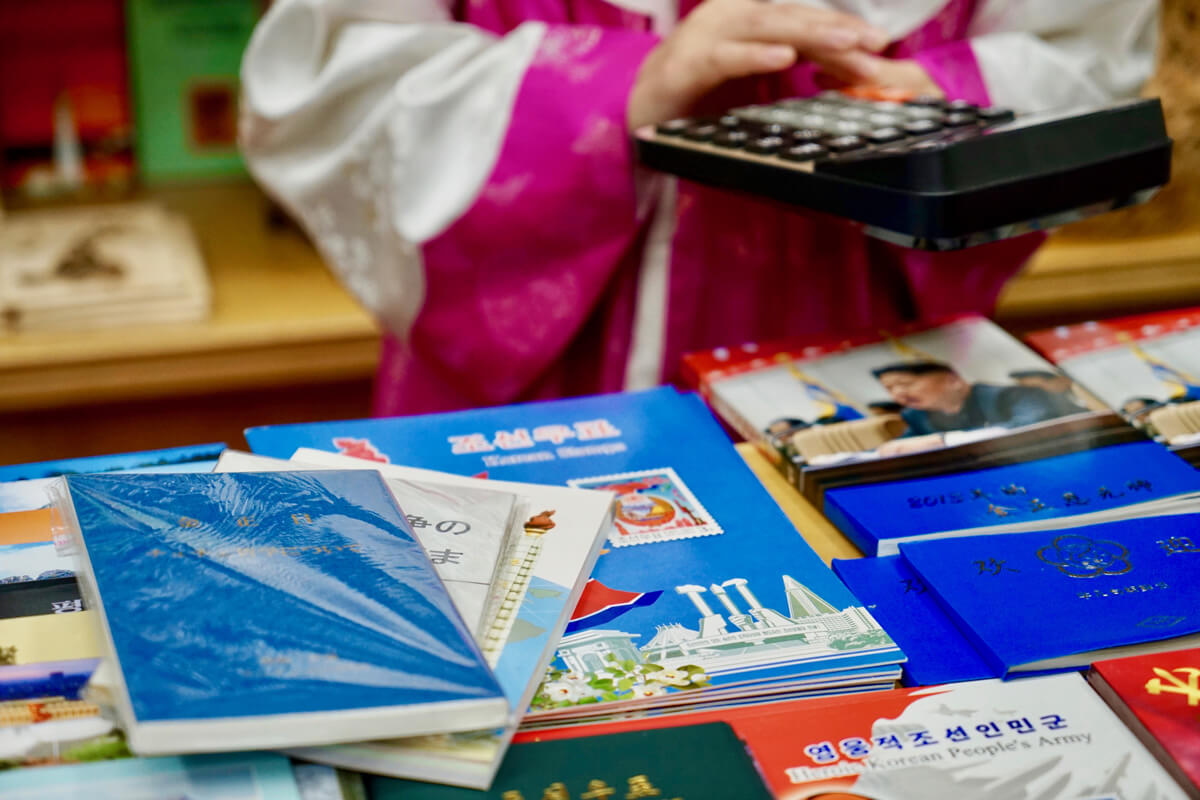
Since you can buy souvenirs here, I bought a book on Juche Philosophy (2002), the Korean War (1996), and Korean Tourism (2014). The texts of which have been translated into very sophisticated Japanese.

Ryugyon Hotel

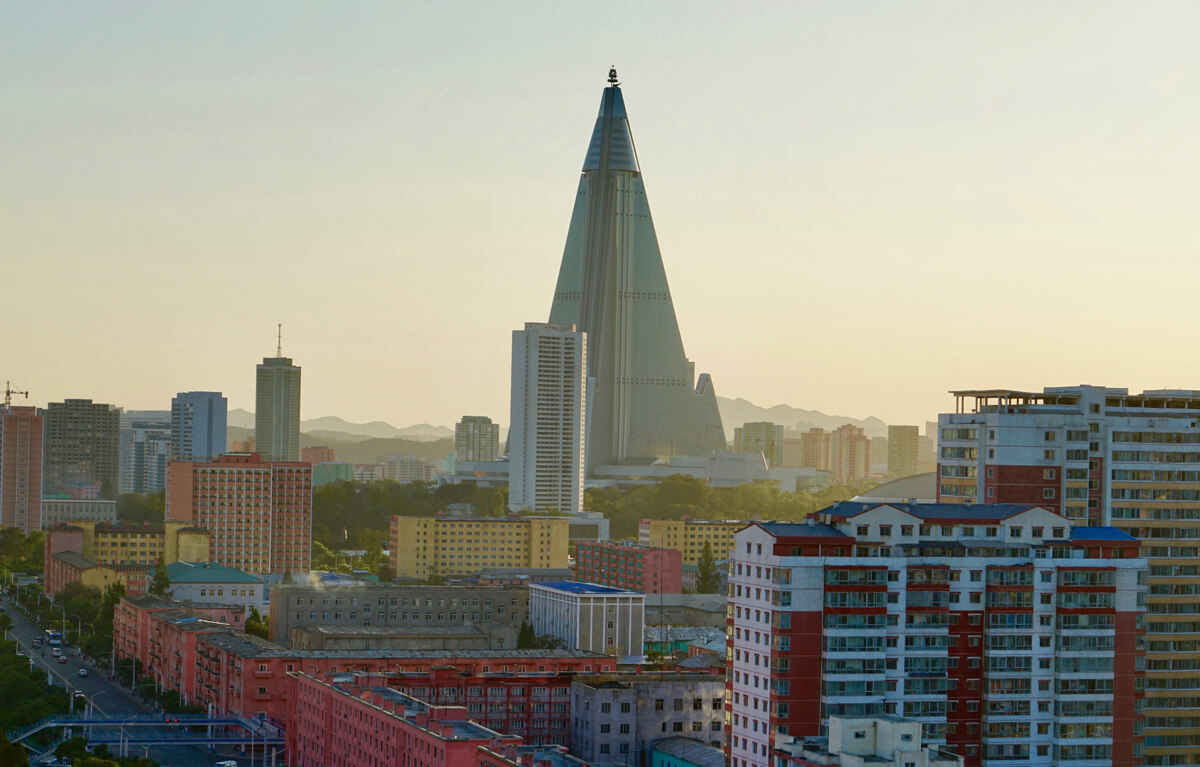
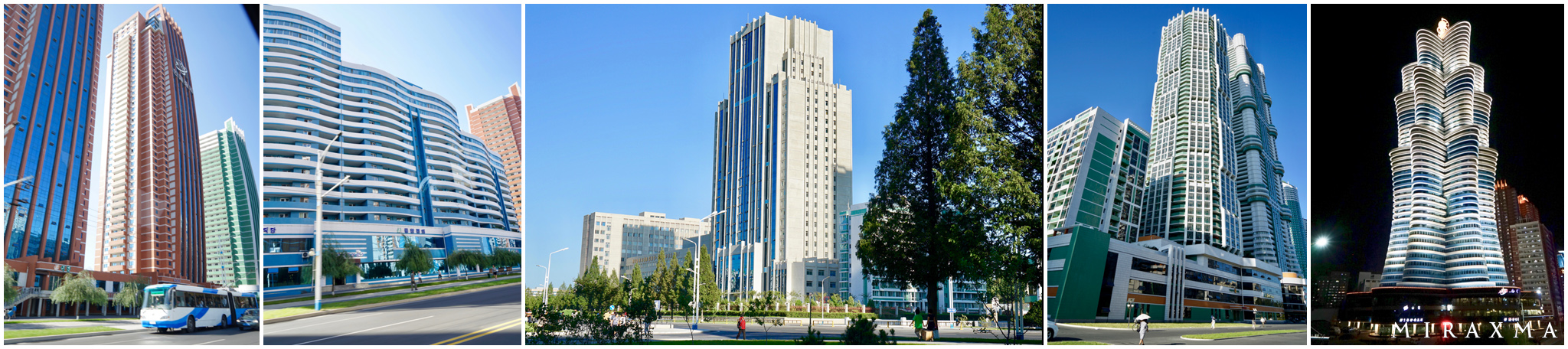
Construction of this hotel started in 1987 and was suspended once in 1992. Sixteen years after the interruption, thanks to an investment from Egypt telecommunications giant Orascom Telecom’s, construction resumed in 2008. Finally, in 2017, a full 30 years later, the hotel opened. Reaching 330m in height with 105 floors, it is the world’s second largest super high-rise hotel. The total investment is approximately 14.4 billion yen, according to Wikipedia.

Pyongyang Koryo Hotel -Date of establishment unknown-

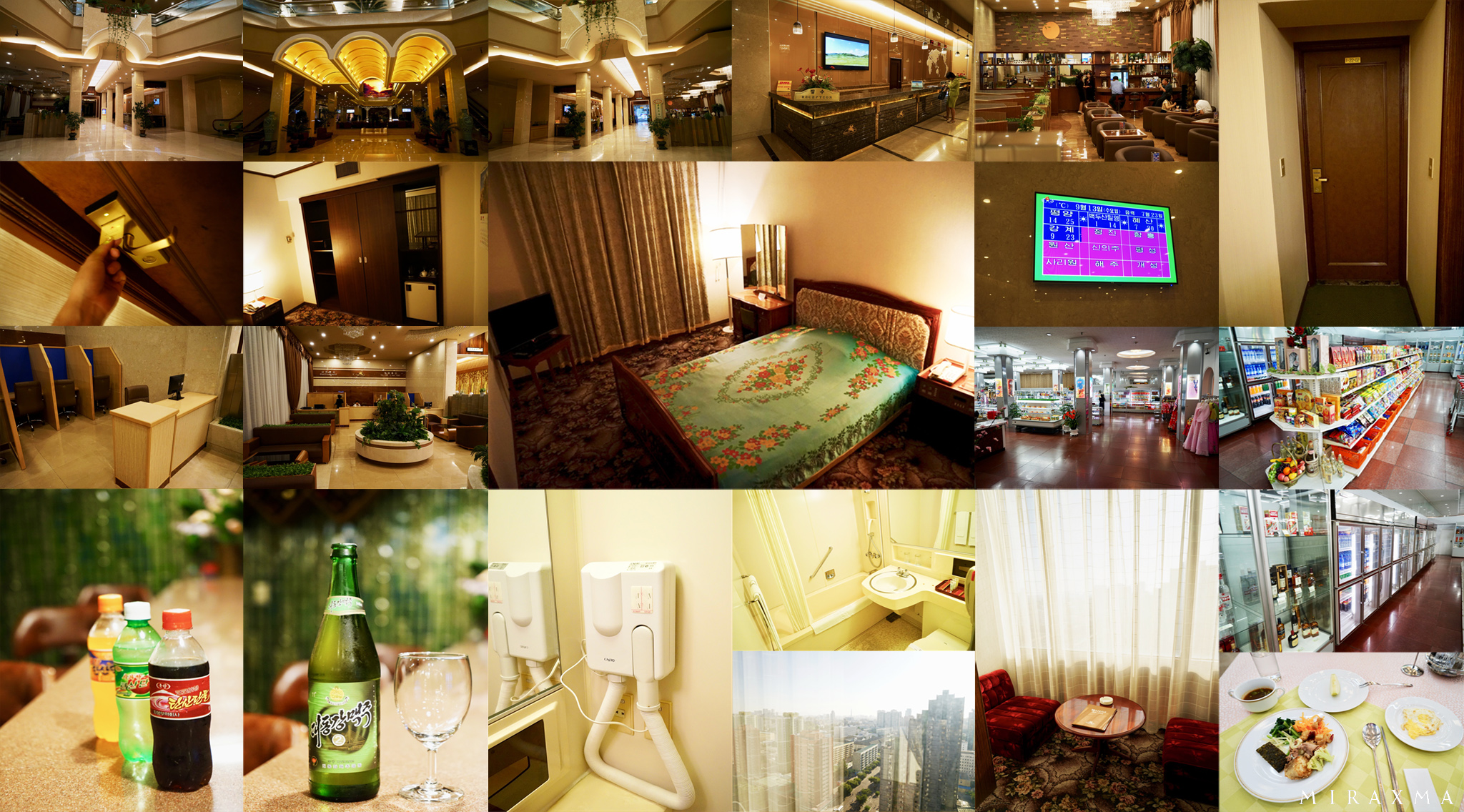
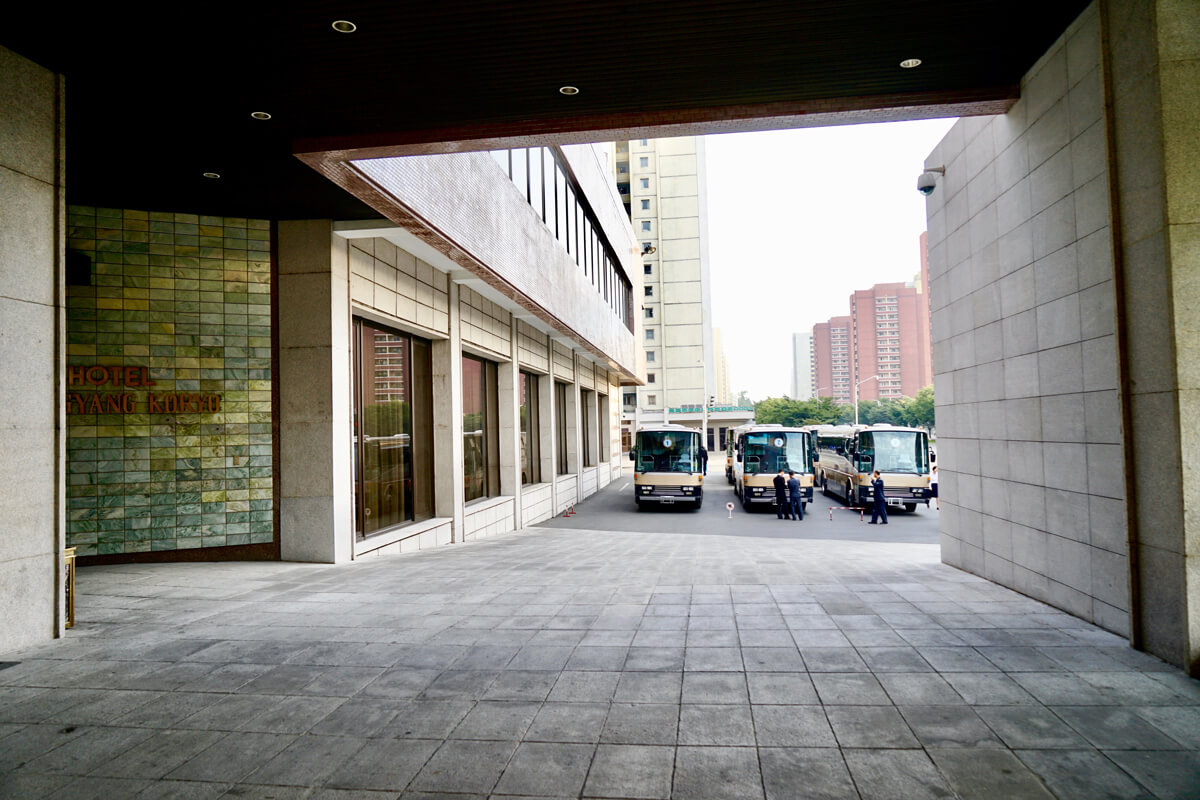
Located about 200 meters from Pyongyang station to the left on Chenggang Street, it reaches 143m in height with 45 story Twin Towers and has a capacity of a little over 1,000. The top floor features a revolving observatory restaurant with panoramic view of Pyongyang city, as well as entertainment facilities such as a fashionable bar and karaoke. In addition, the power supply voltage for Korea is 220v, the frequency is 60hz, but they have outlets that correspond to the Japan “100v50 - 60hz” as well. Former professional wrestler, Antonio Inoki and former prime minister, Junichiro Koizumi are just two of the many celebrities who have stayed here.

Video

NHK World can be viewed every day in the international hotel.
Private Homes can only be seen on the weekends.

Video

Korean Music Program

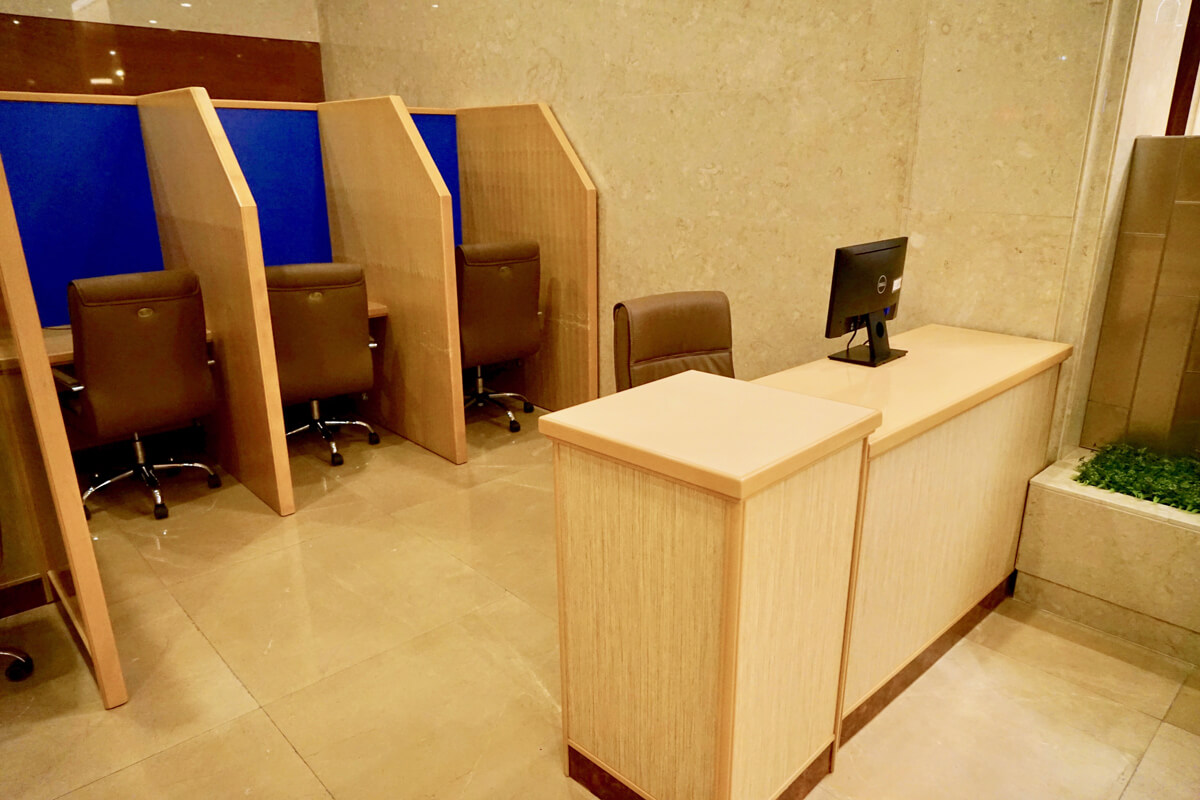
Foreign tourists are prohibited from communicating with their own telecommunications equipment, but there is one PC on the first floor of the hotel where you can only use email.    

Morning Cheer. Korea 08:14 | Japan 08:44

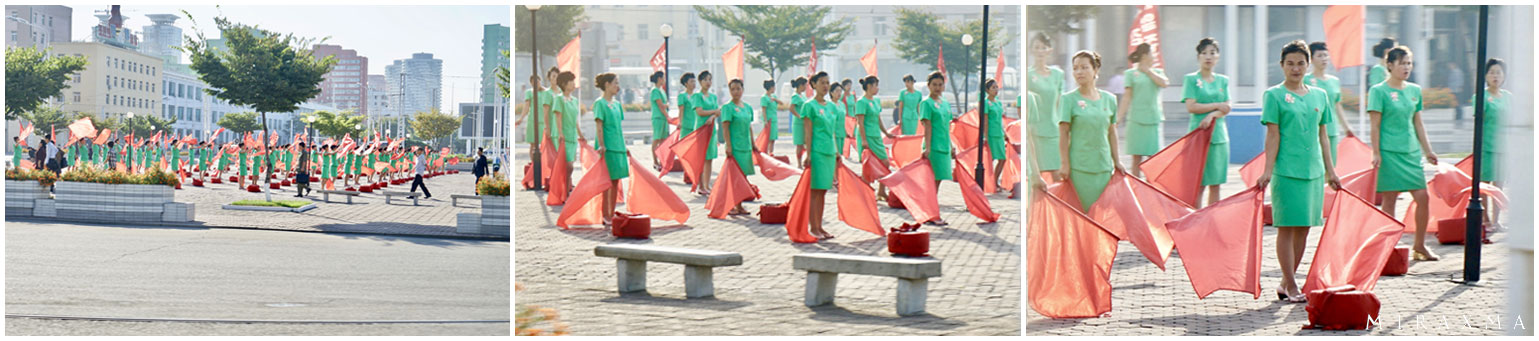
When we left the hotel after breakfast, women in the army gave out a morning call of cheer to motivate the businessman commuting to work. As someone who is not a morning person, this was a very enviable service for me.

Mansu Hill Grand Monument

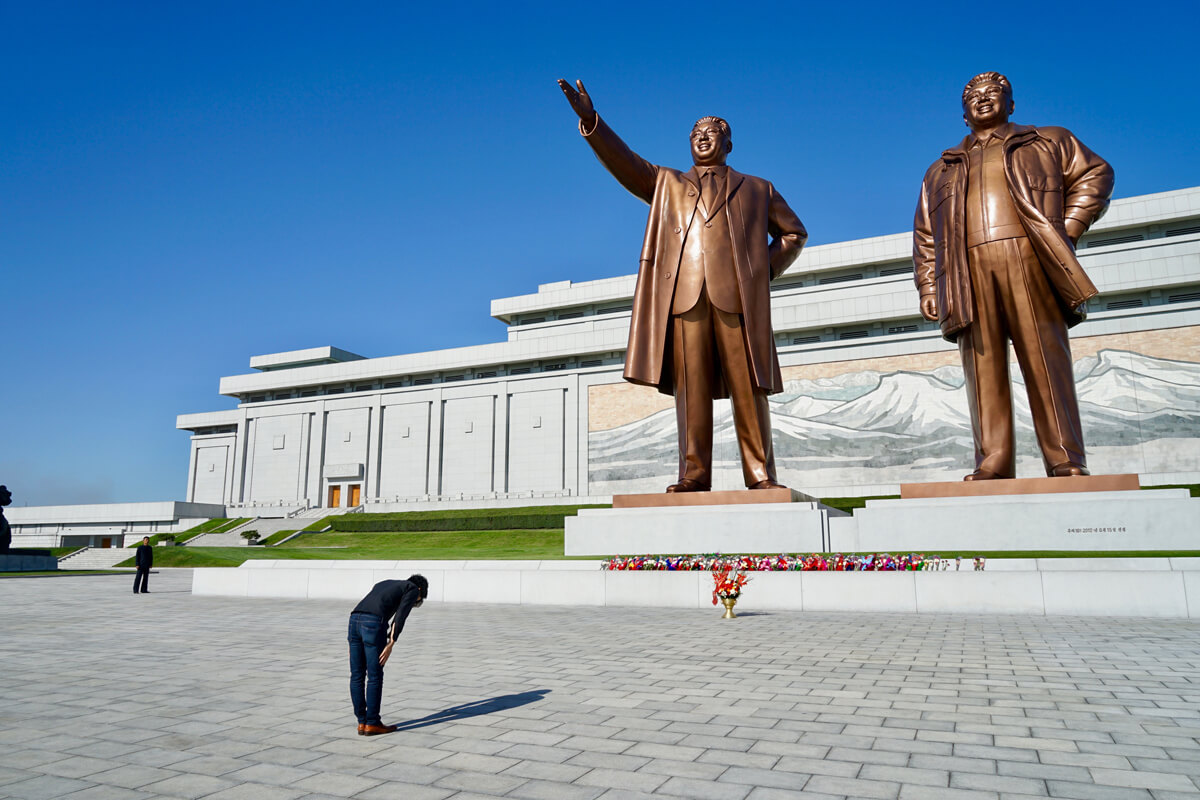
The statues of Kim Il-sung (Built in April 1972) and Kim Il-sung (Manjyudai in April 1912) stand next to each other atop this monument platform. Behind them, stands the Korean Revolutionary Museum, with memorial towers on both sides. It is considered a sacred place. Paying respects and honors is optional. There was a feeling of tension as locals offered bouquets of flowers in complete silence.

I also gave my wishes for world peace and payed respect in my own way.

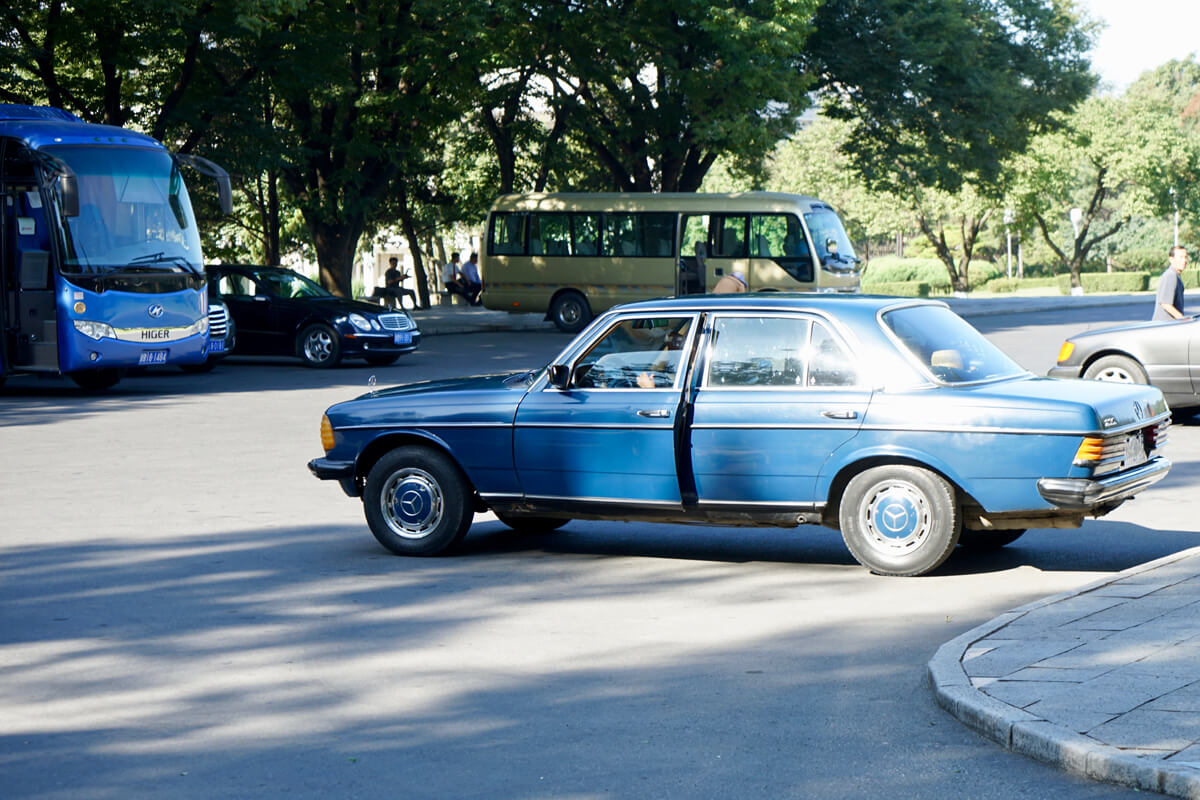
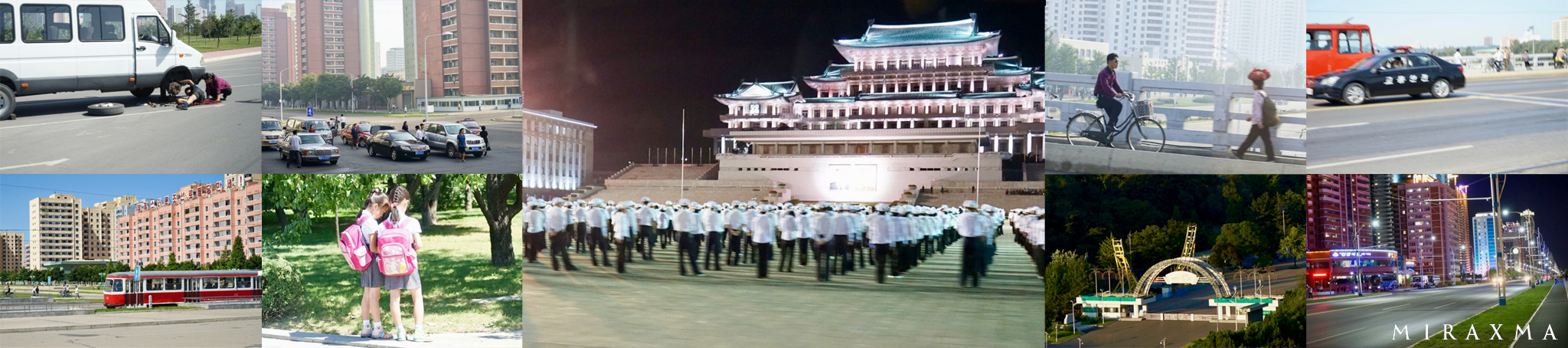
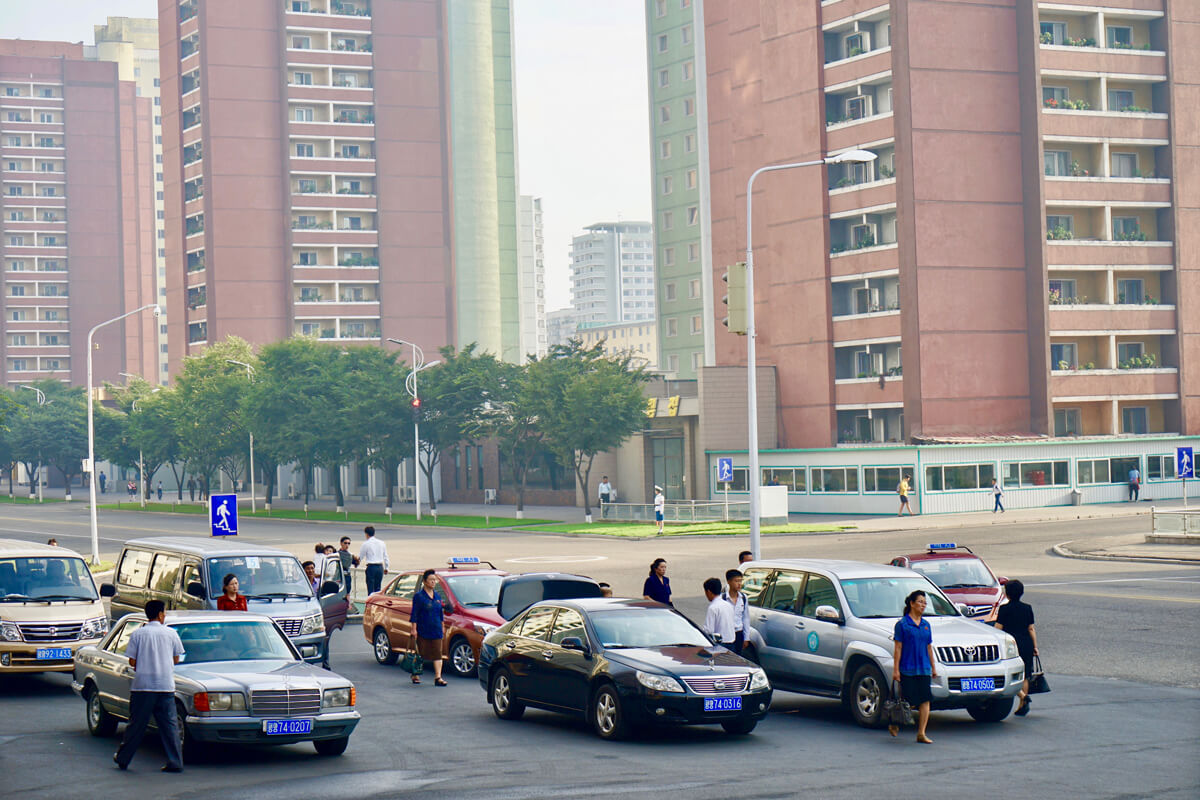
Though new models of cars are gaining popularity, most locals drove old ones. The model in the photograph seems to be a Mercedes Benz 230E that was in circulation in the 1970s.

Most locals wore their hair black and dressed in mostly calm colors such as khaki and gray. It felt as if I was standing in the middle of a photograph in an old album of my parents that I had seen when I was a child.

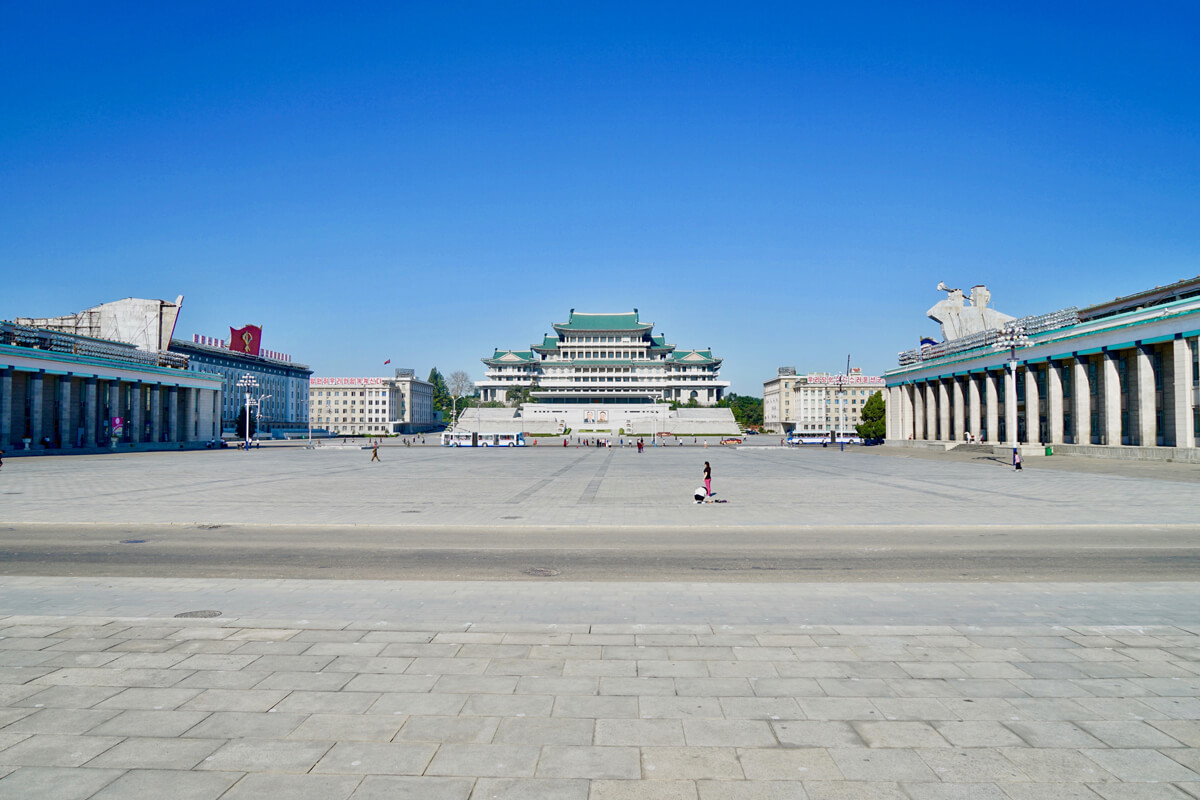
Kim Il-sung Square -Completed in Aug, 1954-

The 16th largest central square in the world. The area is 75,000㎡ and the ground is covered with tiles made of granite.

Home to humanity, Earth has always been a place of both Yin and Yang, and consists of unseen and irreplaceable powers in motion.

Future Scientist Street

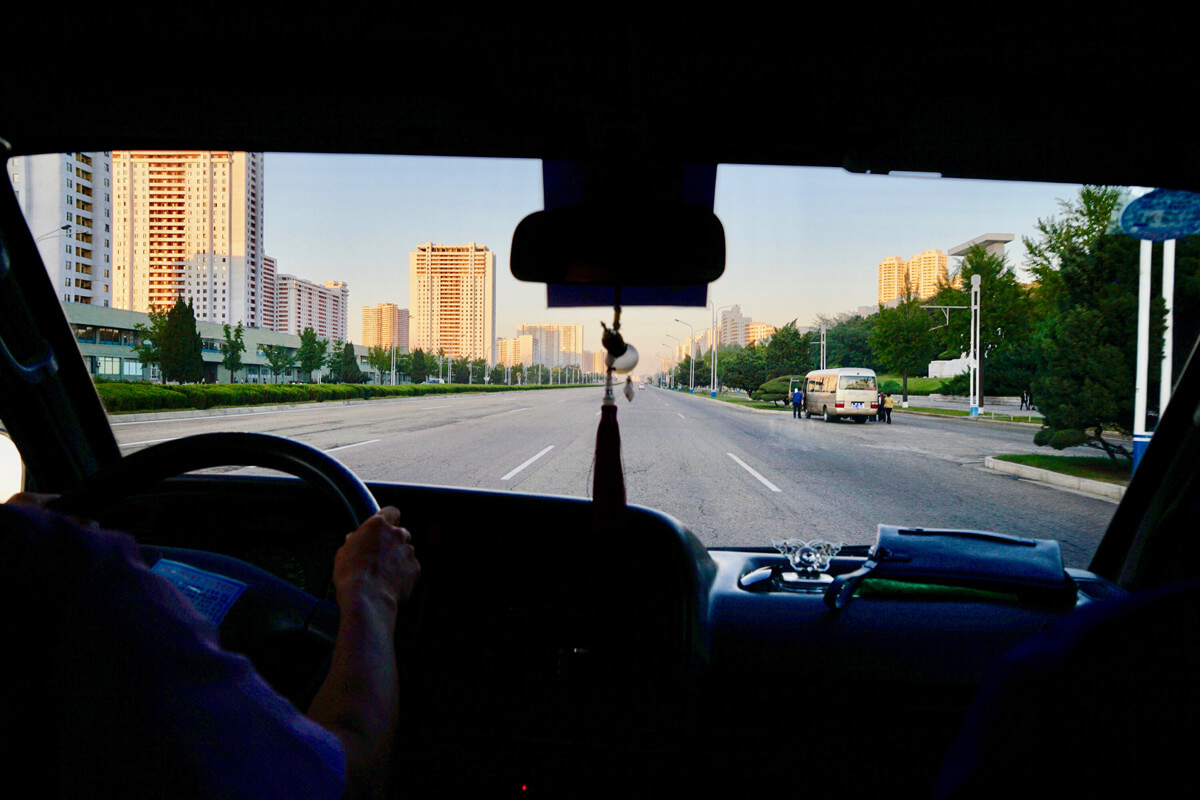
A strip of high rise houses with originality and artistic charm were built along the Taedong River. There are more than 150 living/business complexes holding up to 3,000 to 4,000 households. There are also national scientific research institutes, educational institutions and parks. Most of the residents are used by university professors and people who have made great achievements and major contributions. In Korea, housing and schooling are provided free of charge, and rice is freely distributed amongst schools and households. Salary is paid by commission, and ranges from about one to ten thousand yen a month.

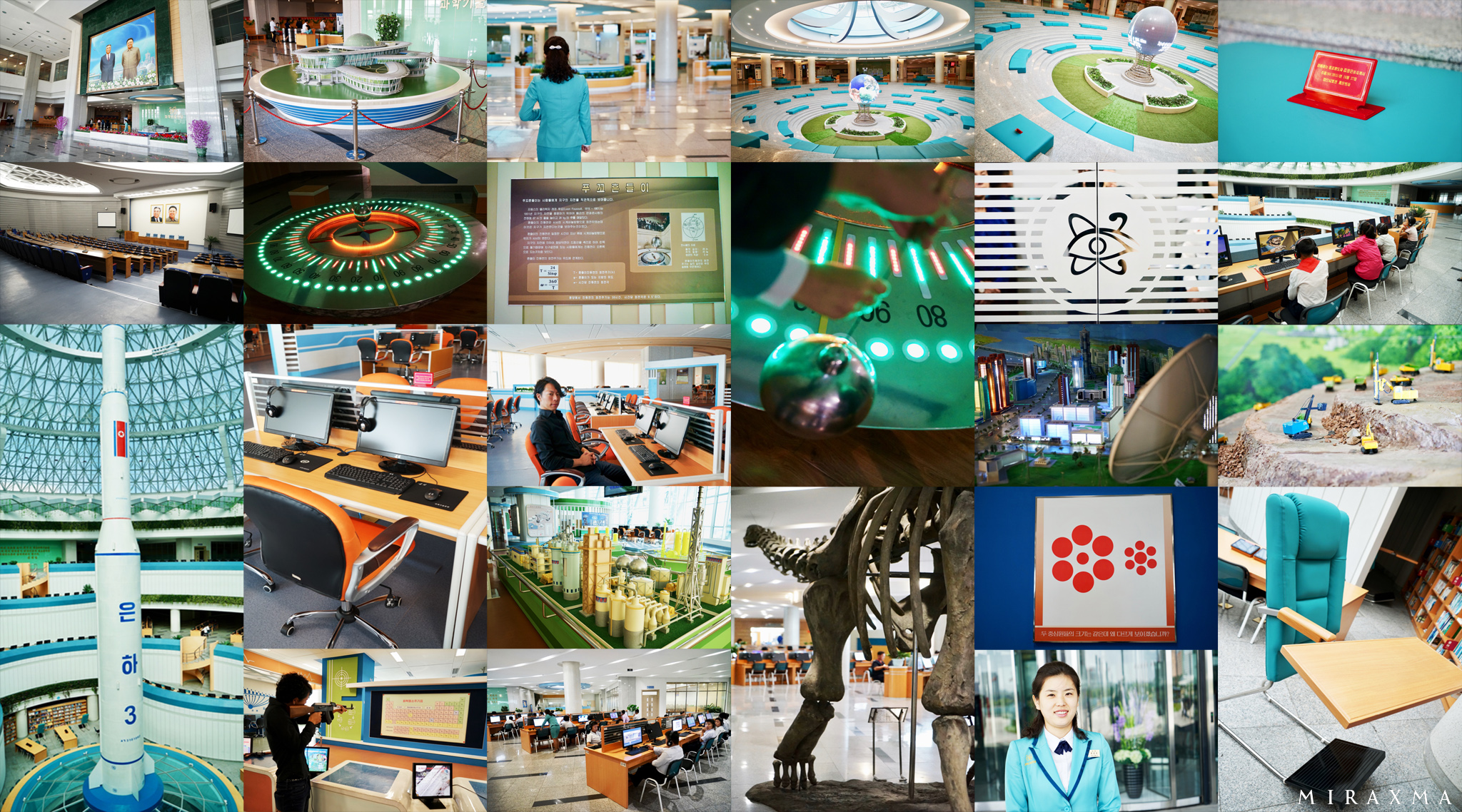
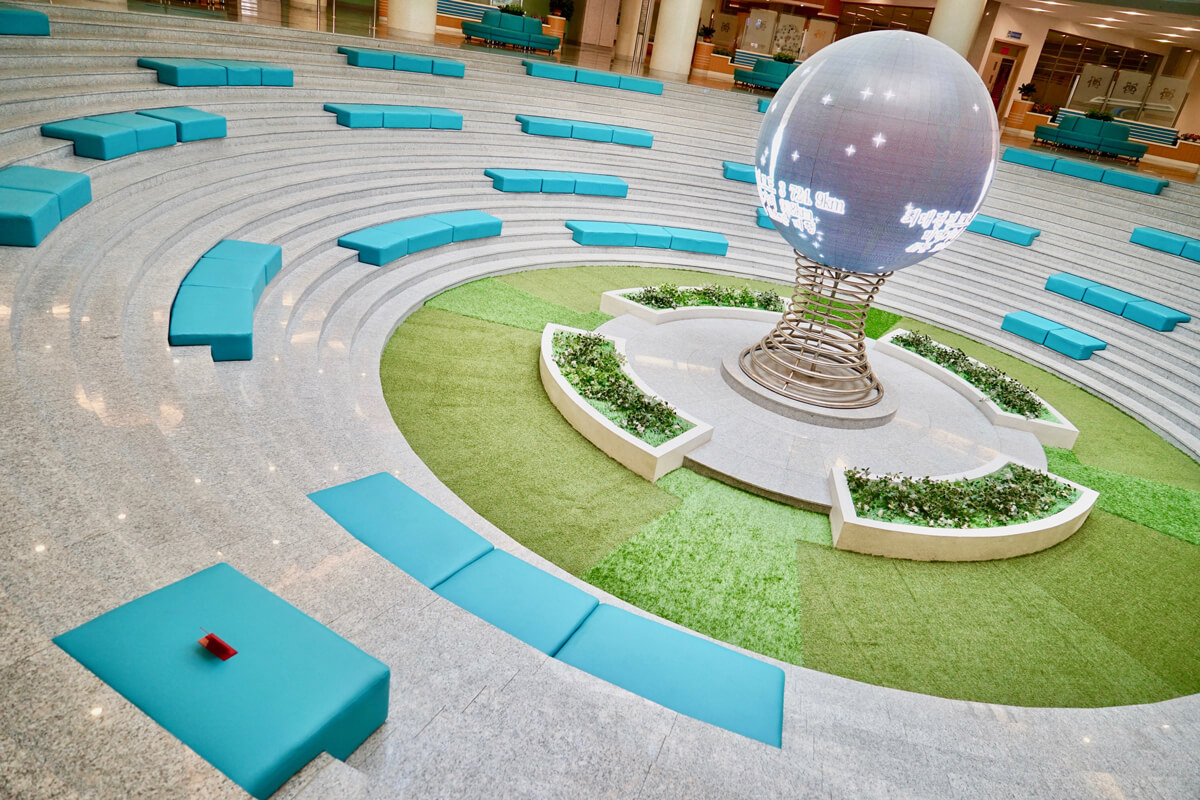
Science and Technology Hall of Fame -Constructed Oct, 2015-

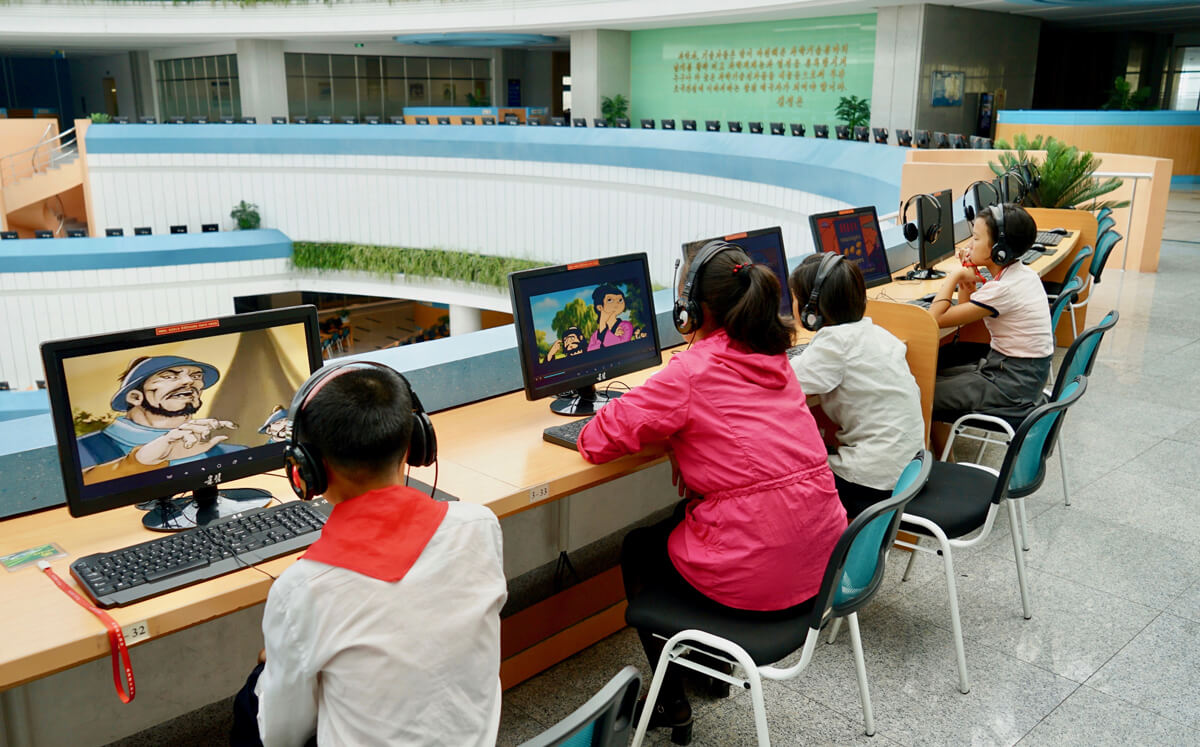
The DPRK openly show their love for science and there are many hands-on exhibits to experience. You could even ride a roller coaster with 3D goggles.

In the Science and Technology Hall of Fame, each chair and elevator that Kim Jong-un used is marked with a special card and is considered to be extra valuable. I wonder how much “past” will be implemented in the future that he sees fit.

I felt relieved to see the children spending their time freely.

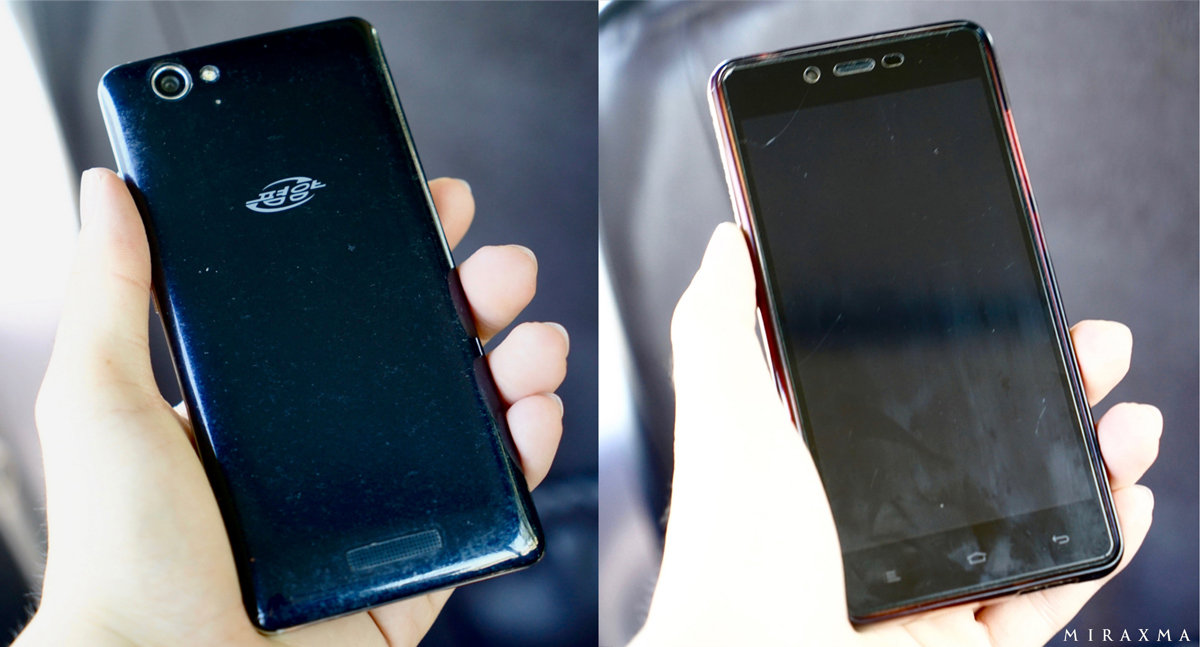
Of course, even in Korea, smartphones are popular, and there are many games and apps, but only a few people are actually able to use them. The maker of the model in this photograph is “Pyongyang.”

Juche Thought Tower -Apr, 1982-

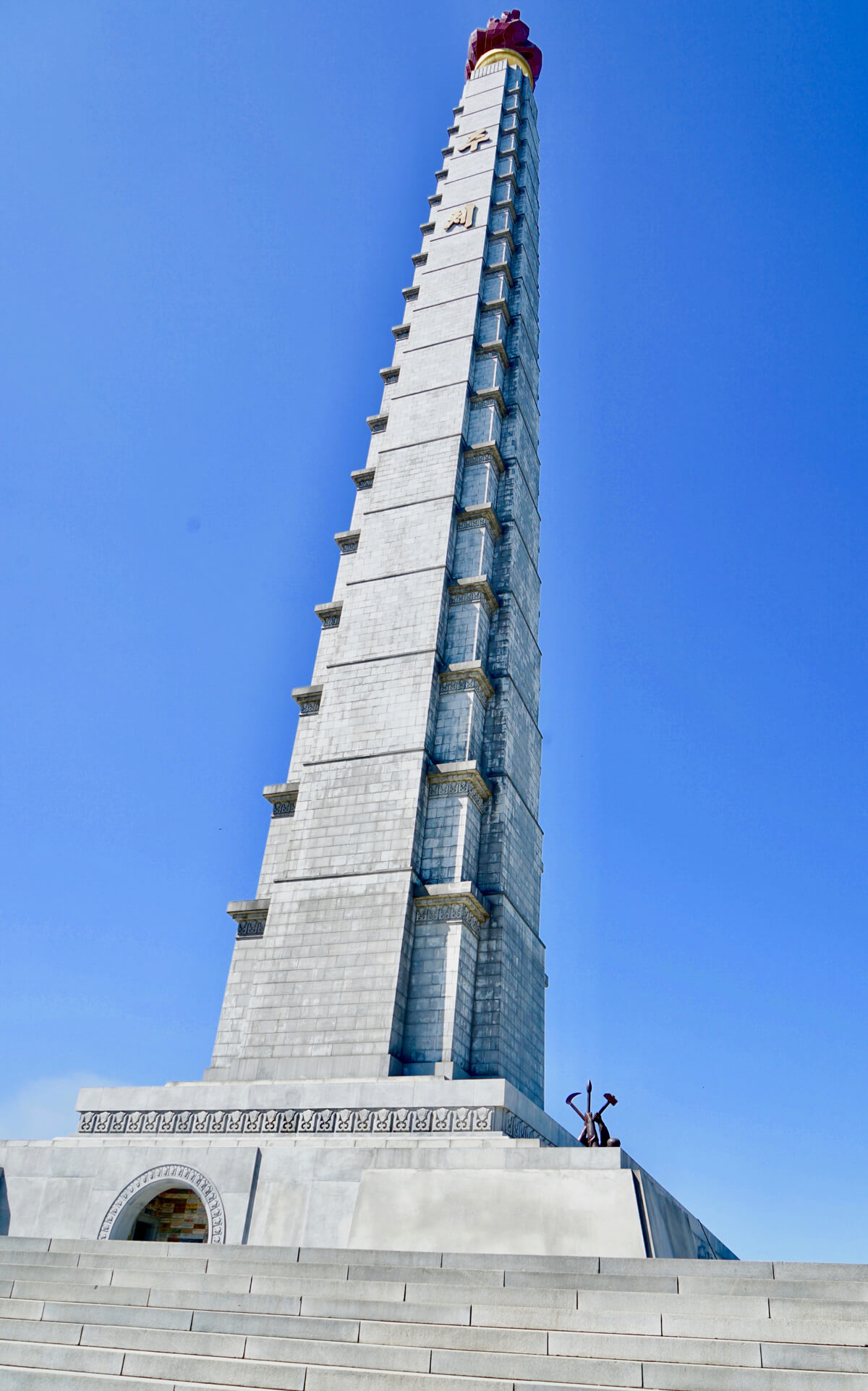
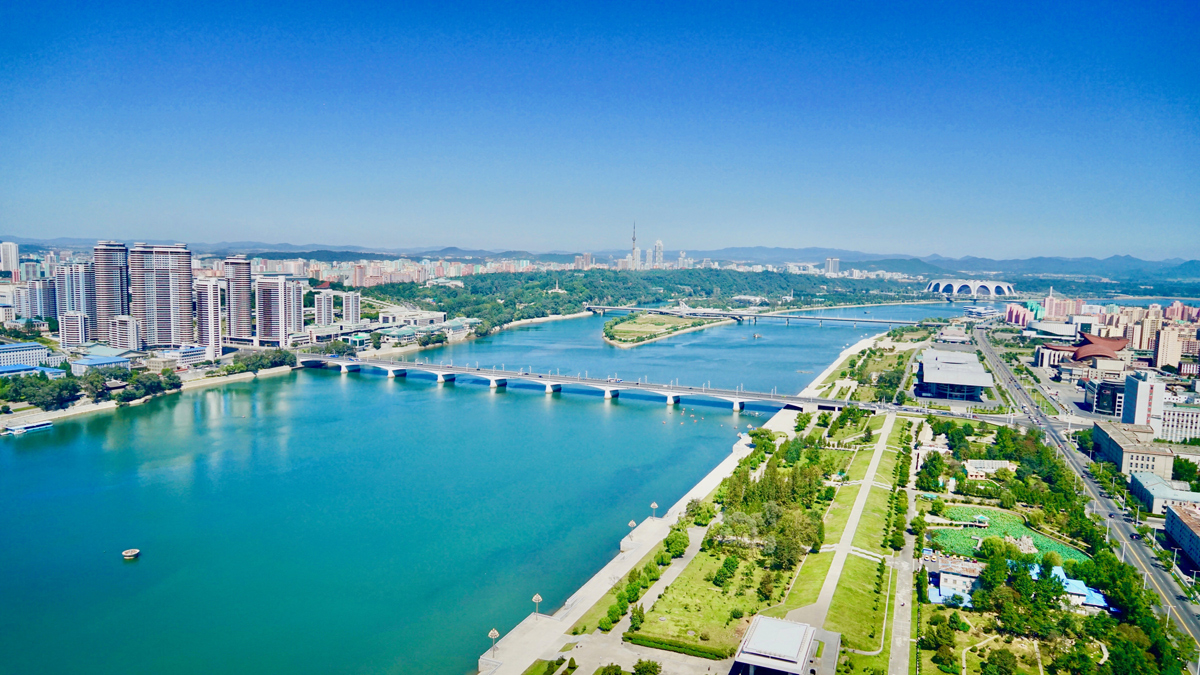
Built in commemoration of the 70th anniversary of the birth of President Kim Il-sung, this tower reaches a height of 170m. This type of traditional Korean stone Pagoda building is brought to life by stacking white granite. The number of stones used is 25,500 for 365 x 70 years. You can go up the observatory by elevator and view the city area of Pyongyang.

Taedong River

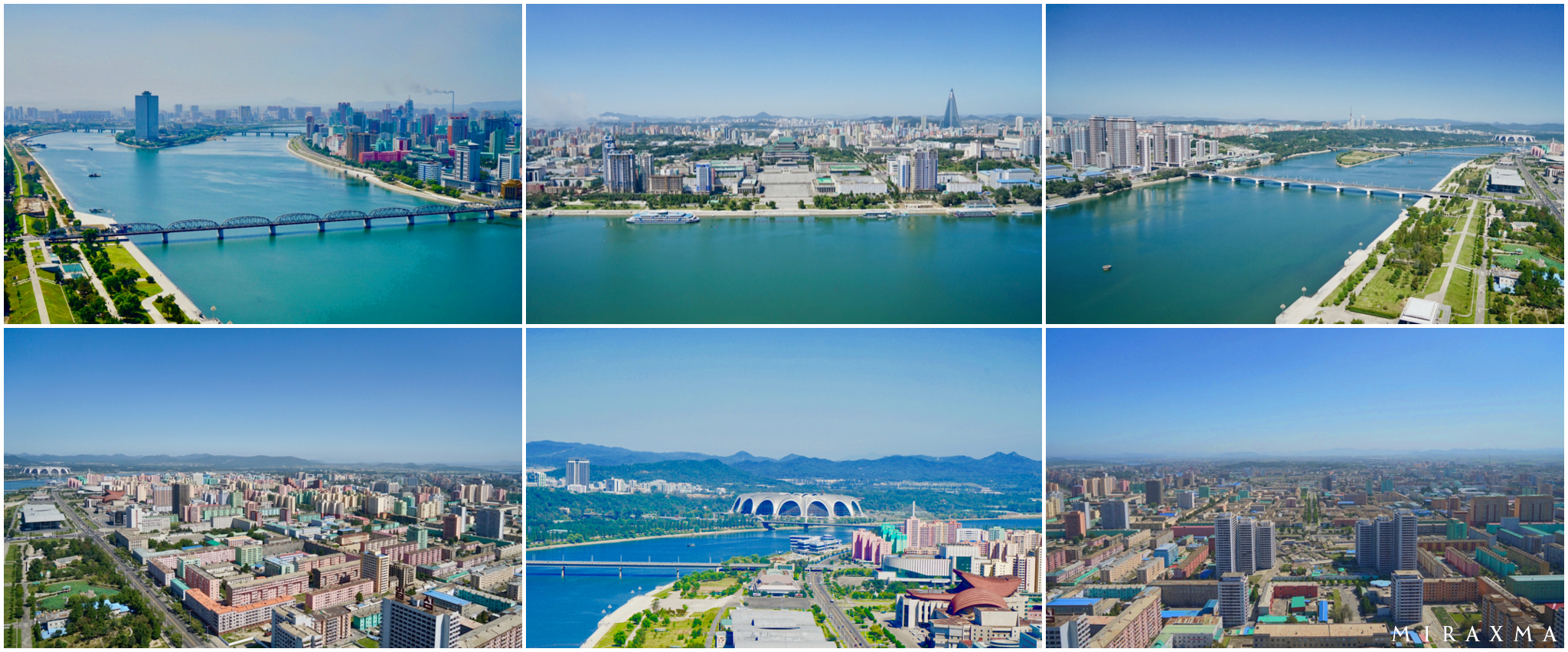
There are six characteristic bridges around the northwestern part of the Korean peninsula. They stand over the fifth largest river on the peninsula, that has a total length of 439㎞, and an area of 20,000㎢.
You cannot see it in the photograph, but in order from left to right is the Chongsong Bridge, the Yanggak Bridge in the distance, the Taedong Bridge, the Kim Il-sung Square (1965), and the Okryu (1960) in order from the left. In the distance is the Rungna Bridge (1988), beyond that is the Chongryu Bridge and the May Day Stadium (1989).

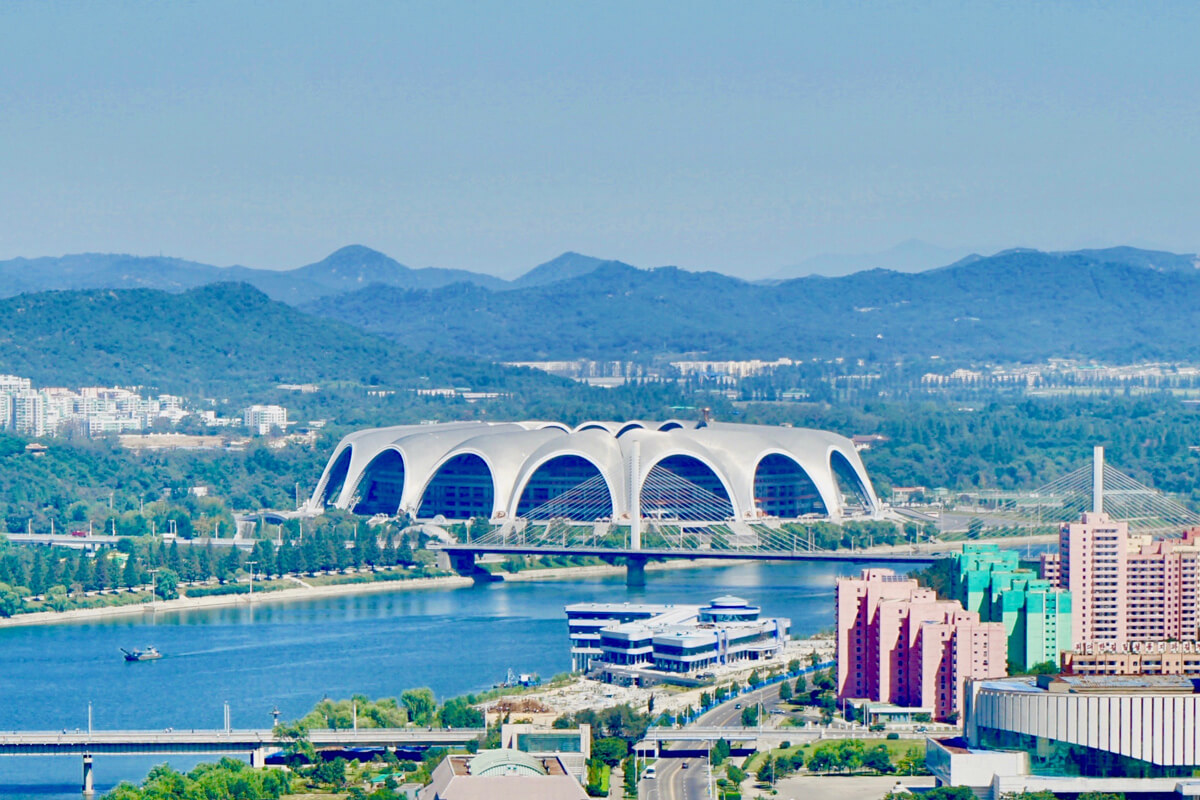
May Day Stadium -completed May. 1st, 1989(Mon)-

This parachute-like architectural beauty is a famous scenic spot in Pyongyang located on the Rungna islet of the Taedong River. It is the world’s largest stadium, and seats nearly 150,000 people. On April 28 (Fri) - 29 (Sat), 1995, the Korean government, the New Japan Pro-wrestling company and the WCW created an event to promote sports and peace, gathering over 380,000 people over two days. At the time, the event was strongly supported by the New Japan Pro-Wrestling company because Mr. Rikidozan, the teacher of Mr. Antonio Inoki, was from the Korean peninsula.

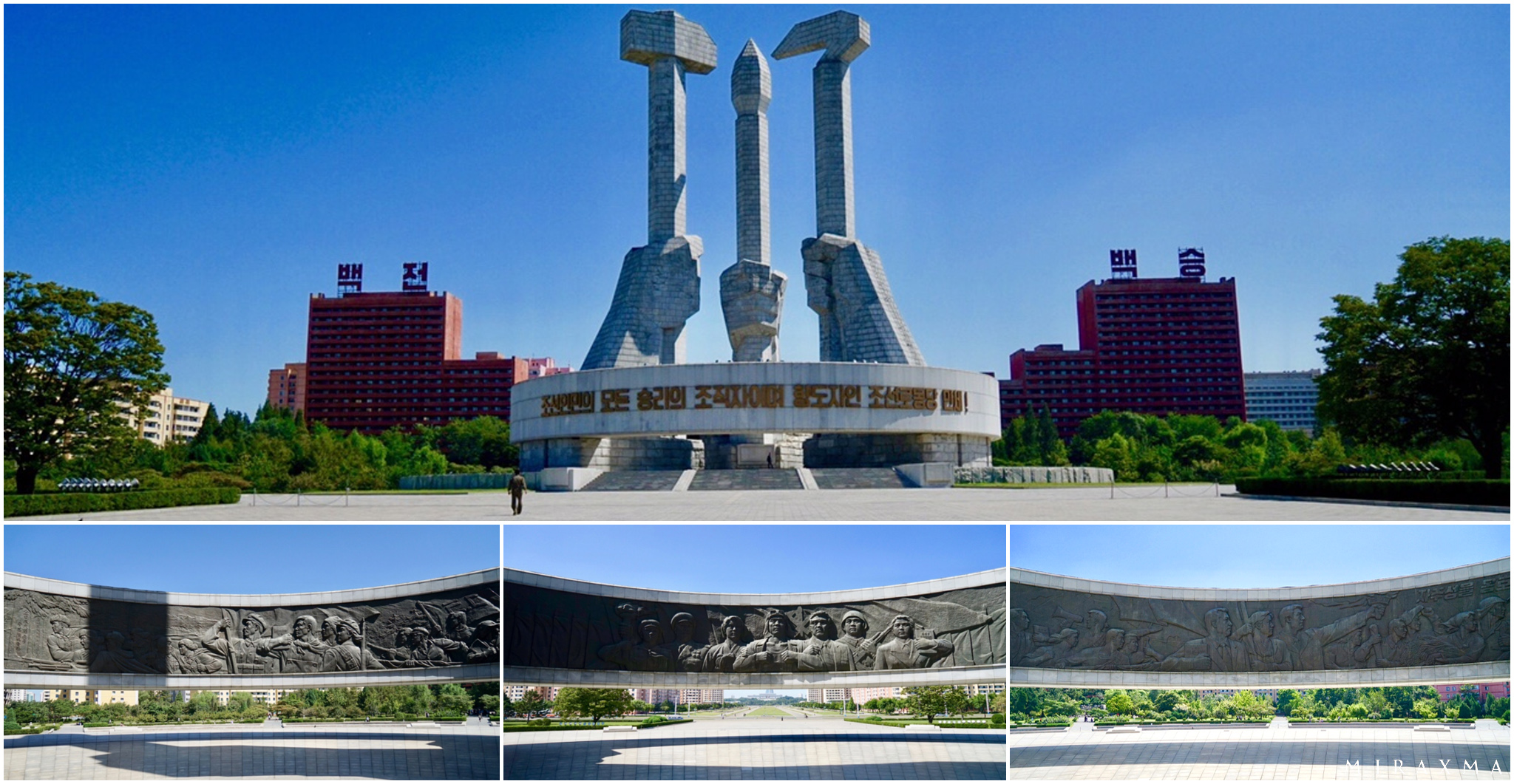
The Monument to Party Founding -Oct, 1995-

Built on the 50th anniversary of the founding of the Workers’ Party of Korea, it is 50m in height. The inscription on the outer-belt reads, " The organizers of the victory of the Korean people and the leader of the Workers Party of Korea!" You can also find the depiction of the “harmonious whole of the leader, the Party and the masses.”

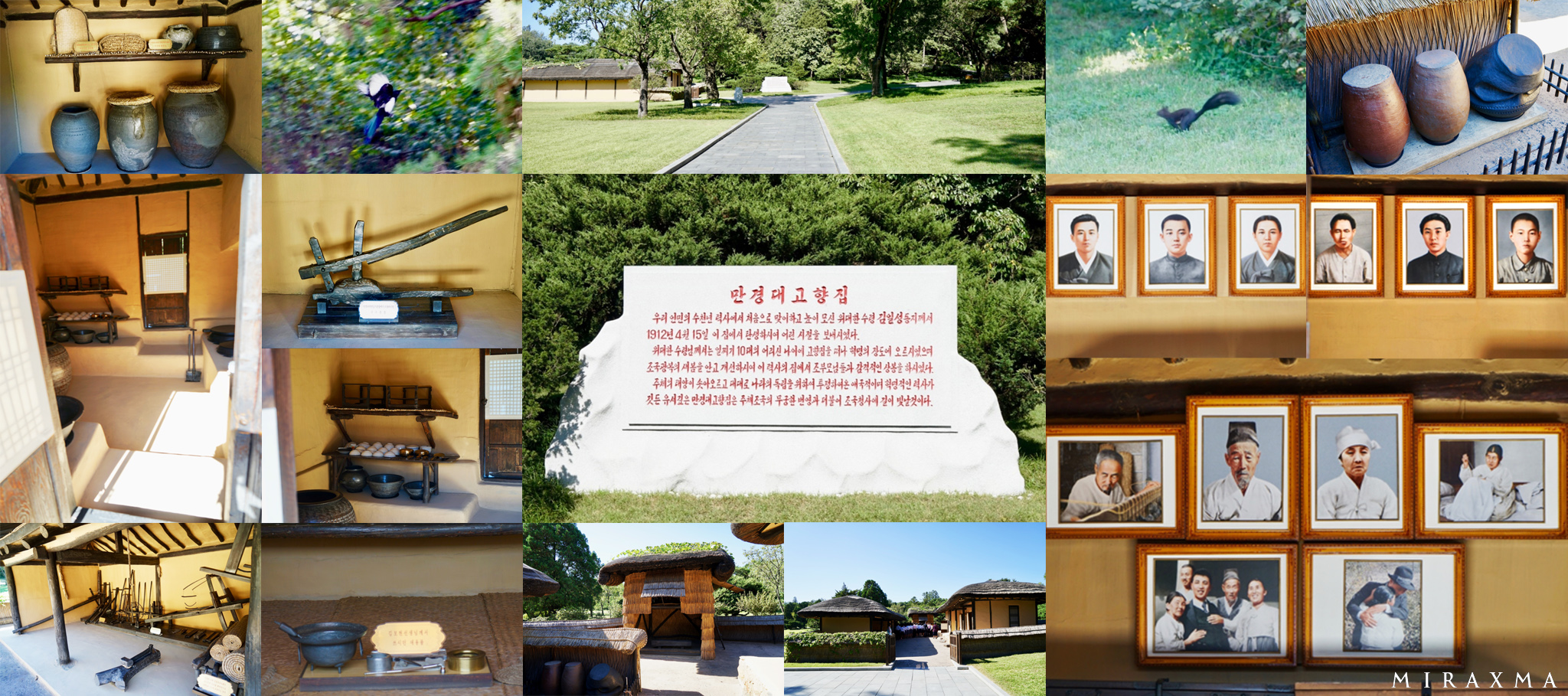
The birthplace of Mangyongdae

Mangyongdae, which is Kim Il-sung’s birthplace and hometown, is a deeply historical area. Kim Il-sung was born and spent his childhood in a simple house with a straw-thatched roof that one could see just about anywhere in Korean farm villages at that time. Inherited all the way from the first generation of the chief great-grandfather Teacher Kim Un-u, the family has been living in that house for four generations. In the home where they were born, one can find preserved household items that the chief and the family in the house used to use on a regular basis.

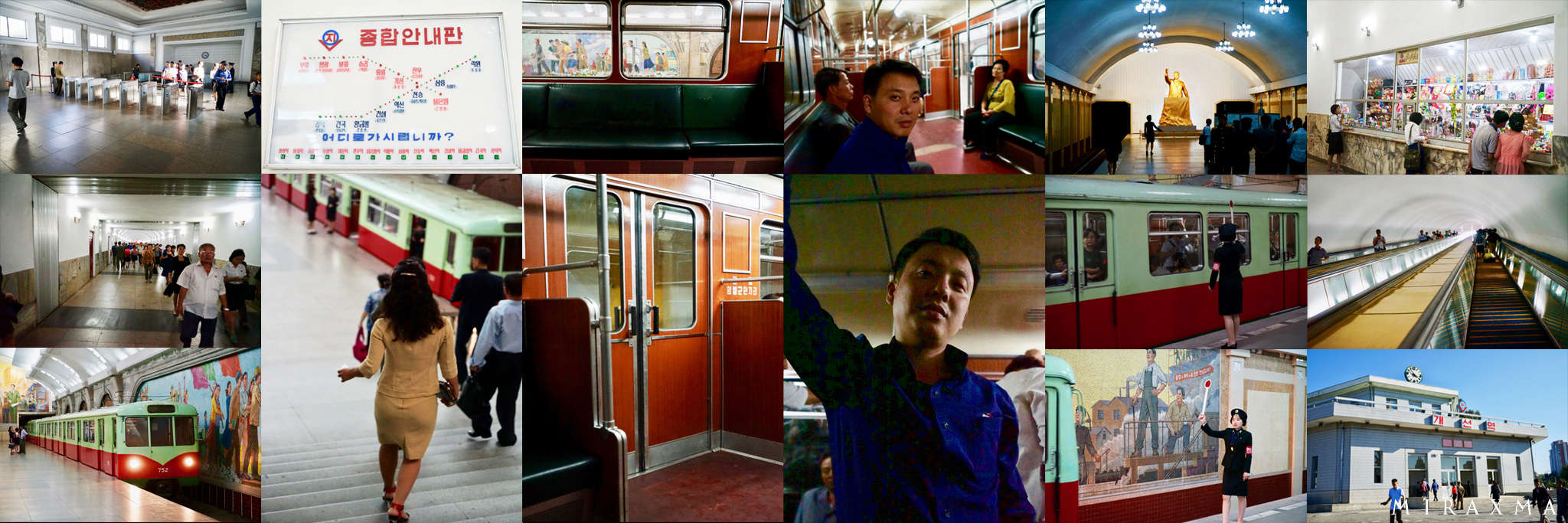
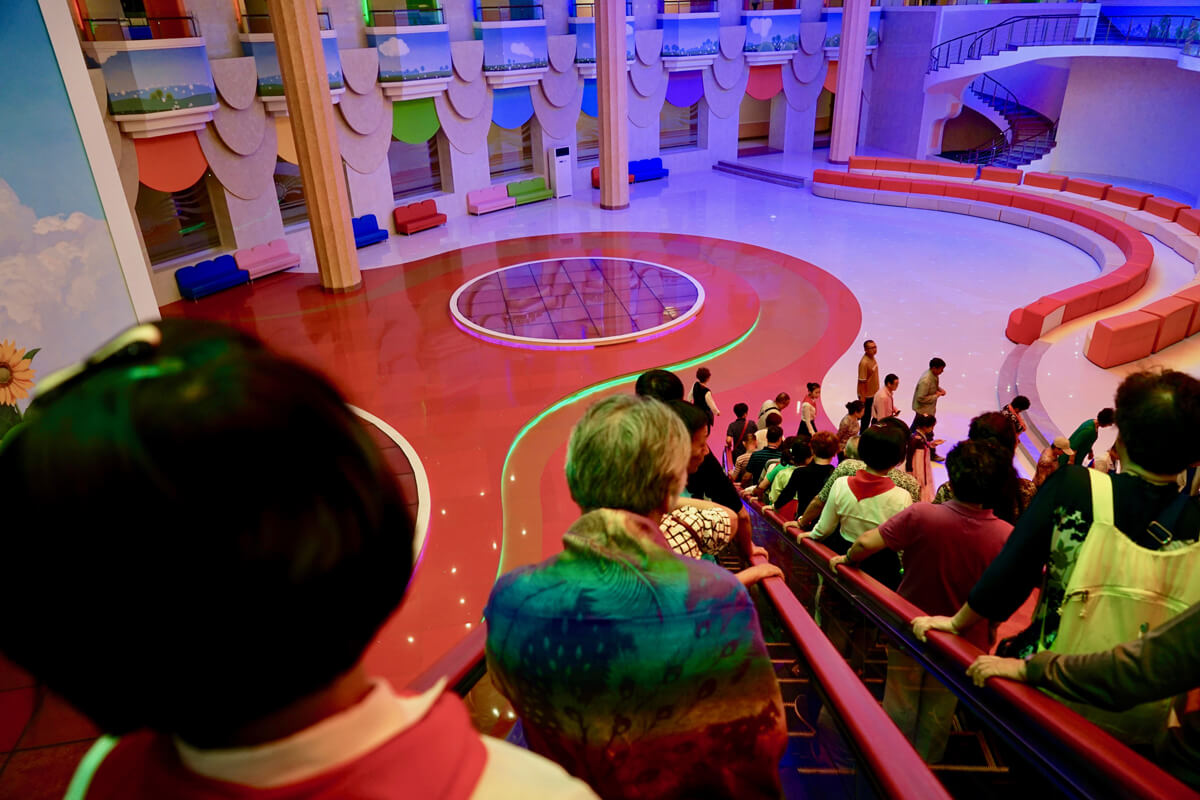
Pyongyang Metro, constructed in 1960 and opened in Sep. 6th, 1973 (Thu). Currently, as of 2018, there are 17 stations and 3 lines.

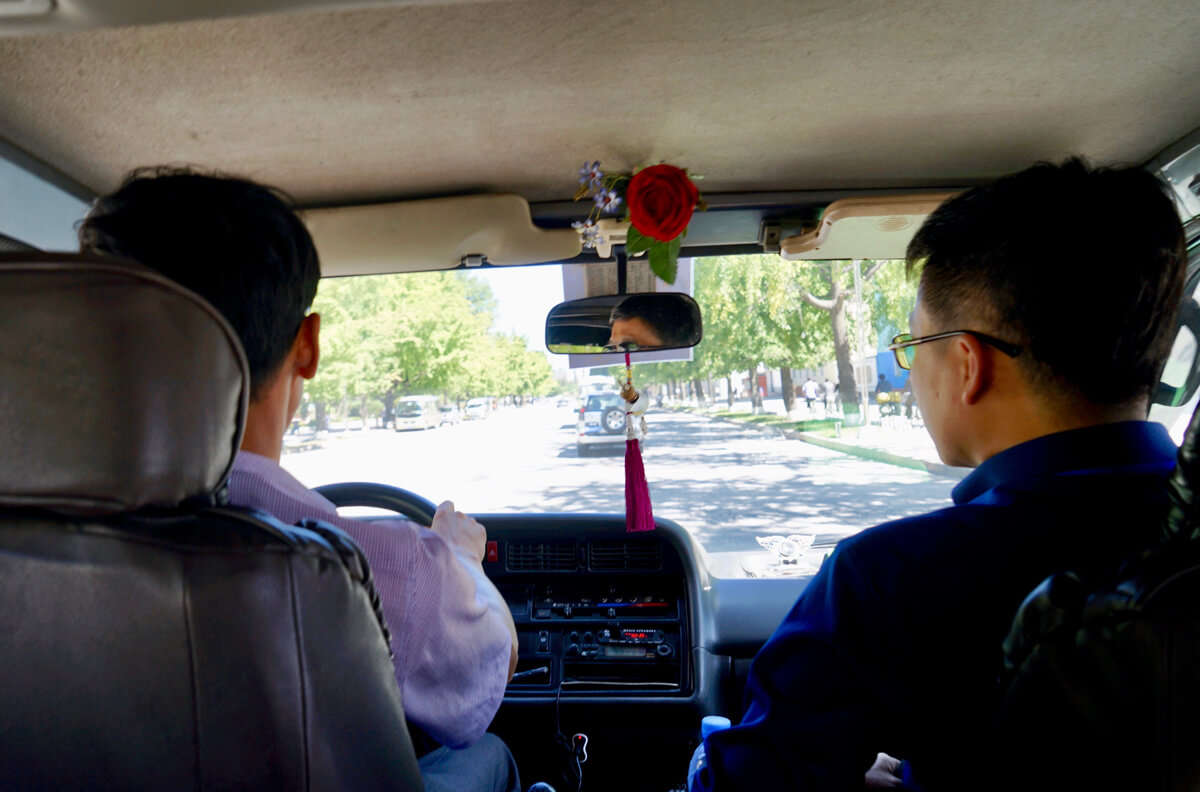
Doubling as a nuclear bunker (shelter), it’s said that Pyongyang metro has the deepest subway system to date. Going just one way on the escalator takes 3 minutes. The man wearing a blue shirt is my guide and also a gentleman that gives up his seat to the elderly during rush hour.

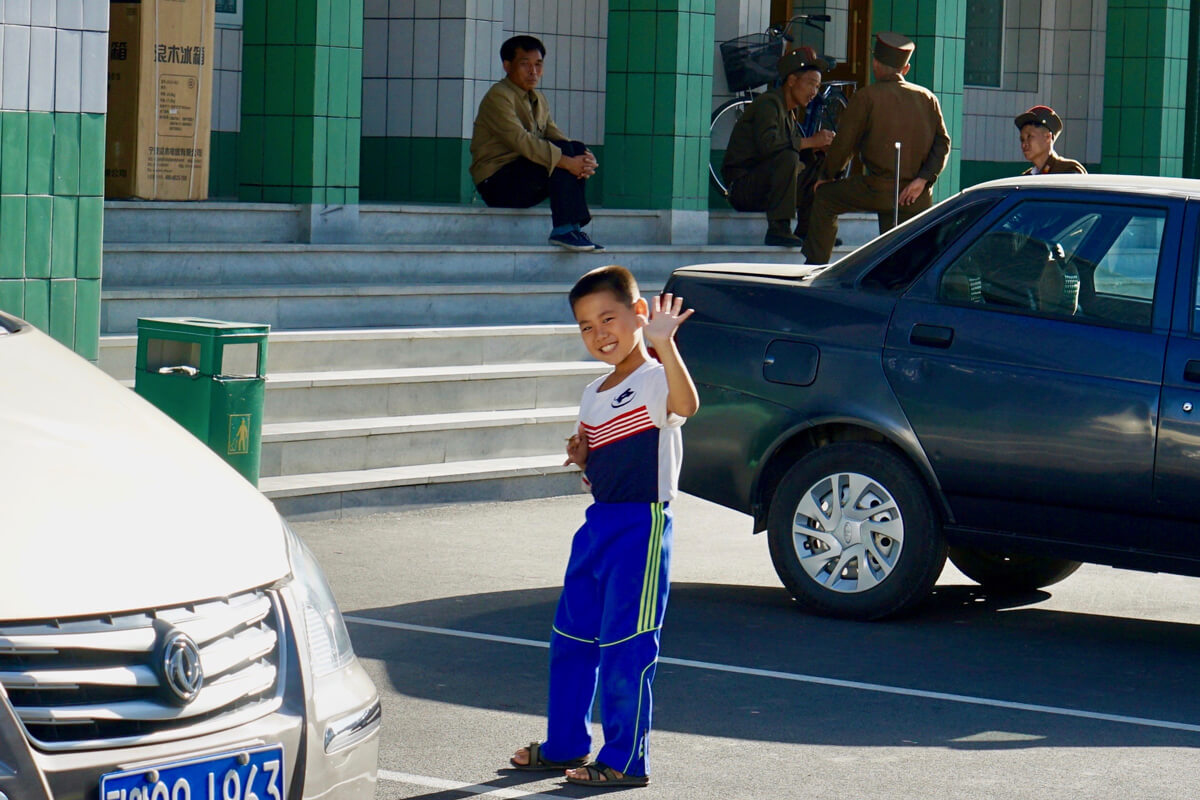
When I was walking down the street, I met an adorable boy that had an innocent smile.
I wonder how many people can find peace in their hearts just by seeing this child’s smile.

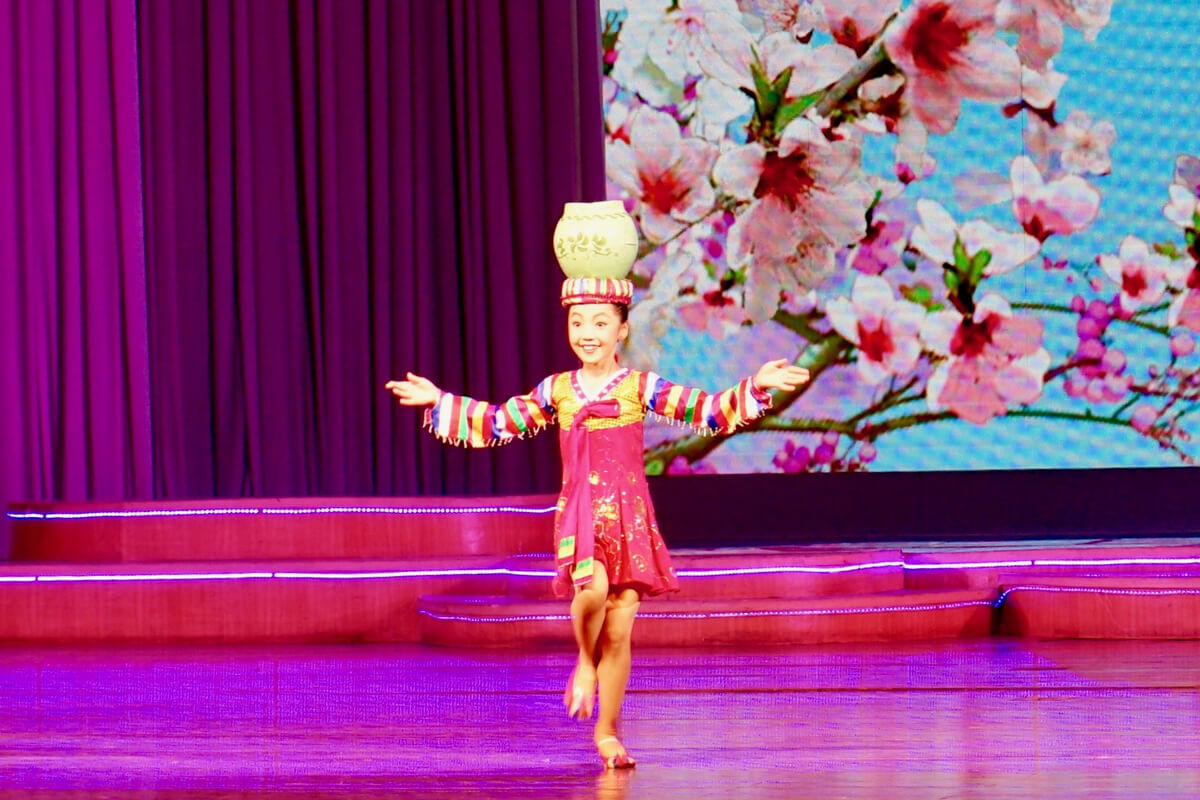
Mangyongdae Children’s Palace -May, 1989-

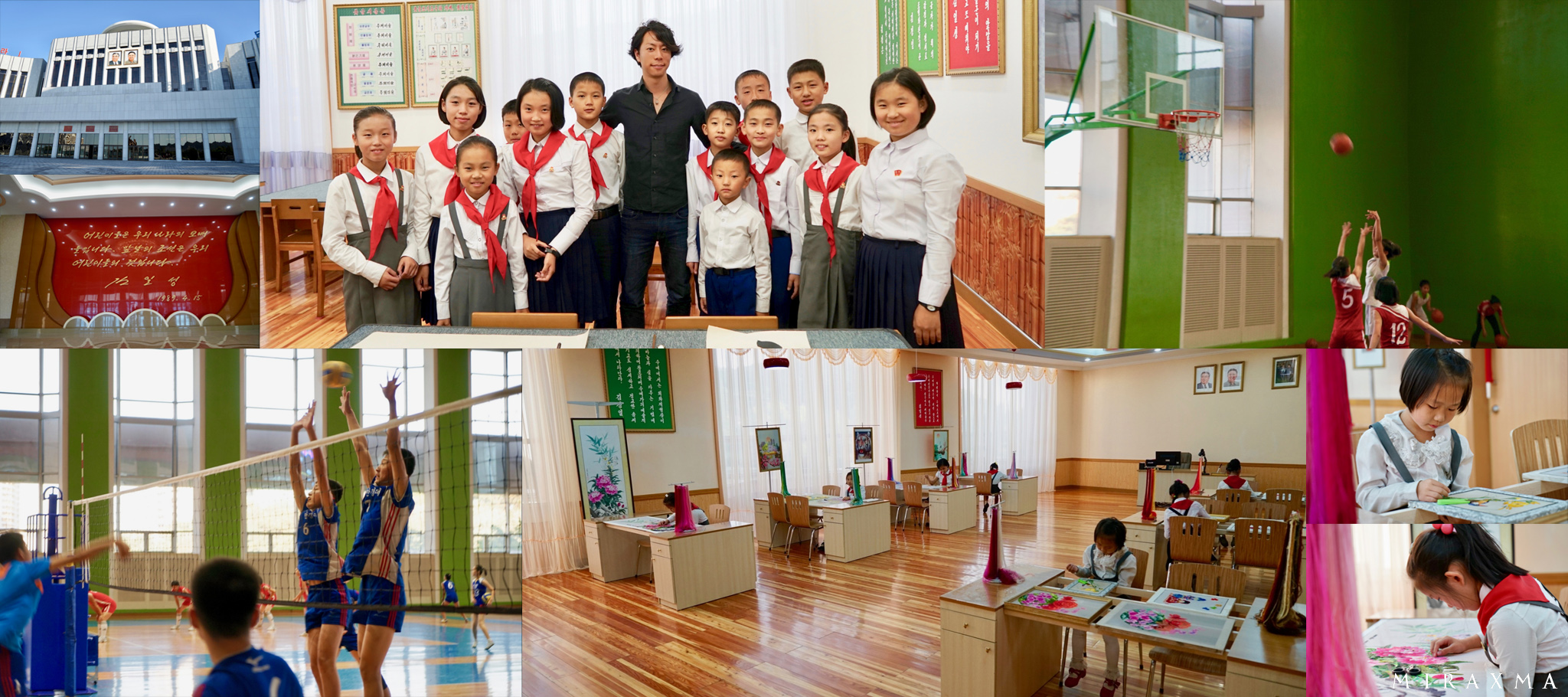
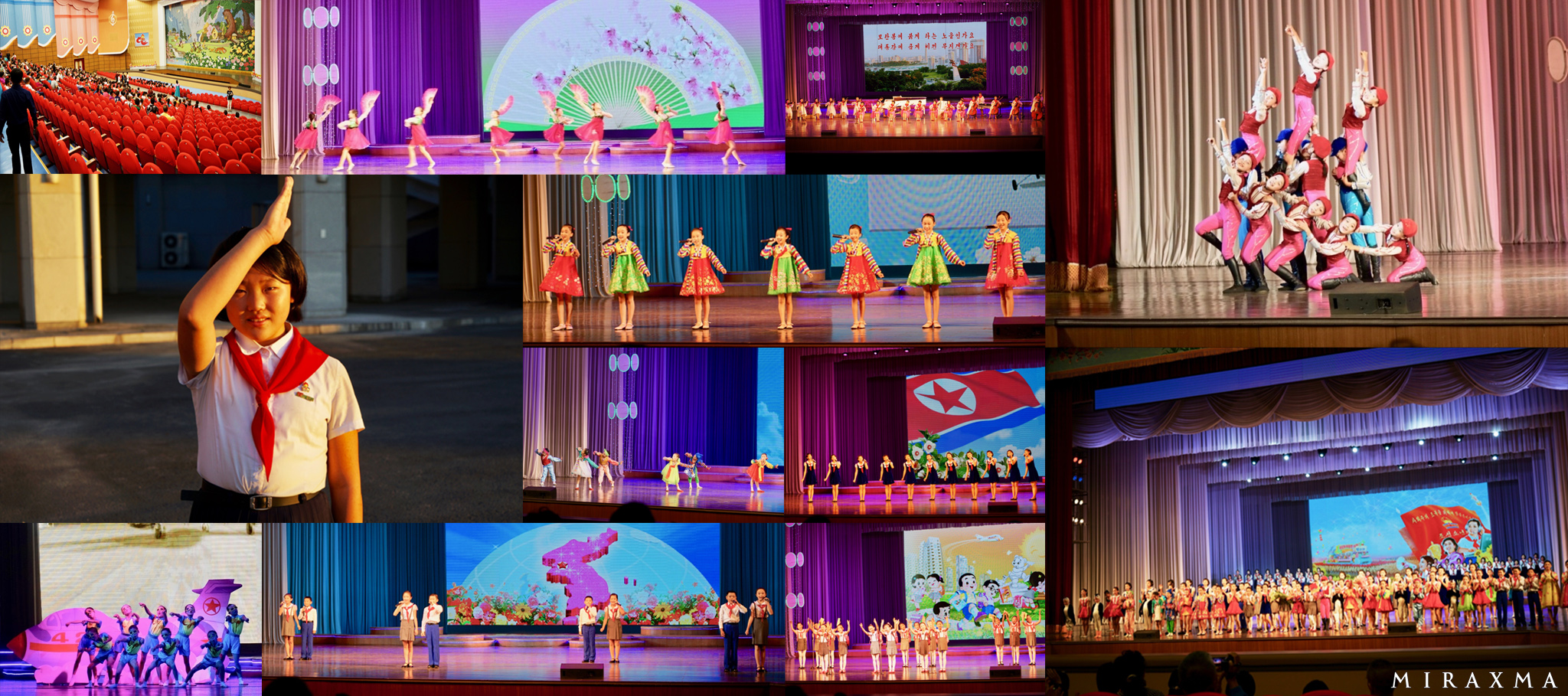
In a day, thousands of young students participate in several extracurricular activities and study fields that correspond to their dreams and talents. The building’s exterior is built to represent arms that spread out to embrace the children in warmth. Inside of the building, there are several hundred clubrooms, pools, gymnasiums and so on. From time to time, they seem to scout children and put them in an education program for half a year to develop their talents.

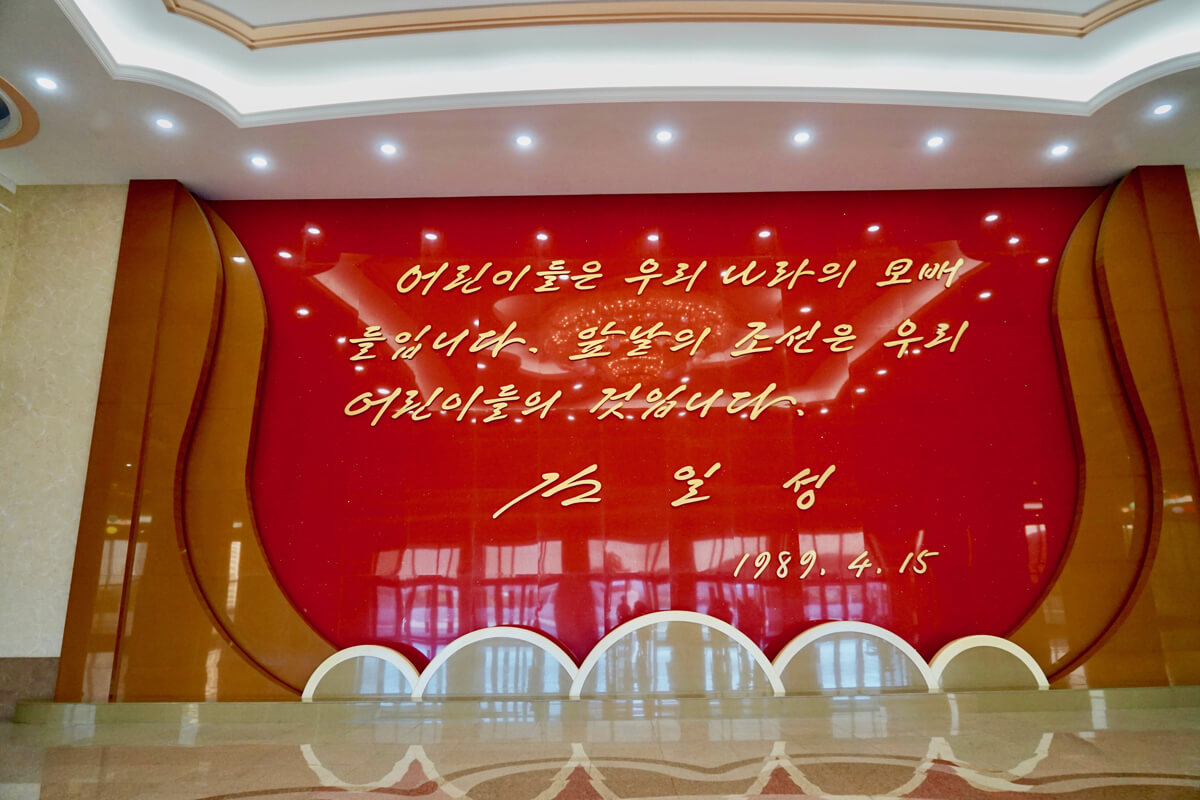
It says “Children are our country’s treasure. The future of Korea is in our children’s hands. Kim Il-sung”

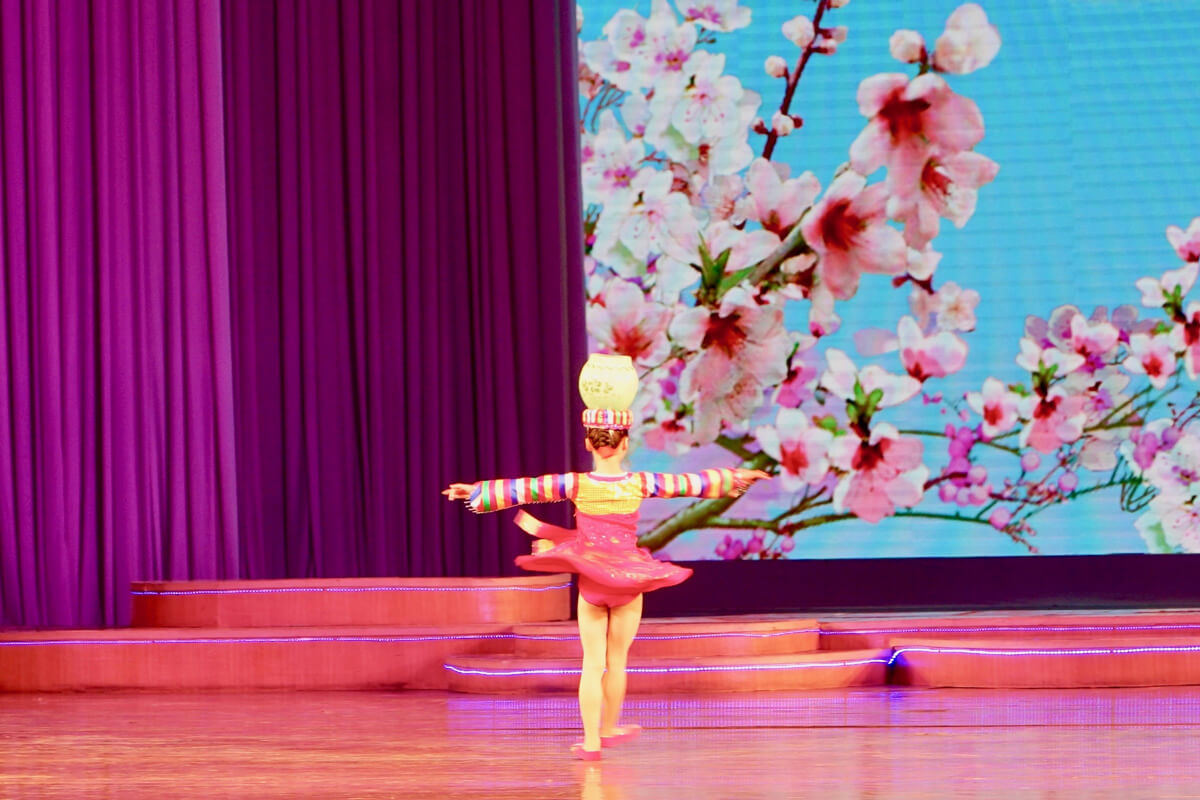
I’ve never seen a child carry and rotate a pot on their head until now.

It seems people are capable of anything.

Video
Video

The unity and musical performance of the children, which was conducted for an hour, was truly magnificent. We now live in an age where we can learn so much from children. By knowing that you need to pay respect to those above and below you, you can always remain on the path to growth.

By getting rid of your blind spots, you can open yourself up to more information and let it enter your mind.

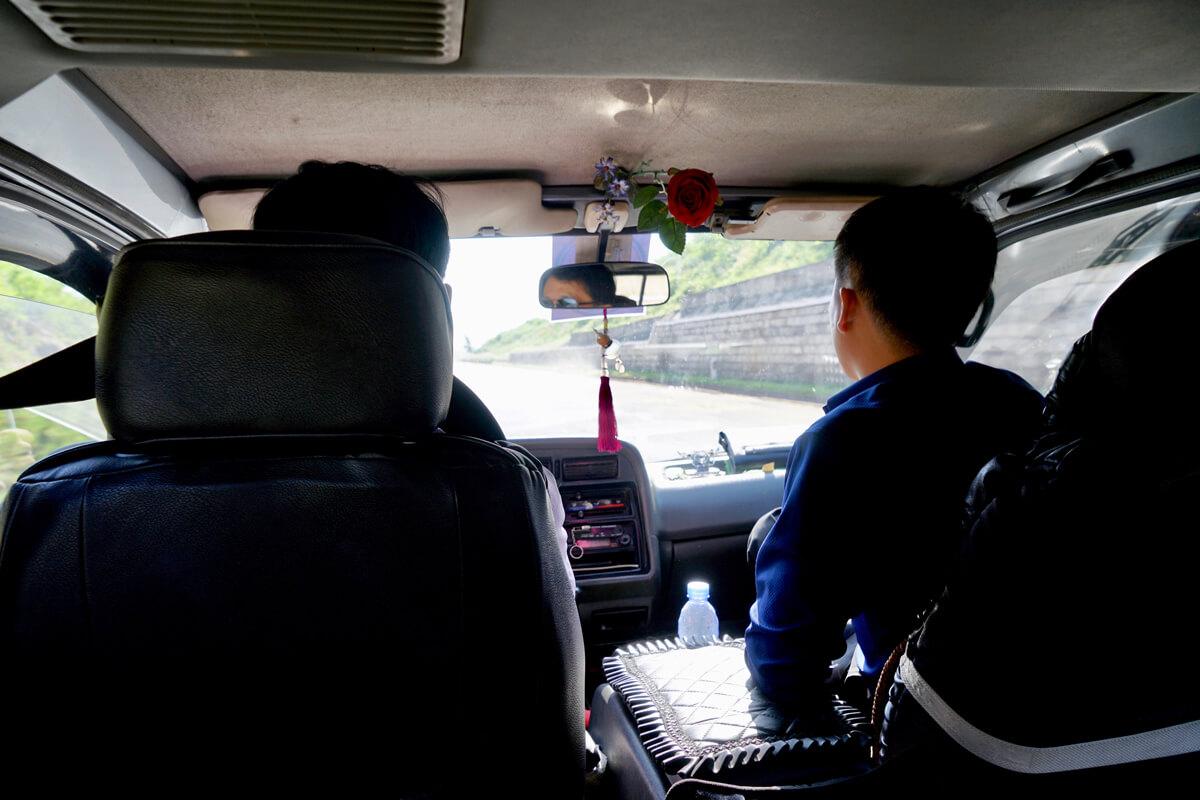
We drove to a restaurant for dinner.

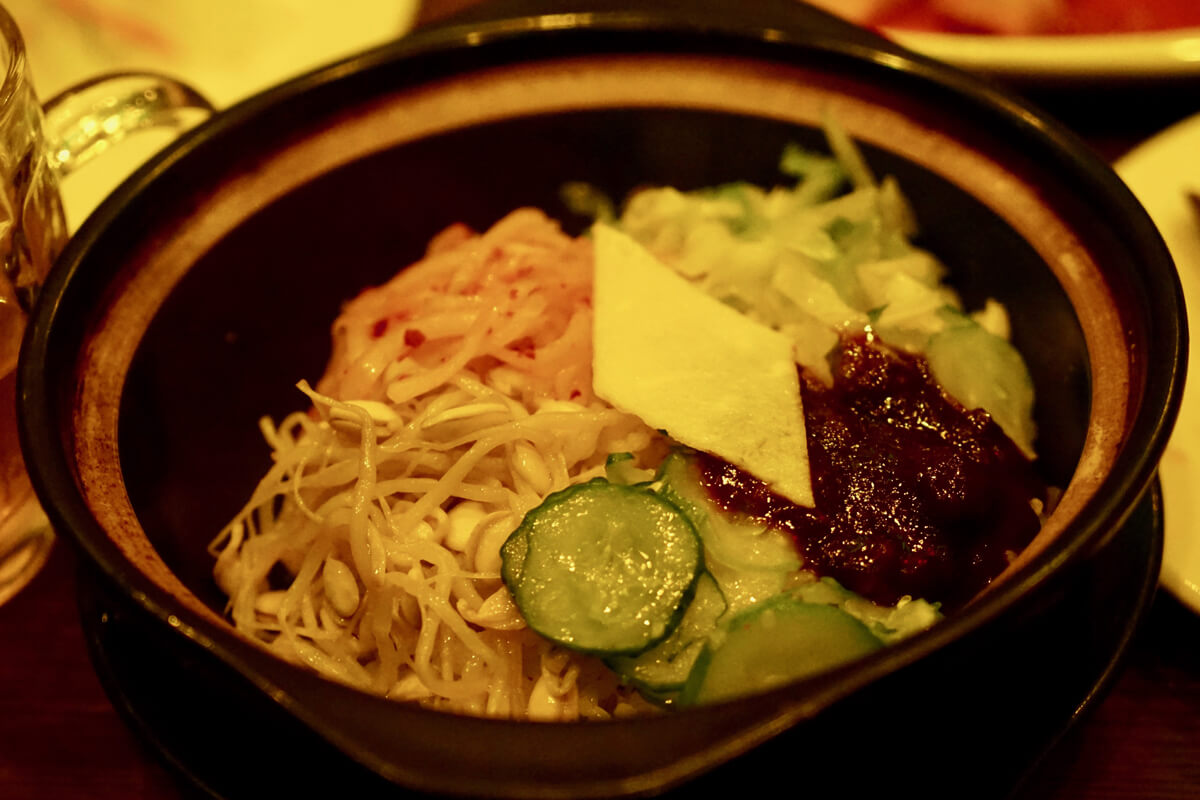
Pyongyang’s specialty is stone-roasted Bibimbap.
I was very fortunate to enjoy this authentic cuisine at a place that makes it locally.
It goes without saying that this kind of opportunity would usually be hard to come by.
I will leave the taste to your imagination.

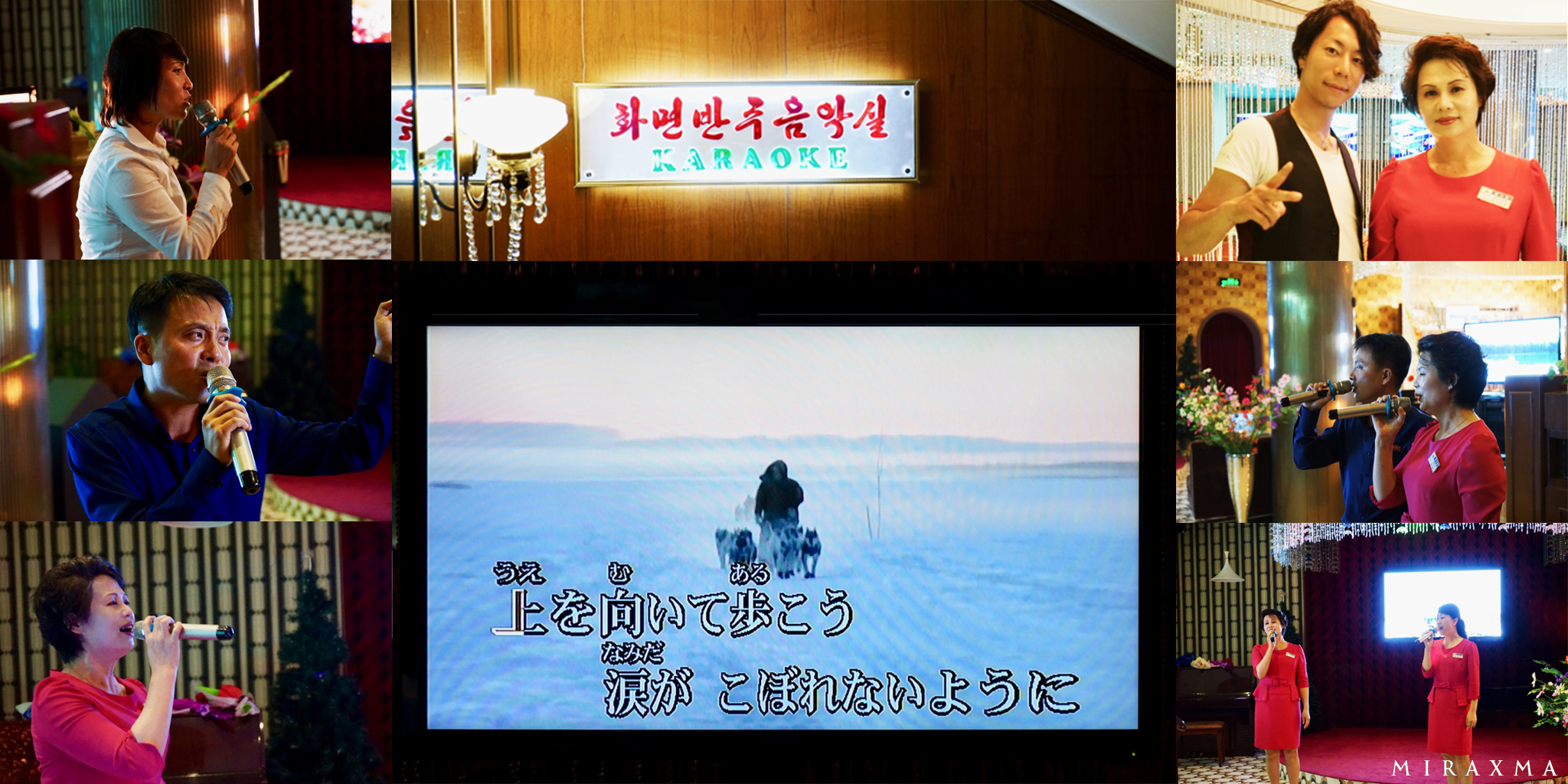
Karaoke 1F Underground (Koryo Hotel)

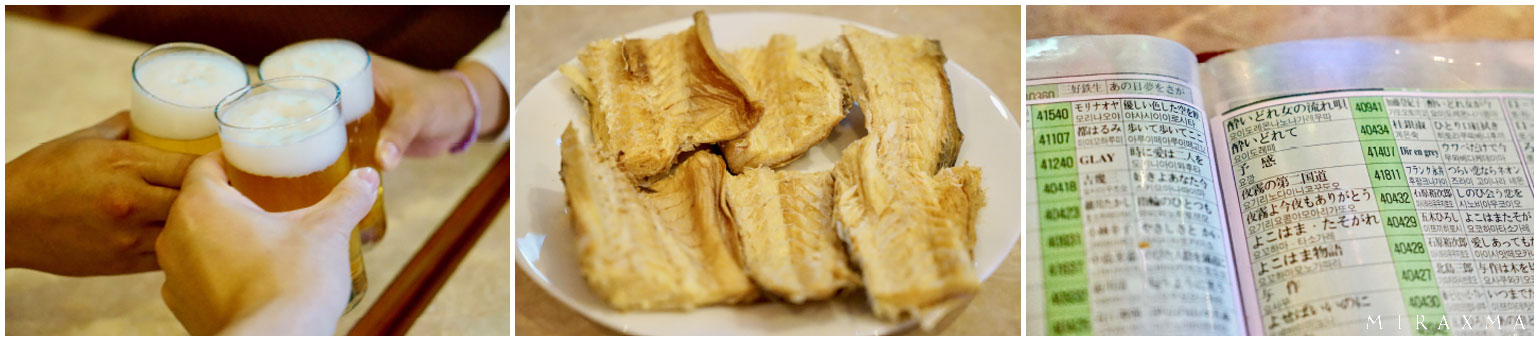
Once we finished eating, we went to the karaoke located in the Koryo hotel’s basement. The two guides who were with me so attentively listened to my selfish requests that I just had to show them my gratitude by having a drink together.

The karaoke’s female owner came in and started singing Kyu Sakamoto’s “Sukiyaki”. We all joined in with them. This song is usually sung here by one man that has never given up on creating a dialogue between DPRK and Japan. We sang this song as we all thought of the meaning behind the lyrics. And as I looked around, I saw the guide, who sang full of love for Japanese music, and the female owners, who were dancing and singing along. A thought crossed my mind — the emotions that this kind of song contains have the power to reach other people’s hearts and make the world a peaceful place.

That night passed and morning came — the clock showed 07:40 AM.

On this day, we headed for Panmunjom, i.e., the DMZ.

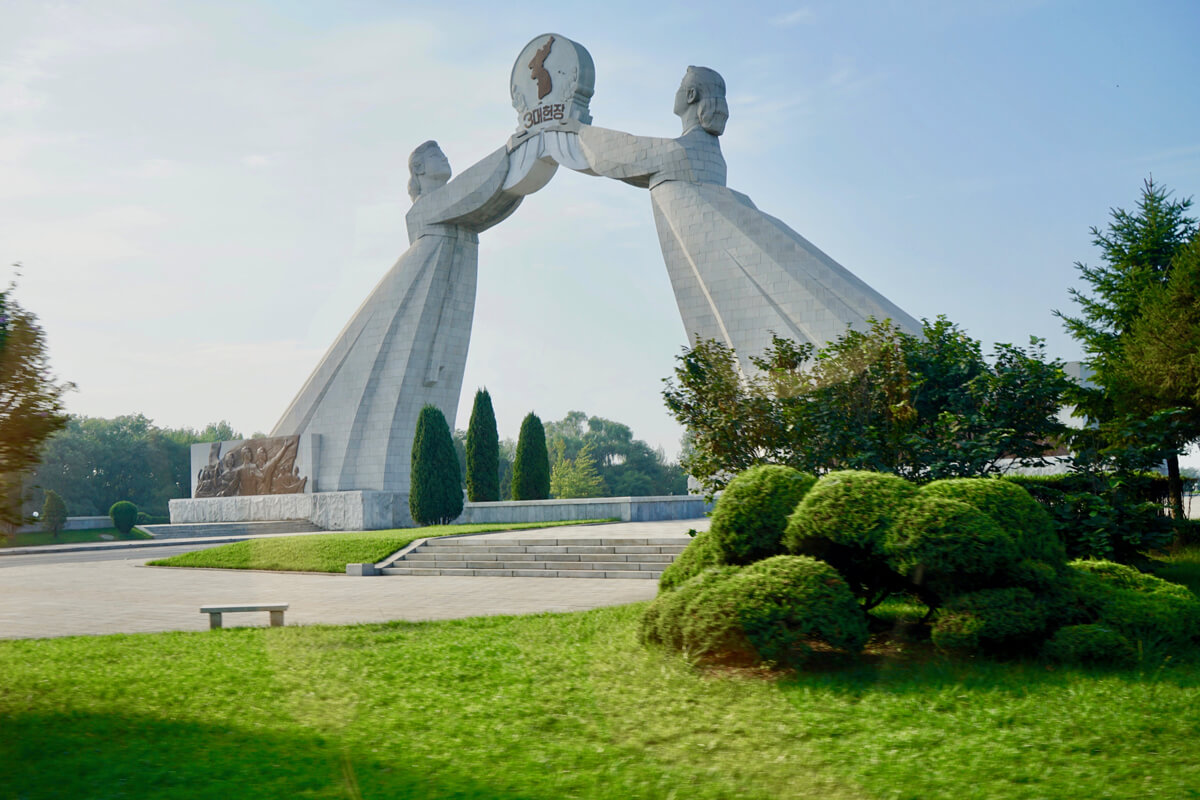
Arch of Reunification -Aug, 2001-

Standing at the entrance to Pyongyang’s Reunification Highway, we could see a sculptural arch of two women, symbolizing the North and the South, holding up a sphere that has the emblem of the Three Charters; the three principles of national reunification.

Pyongyang Reunification Highway -completed in Apr. 12th, 1992-

Let’s see what the road there was like in this video.

video

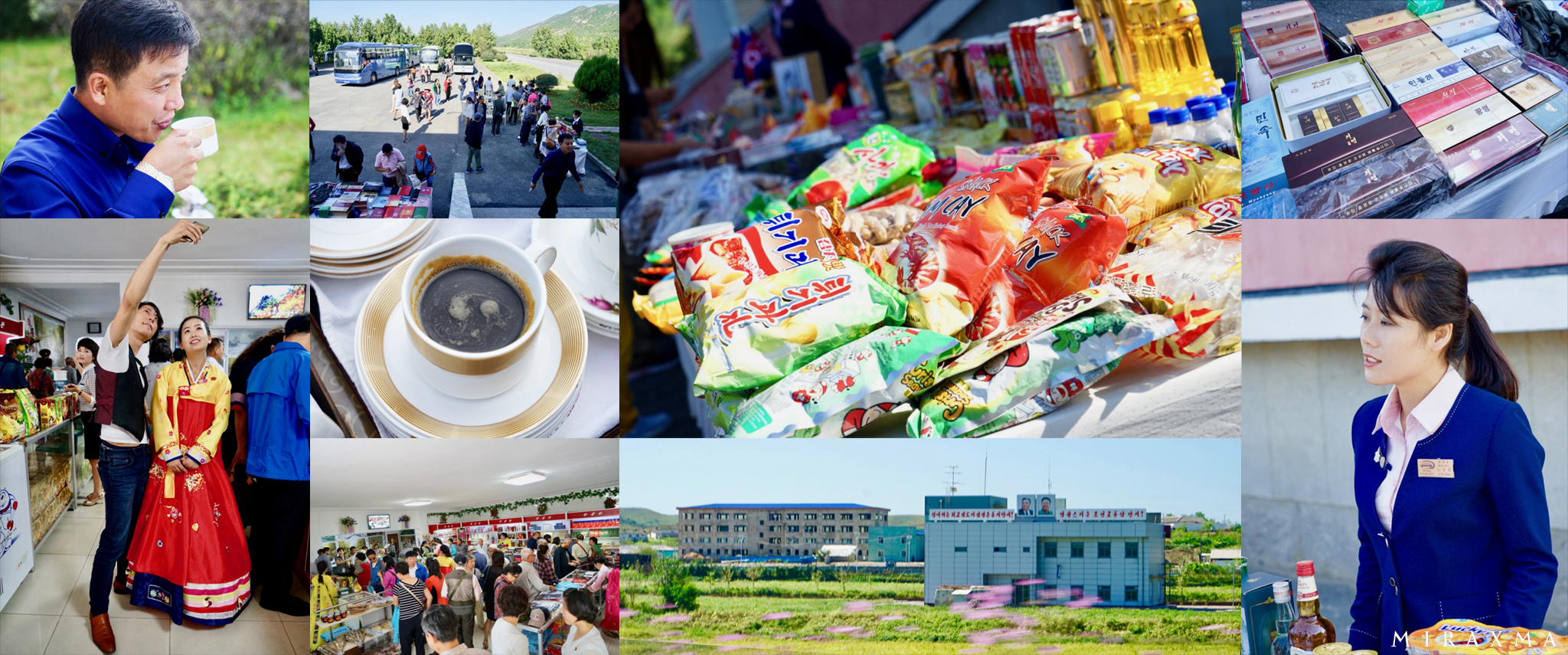
On our way there, we pulled over to a rest area and drank some delicious coffee.

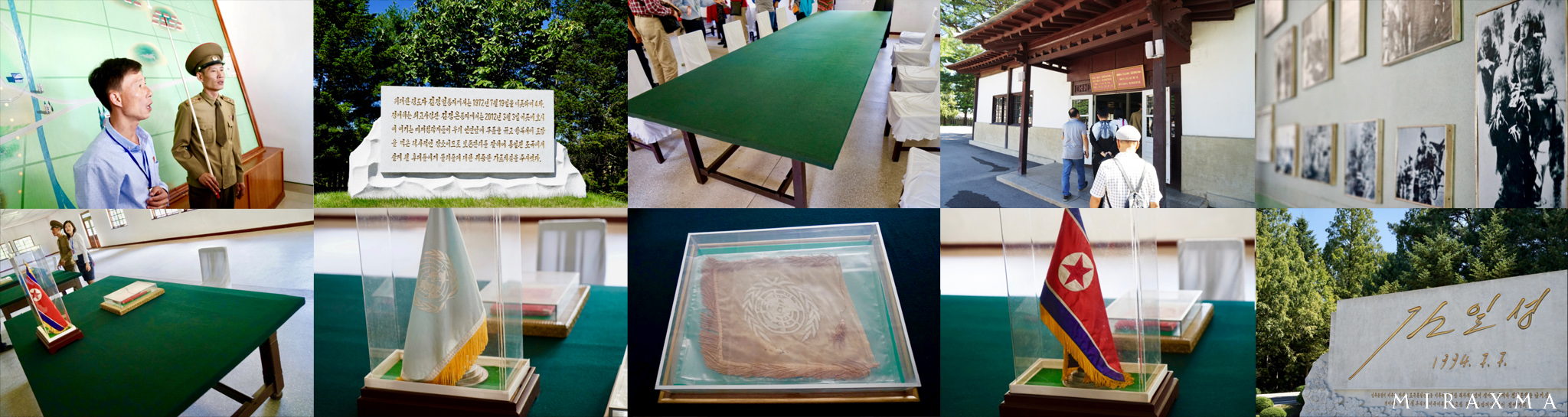
The place where Korean Armistice Agreement was signed

On Jun. 25th, 1950 (Sun) the Korean war broke out.
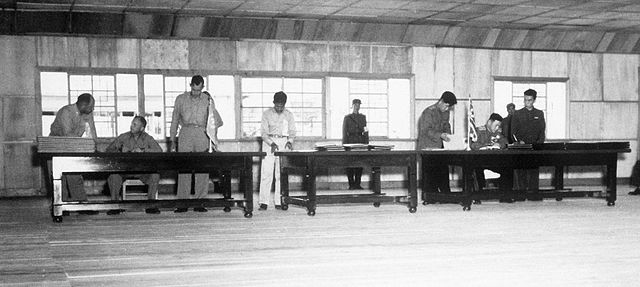
On Jul. 27th, 1953 (Mon) at 10 in the morning the Korean armistice agreement was signed.
In the contents, it says that the agreement is “to ensure a complete cessation of hostilities and of all acts of armed force in Korea until a final peaceful settlement is achieved”. However, no “final peaceful agreement” has been reached thus far. Also, the president of South Korea at that time, Syngman Rhee, and Kim Il-sung were both in agreement about reunifying the South and the North, but due to factors such as the considerable number of casualties, there has been no progress in ceasefire negotiations.

This is a photo from that time. We can see the representatives of both armies signing the armistice agreement at Panmunjom.

(Quoted from Wikipedia)
-catalog from an anonymous person
American lieutenant general : William Harrison Jr.
Korean army general : Nam Il
Commander-in-Chief of the United Nations Command : Mark Wayne Clark
Chinese People’s Volunteer army official : Peng Dehuai
Supreme Commander of the Korean People’s Army : Kim Il-sung

Panmunjom -Oct. 25th, 1951 (Thu)-

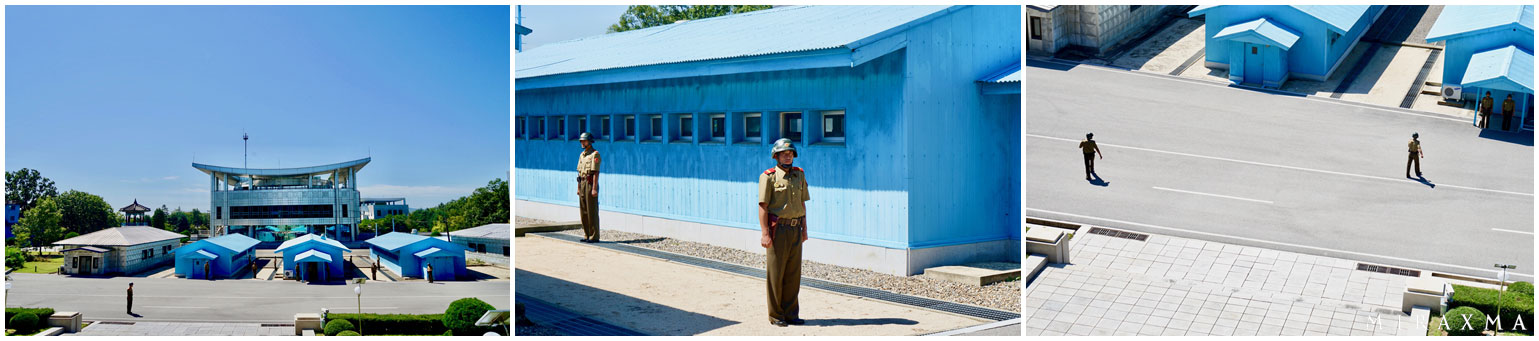
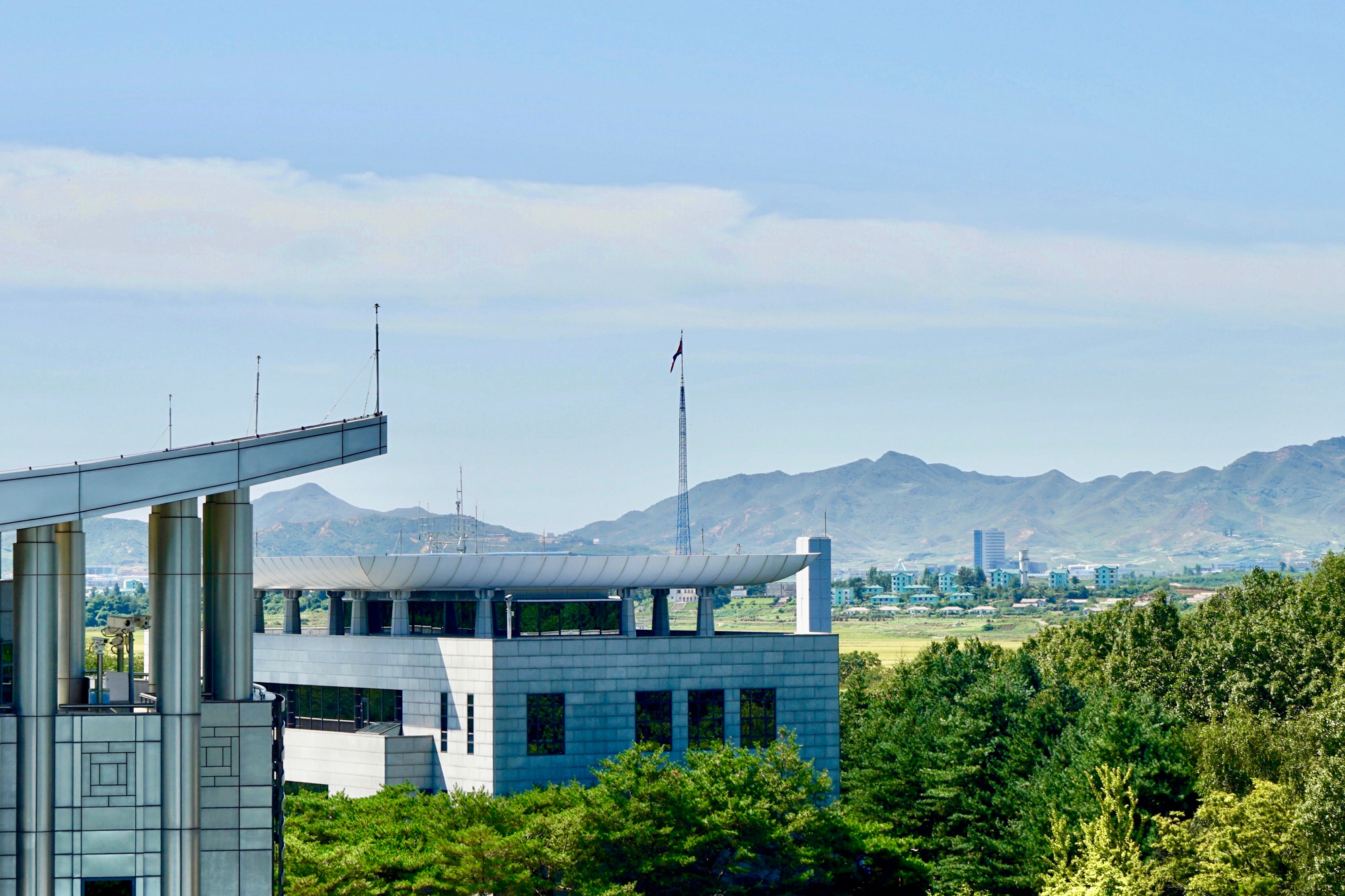
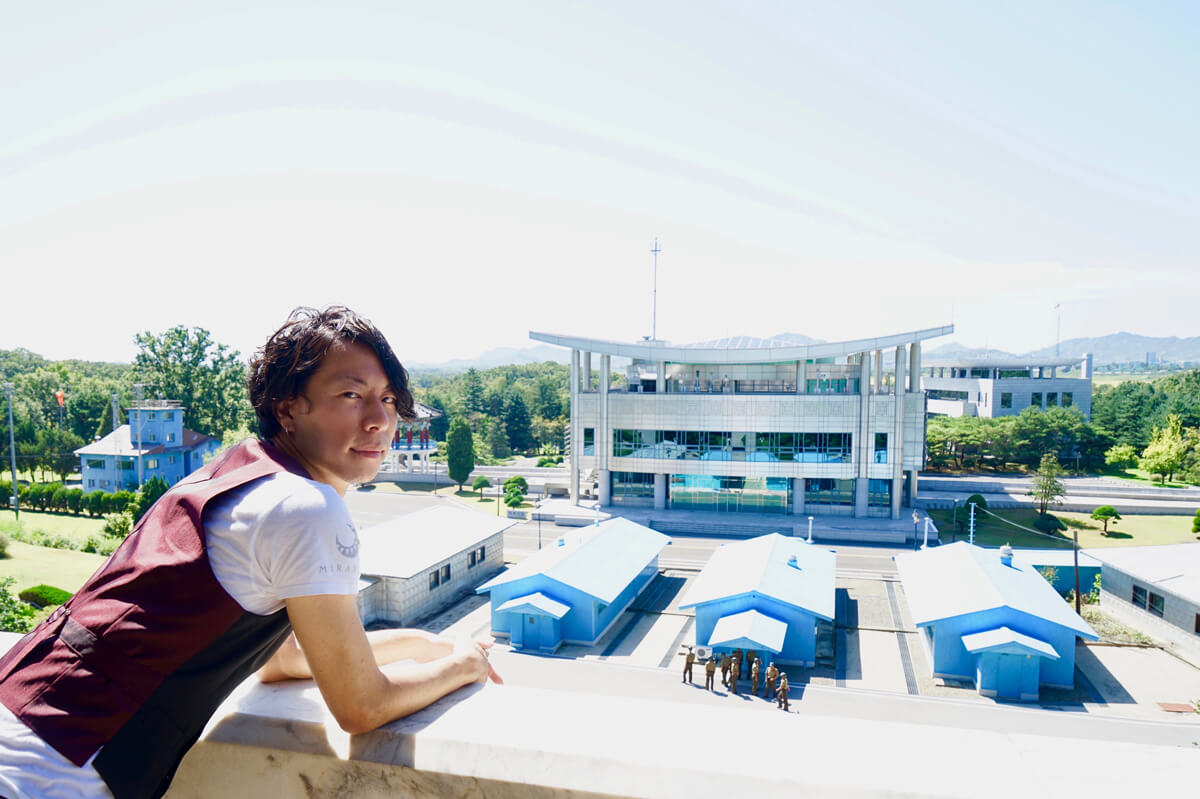
Panmunjom is vital ground that symbolizes the divide between the Koreas. From Kaesong it is 8㎞ to the Southeast, to Seoul it is 70㎞. Originally, it was just a village on the road between Kaesong and Seoul, but it became famous ever since the negotiations for ceasefire started there. Since 1953, many institutions were established in the Korean Demilitarized Zone such as the Neutral Nations Supervisory Commission and the Military Armistice Commission. A DPRK soldier stands on the DPRK side and a South Korean one stands on the South side. On the DPRK side there is the “Panmungak Pavilion” and “Tongilgak”, and on the South Korean side they have “Freedom House” and “Peace House.”

38th Parallel North -Aug. 15th, 1945 (Wed)-

The 38th Parallel North is a line that was originally established as a boundary between American and Soviet occupation zones after the end of World War II. It now serves to divide the South and the North. Therefore, the South part (South Korea) and Western countries took on capitalism, while the North part (DPRK) took on socialism from the Soviet Union.

After spending some time in Panmunjom, we moved on to Sungkyunkwan.

Sungkyunkwan (World Heritage Site)

992: Guozijian, an institution of the foremost education, was established.
1308: Several buildings including Taiseiden were established. It was renamed to “Sungkyunkwan”.
1592 - 1598: Japanese invasions of Korea
NOTE: It was a war of aggression waged by the Koreans in retaliation against Japanese invaders.
1602: Buildings that were destroyed by Japanese invasions were restored.

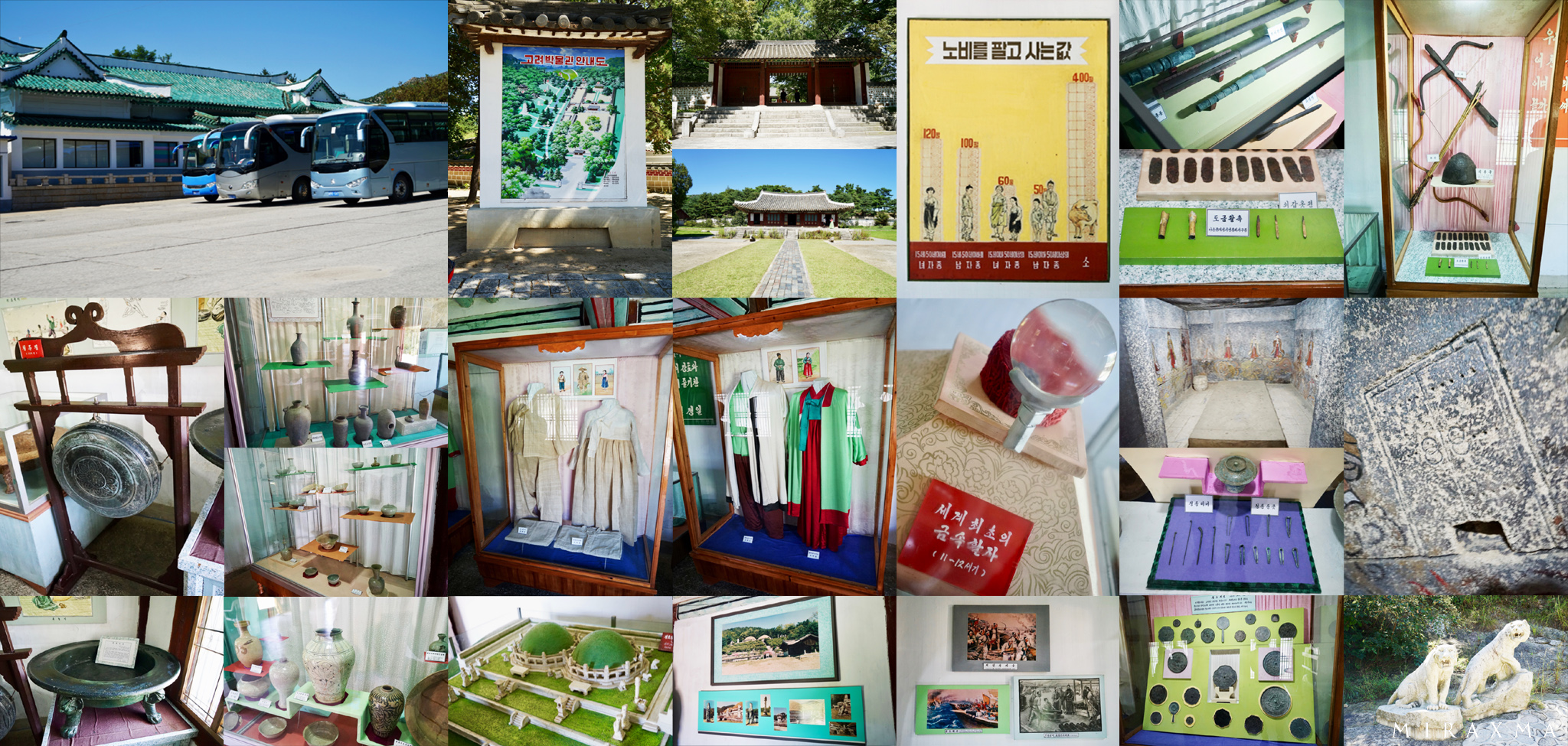
Sungkyunkwan was not just a place for teaching the Yangban children feudal Confucian doctrines or training public servants in an education institution, but also for performing rituals to worship renowned Confucianists. The site has over 20 buildings that, besides a few exceptions, all face North and South. Koryo museum has over 1,000 items of historical relics and material that are on display. In the front yard, there is a Ginkgo and a Zelkova tree that has tree rings which date back to more than 1,000 years ago.

Sonjuk Bridge (World heritage site) -A small stone bridge built in 1216-

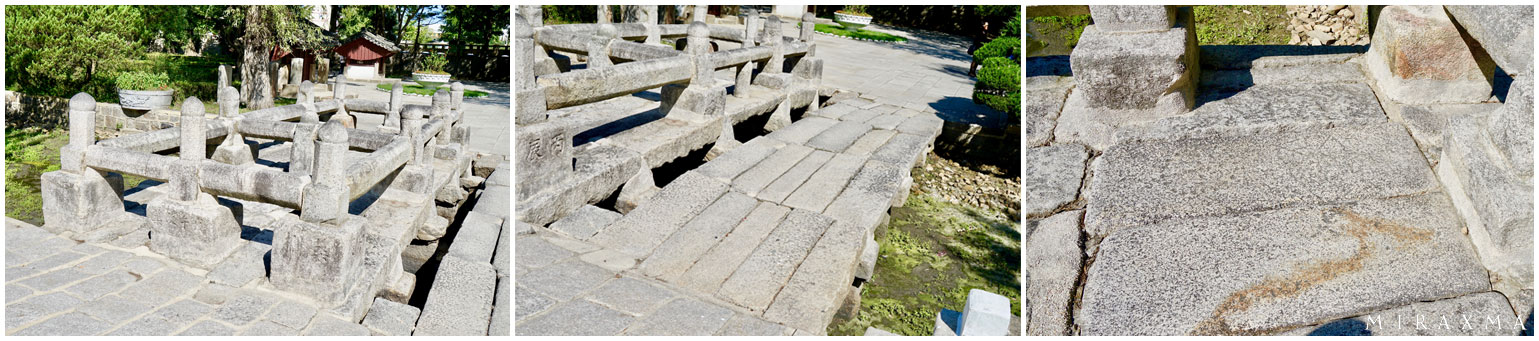
1392 (End of Koryo): This was the place where Jeong Mong-ju was murdered by the Koryo dynasty loyal subjects of the Yi Seong-gye party. It was first called Senchipashi (The chosen bridge) but because it was said that bamboo started growing where Jeong Mong-ju’s blood was spilled, it instead started to be called Sonjuk bridge(The bridge of virtuous bamboo).
1780: Chon Hoin, who is a descendant of Jeong Mong-ju, cherished the memory of the deceased by fencing off the bridge in stone and putting up another stone bridge on the side. 

War memorial monument -1740(left photo) 1872(right photo)-

This is a stone monument that was built with the intention of instilling disciples with devotion towards the Joseon dynasty like Jeong Mong-ju did during the Koryo dynasty.

Stamp shop (In front of Sungkyunkwan)

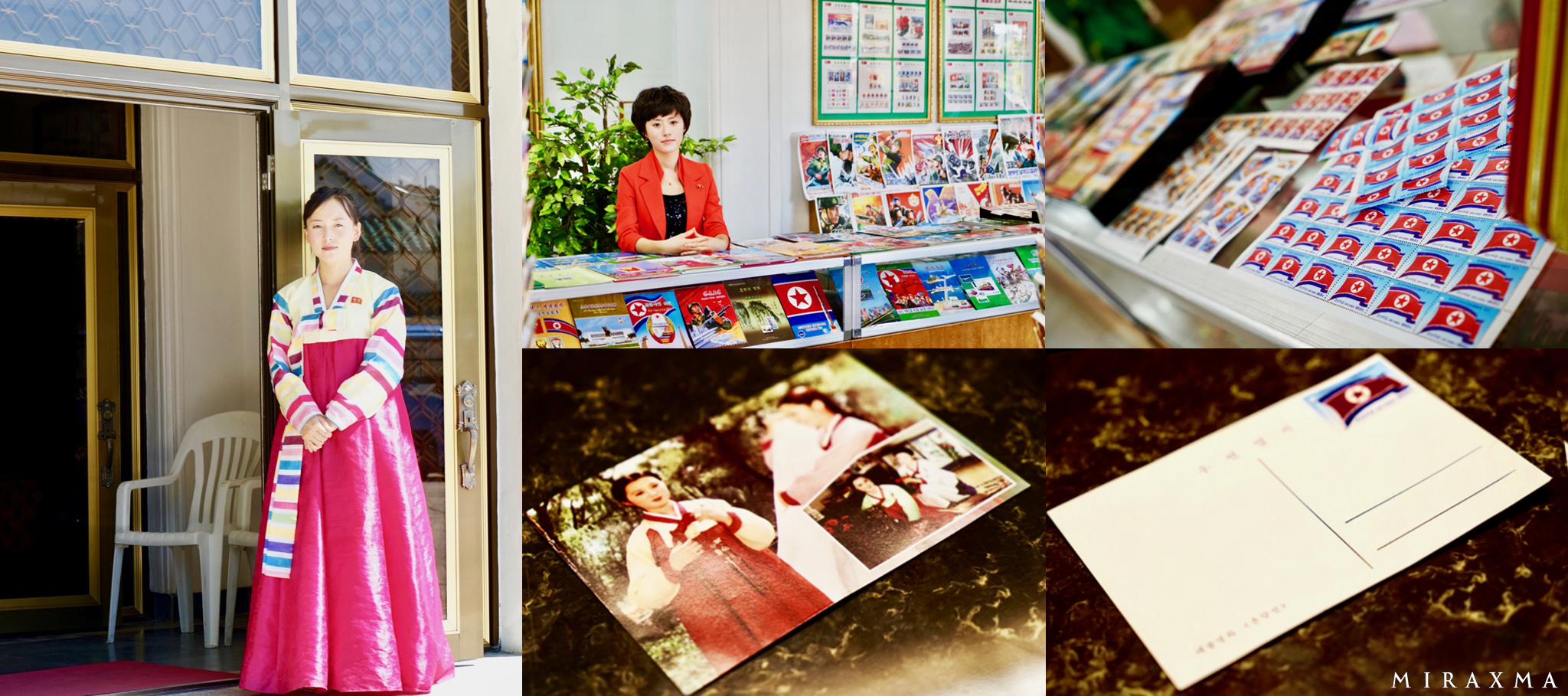
I bought here a postcard that I can send to my address in Japan. I can send it out from the post office on the first floor of the hotel.

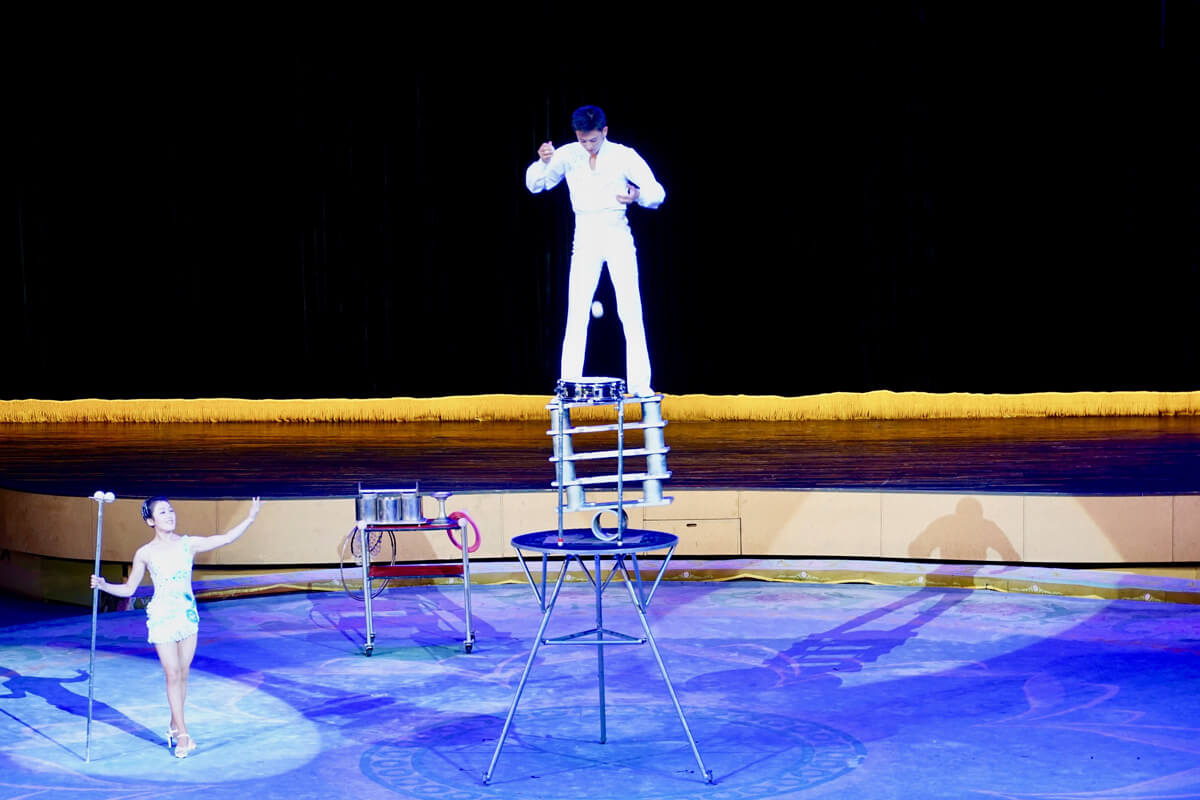
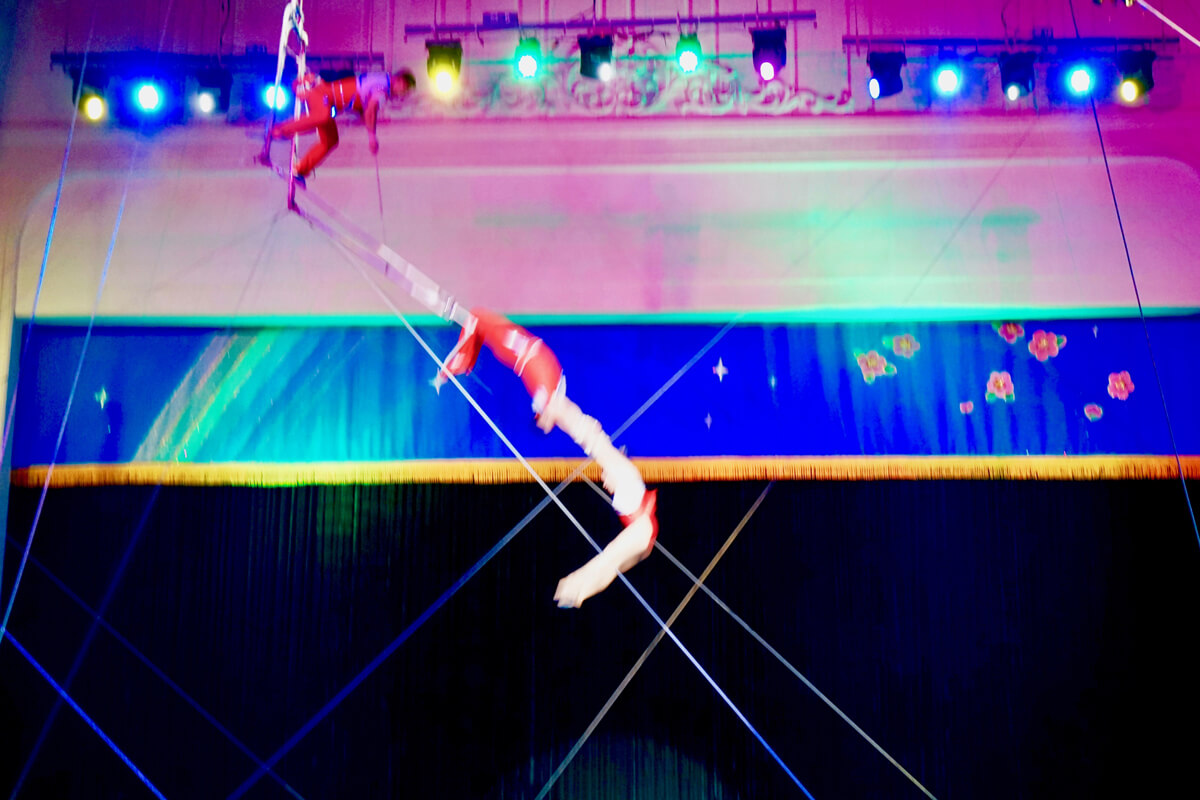
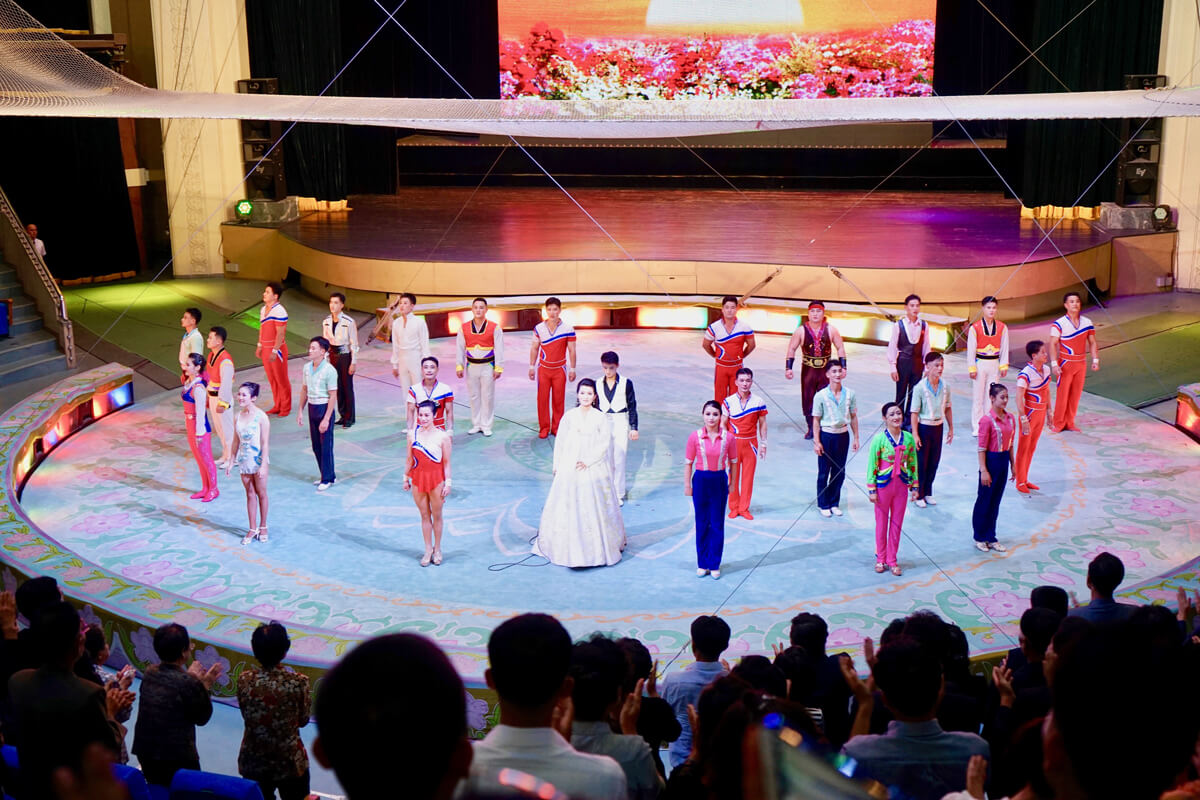
Pyongyang circus -Opened in 2002-

It is located along the Kofuku street in Mangyongdae district. There are enough seats for 3,500 people.
I can’t believe that I went to a circus for the first time abroad! It left me speechless with emotion. They offer tickets for 3,000 yen on site.

Video

DPRK beauties

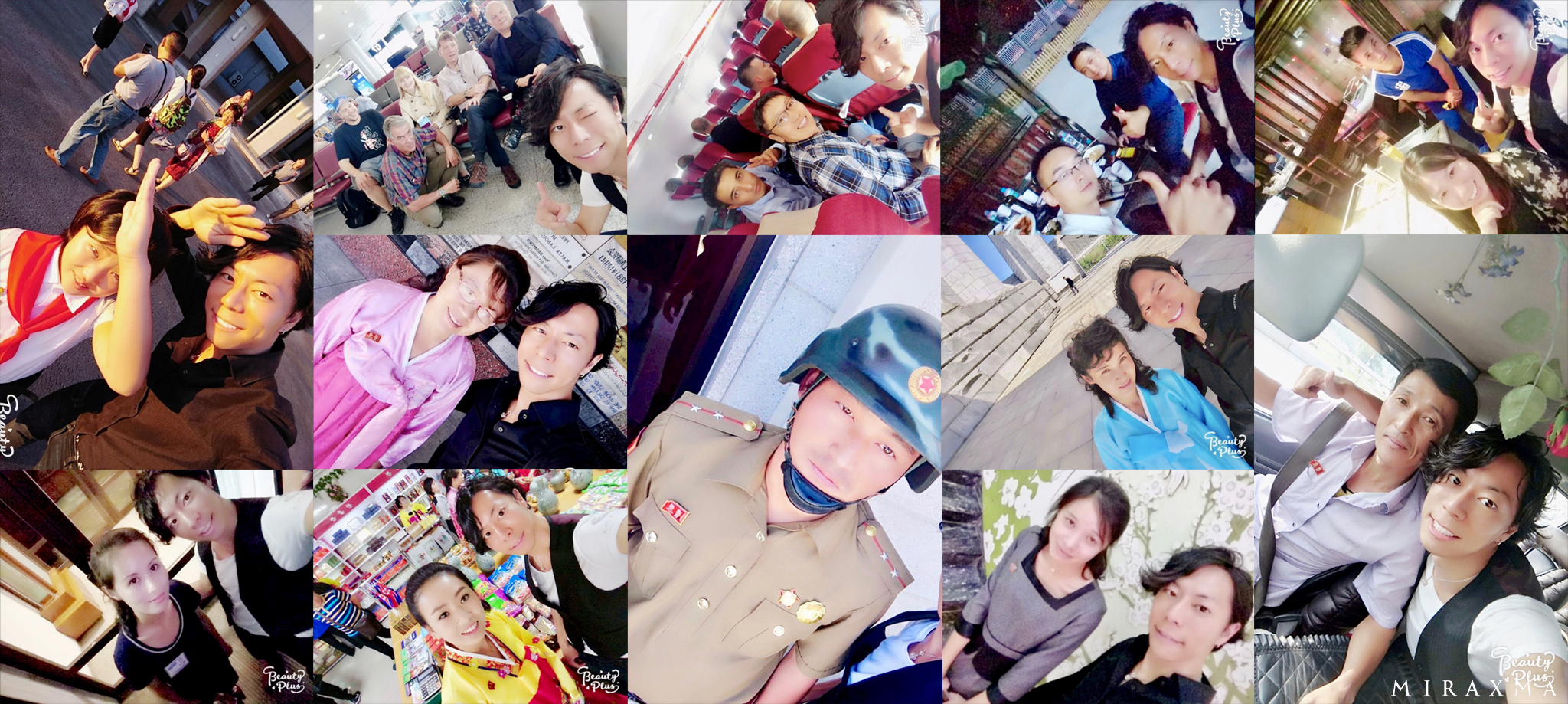
If I were to put it into categories, I’d probably say that in order from the left we have the “Pure kind of beauty”, “Athletic beauty”, “Showa Idol beauty”, “Girl-next-door beauty”, and “Mysterious beauty”.

NOTE: These women are the local guides and store staff.

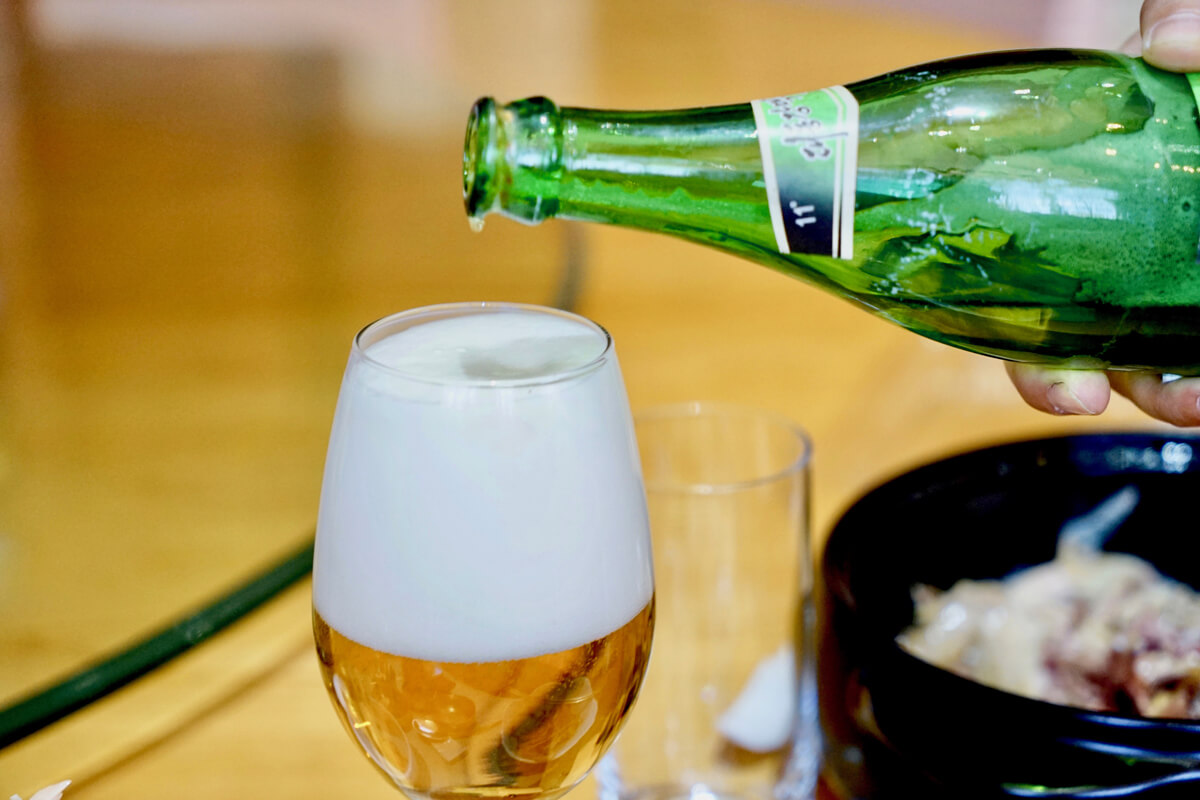
This is the beer that the “Mysterious beauty” poured for me.
The beer and the foam ratio was 5:5. Going through all that foam made me excited for the taste.

Cuisine of DPRK

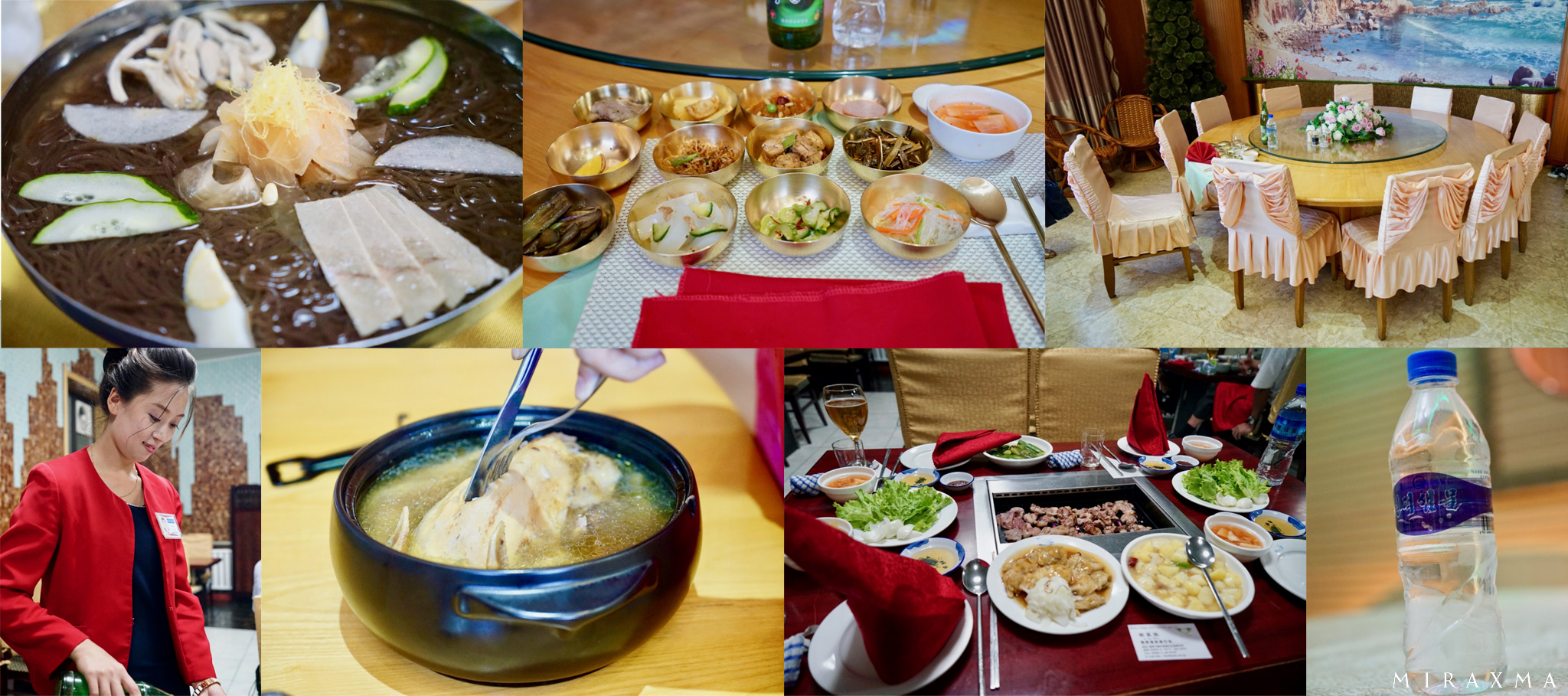
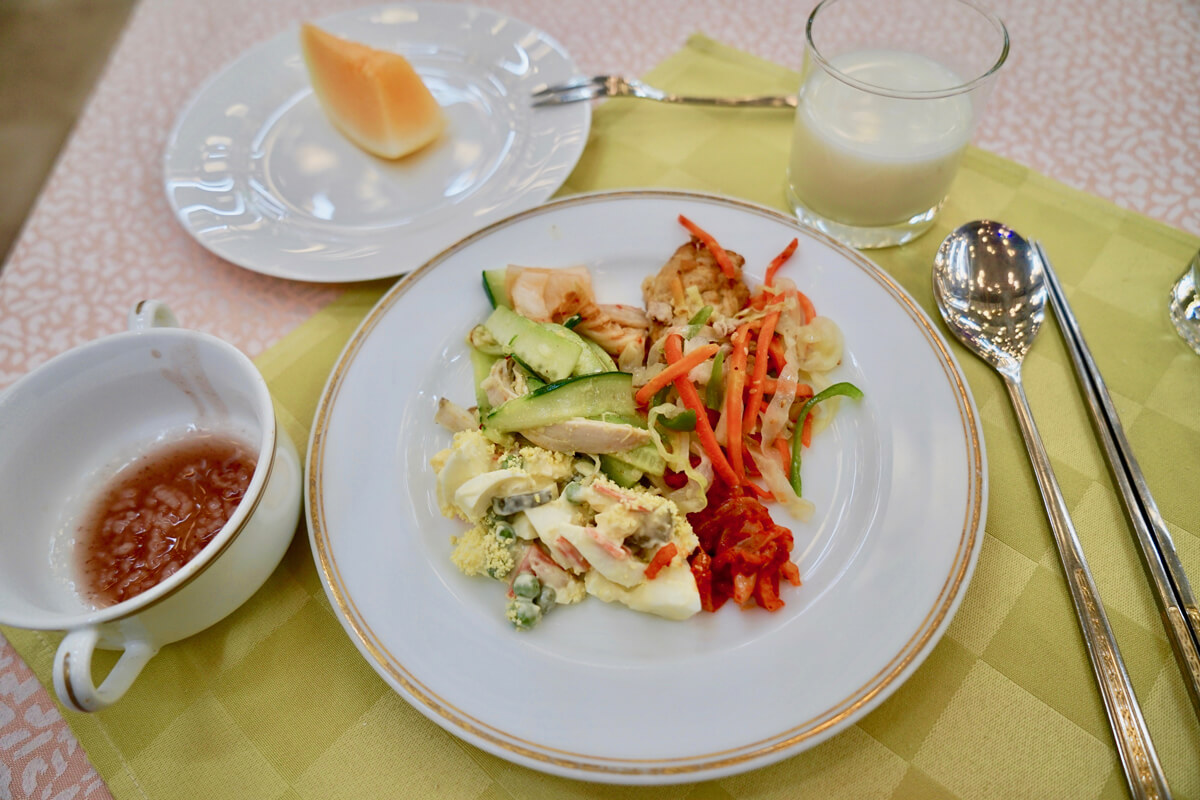
Foods such as cold noodles from the Korean peninsula, Samgyetang, and duck meat are popular. Samgyetang contains stewed ingredients such as chicken, Koryo carrots, shiitake mushrooms, glutinous rice, and so on. These foods are highly nutritious. You can eat it for 3000 yen (tourist price). They also serve other things such as medicinal cooking (based on traditional Chinese medicine), Bosistang cuisine, nutritious foods, and so on.

I always finish my meals, but sometimes when the people saw my finished plate, they would even say “We’re sorry for not being able to prepare enough food for you”. Also, even if you ask Koreans about what they like or dislike in some people, they will reply in a sophisticated manner. For example, they will say “I think that person is warm” or “I think they are cold”. Even when it comes to other countries, they won’t, for example, use their personal opinion to make another country look bad. This also rings true when it comes to trusting others — they believe that actions speak louder than words. That’s the kind of realistic approach I felt from them in our conversations.
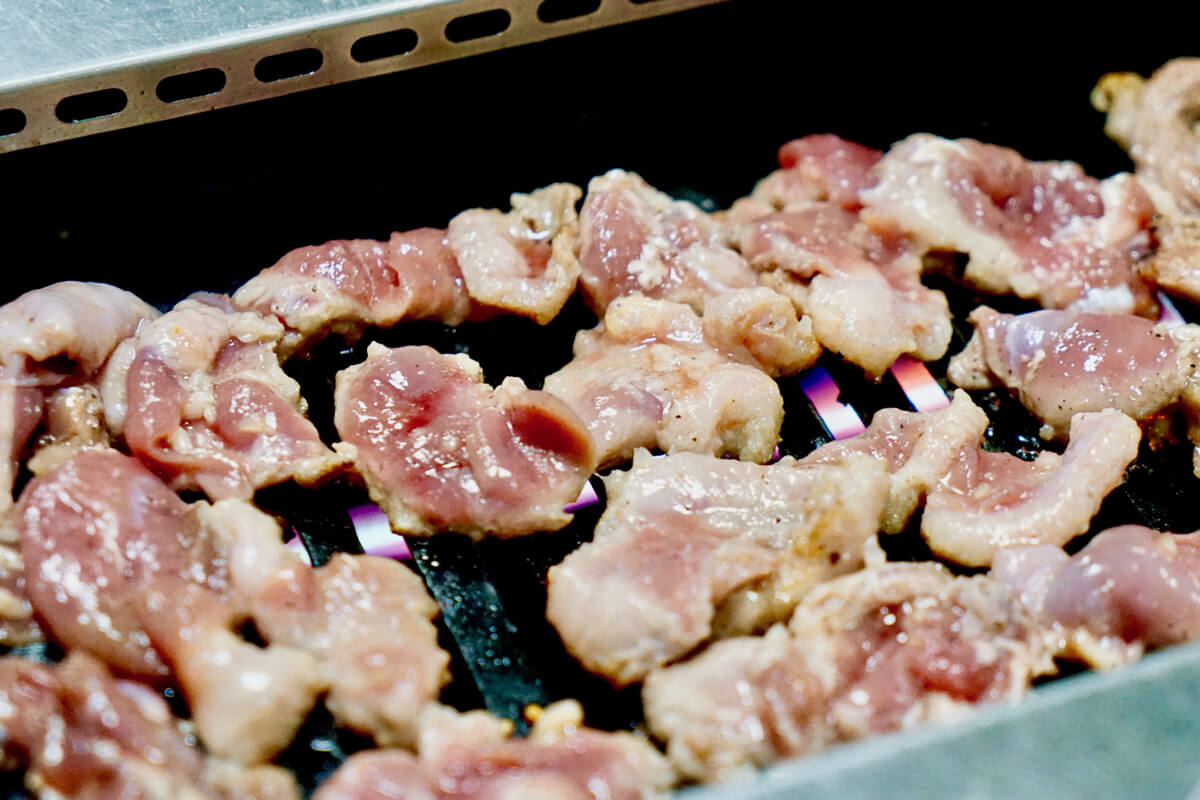
The last dinner I had in Pyongyang was “grilled duck”. Meat from ducks that usually inhabit the waterside has a great texture — the more you chew on it the sweeter and juicier it gets! Well, you can now say that I’m crazy for duck meat.

Snacks of DPRK

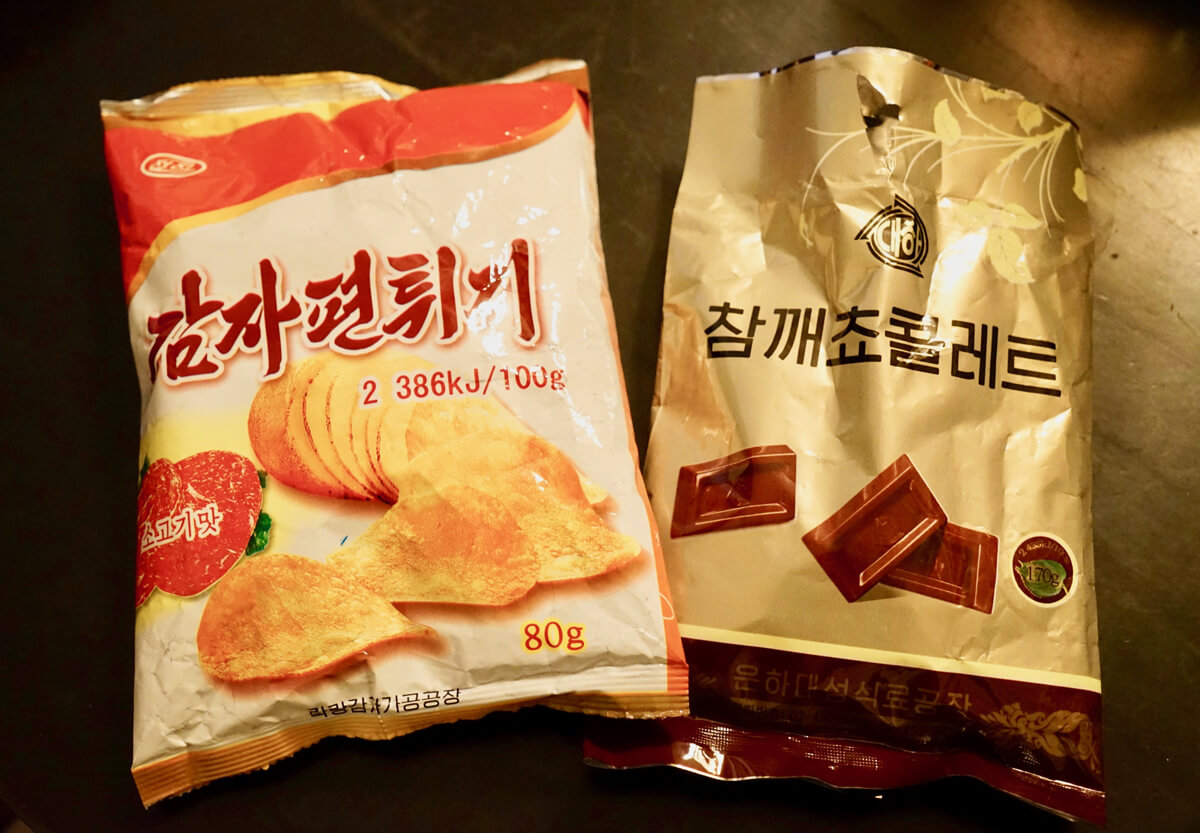
This is a photo of some snacks that I bought at a supermarket in Pyongyang. Unfortunately, they didn’t allow me to take a photo inside, but basically, the first floor had groceries and the second floor sold things such as clothing and electronics. The product on the left - at least from how I took the taste - was like potato chips, mixed with ingredients like salt, vegetable oil, beef flavoring, and so on. The taste overall was light.

The 3 nights and 4 days went by in a blink of an eye. What surprised me was not by any means the feeling of threat, but rather the manners, duty and empathy that I saw from the locals.

On this day I went back to the hotel and prepared for my return to Japan the next day and went to bed.

Sep. 15th, 2017 (Fri) Korea 06:02 | Japan 06:32

25 minutes before the missile launch...

Most people in DPRK had no idea just how quickly the situation had changed.
Just as both people in DPRK and Japan woke up, coincidentally, as I was taking a photo of the sunrise, the preparations for launching the missile had already started.

2 minutes before the missile launch...

06:25 | 06:55 -Breakfast in Pyongyang-
I found out that the missile was launched at exactly this time while I was on my way to Beijing International Airport.
I went back and clarified the time in all of the photos. Only a few select people in DPRK could have known about it. Most would likely doubt that the missile had even been launched from their country.

06:27 | 06:57 The missile is launched (from a district neighboring Pyongyang called Sunan)
06:31 | 07:01 The J-alarm went off
06:34 | 07:04 The missile flew across Hokkaido

06:39 | 07:09 I left the hotel

06:46 | 07:16
The missile landed in the Pacific Ocean some 2,200㎞ east of the northern island's Cape Erimo.
Reaching a height of 800㎞, it traveled 3,700㎞ in total.
The distance between DPRK and Guam is 3,400㎞.

07:00 | 07:30 (Inside the train headed for the airport)
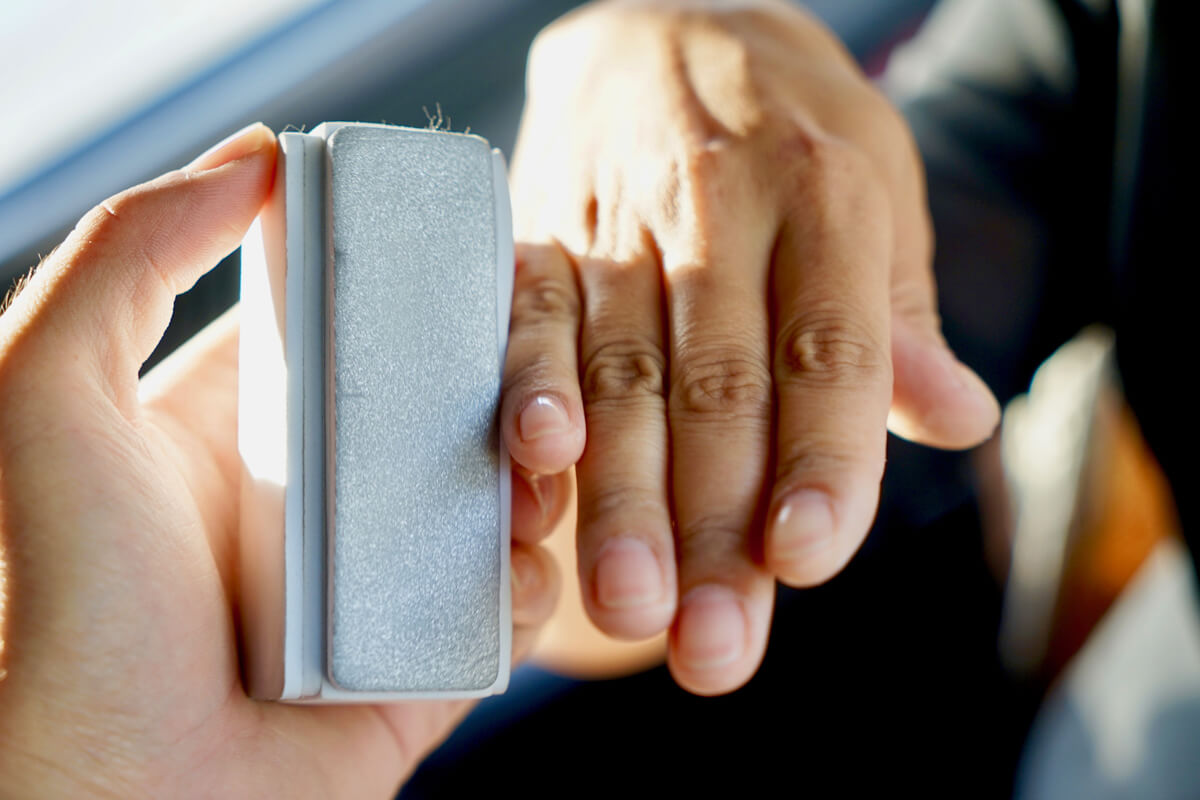
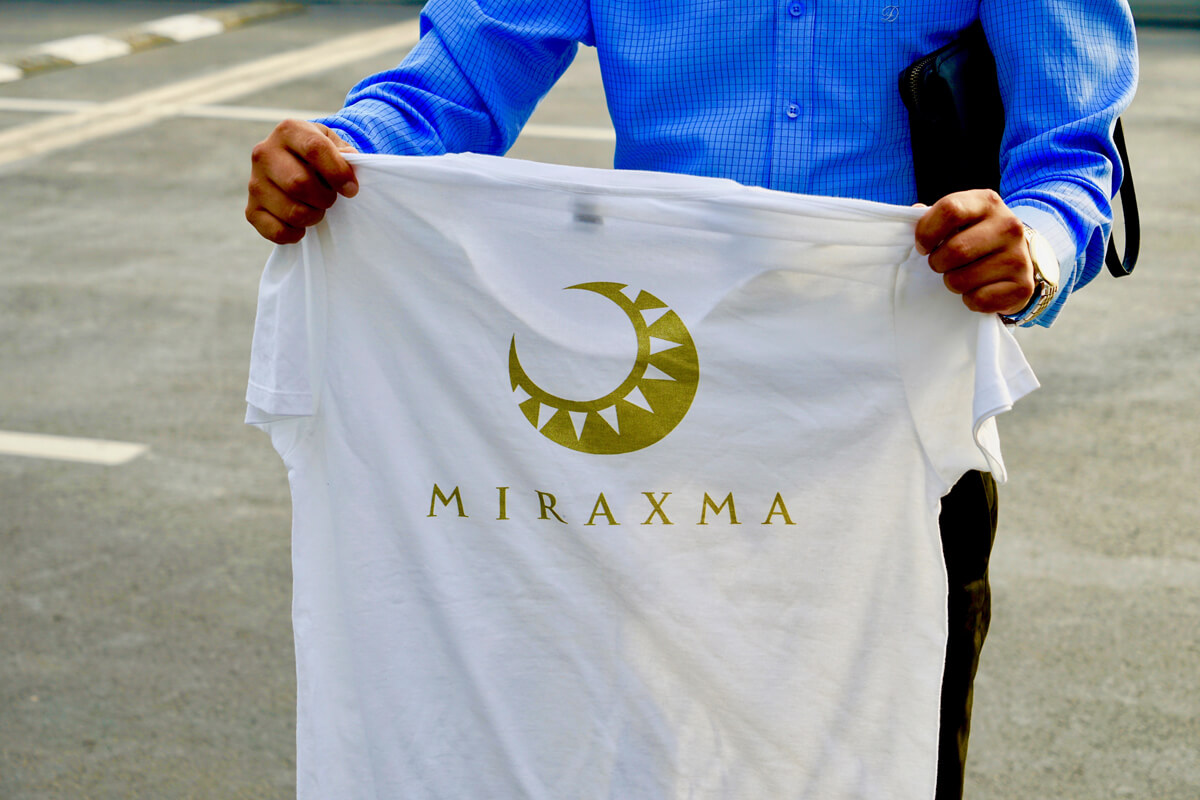
I appreciate everything our Japanese-language guide did for us. I gave Ms. Lee, who has been working as a guide for 10 years now, an original T-shirt from my company as a present, and also polished her nails for her.

We arrived at Pyongyang International Airport (Sunan International Airport) 07:10|07:40

We also gave the same type of original T-shirt to Mr. Kim, who has worked as a Japanese-language guide for 5 years. Actually, if you read the price of the T-shirt in the way we do in Japanese sometimes, we see something interesting. The price for the T-shirt is 11,351 yen (before-tax). In Japanese, it can also be read as “I-I-MI-RA-I”(a good future), if the tax is included the price becomes 12259 yen. In this case, it can be read as “JIYU-NI-NYU-KO-KU”(Free entry into a country). The meaning behind these readings in Japanese could be a plea for the world to become open and get rid of barriers.

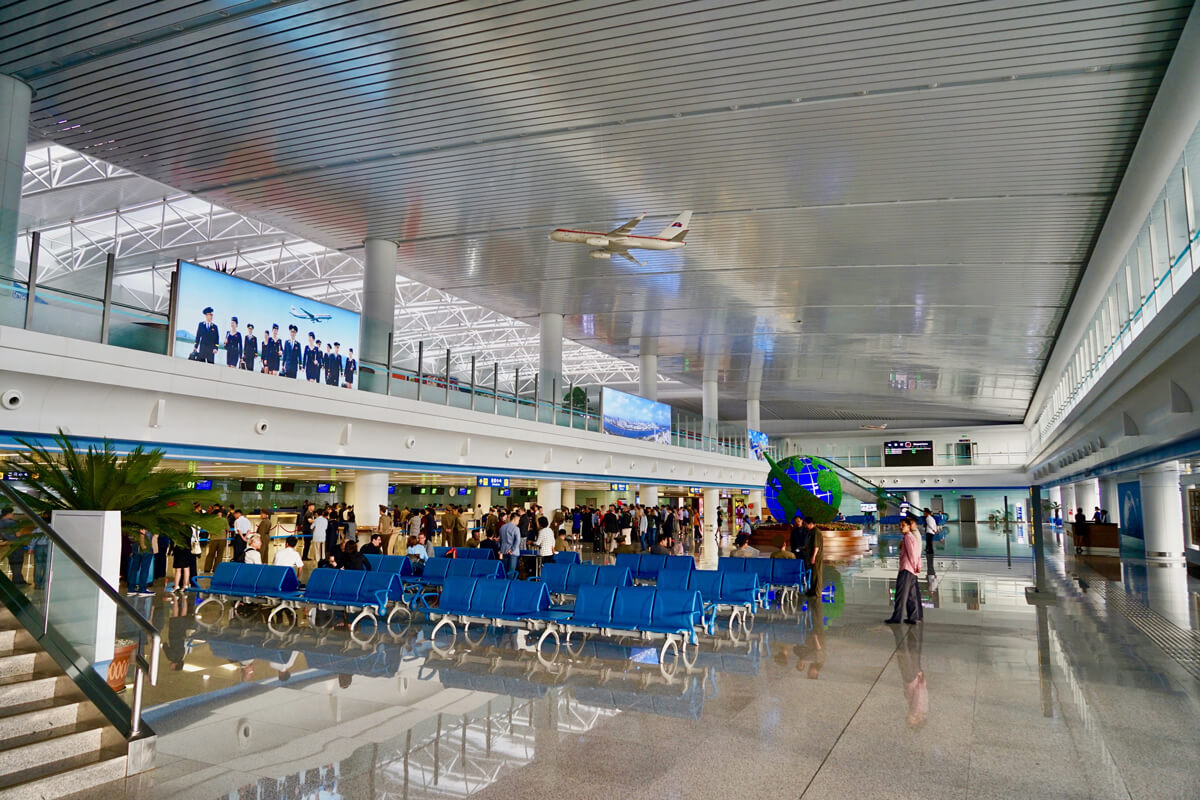
07:21 | 07:51 - Inside the airport

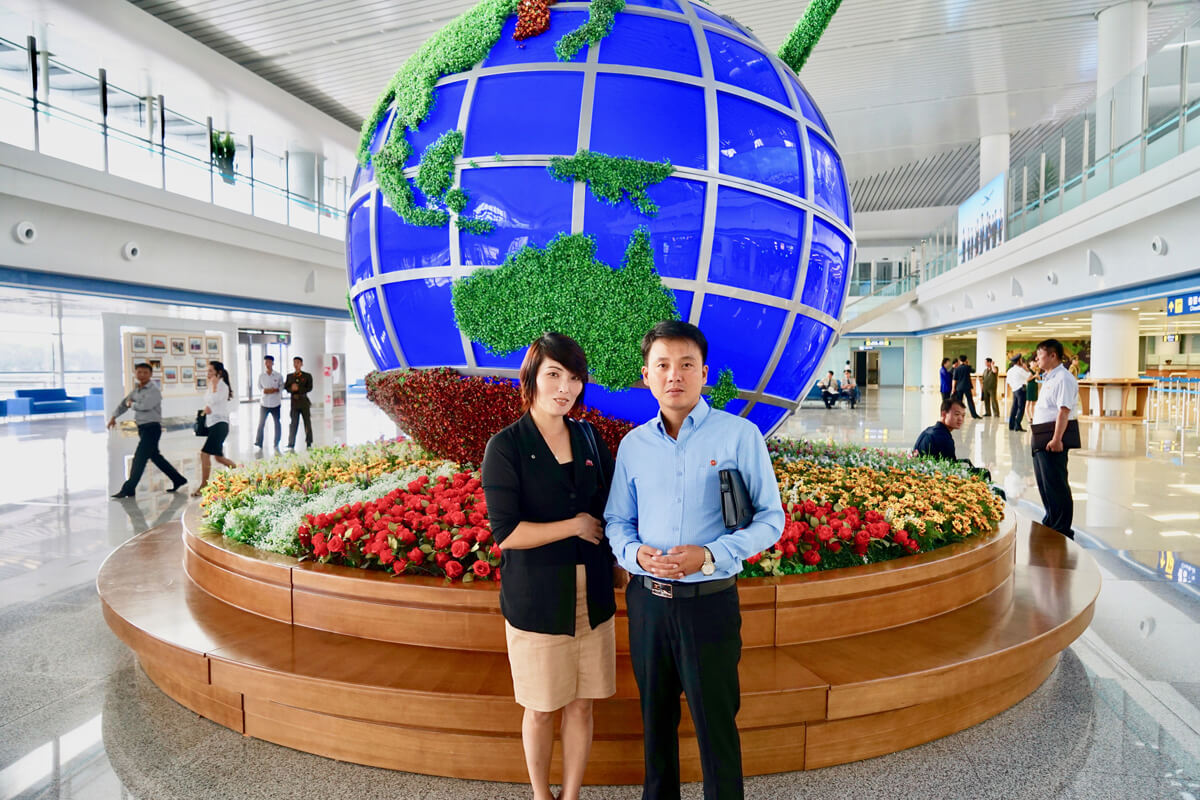
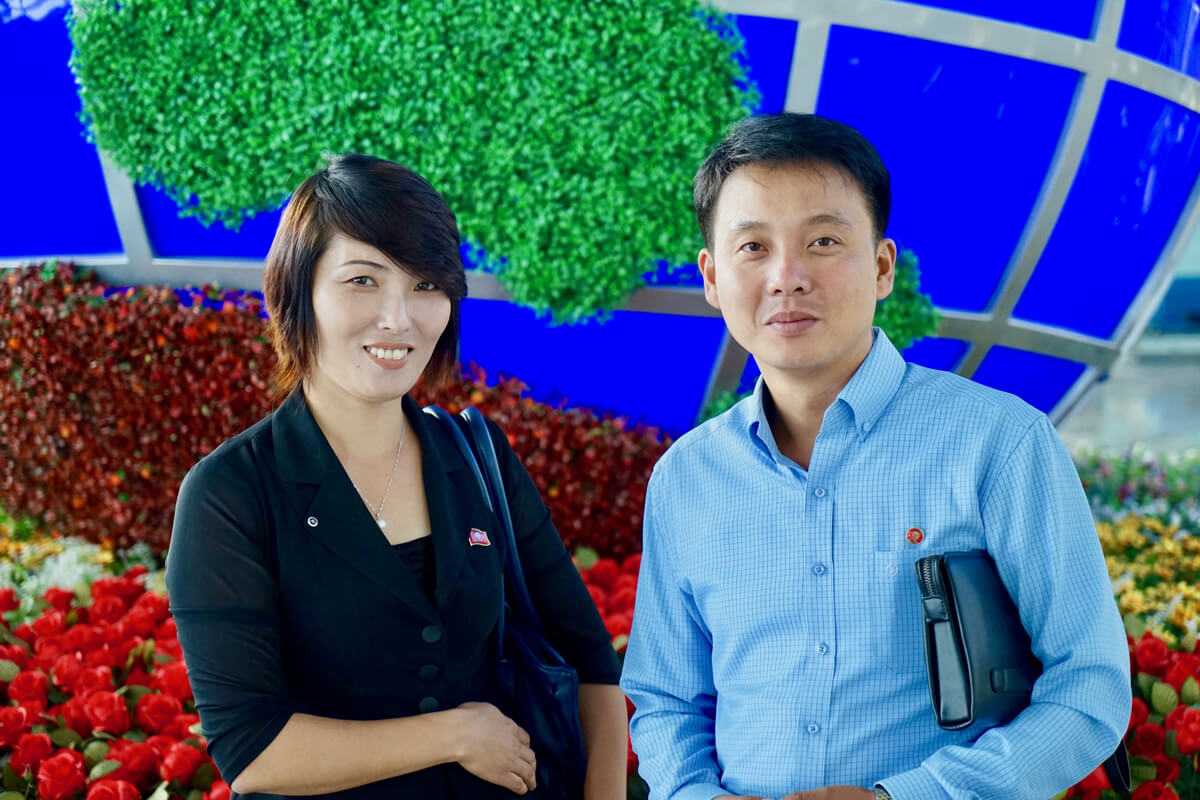
The two guides I am indebted to

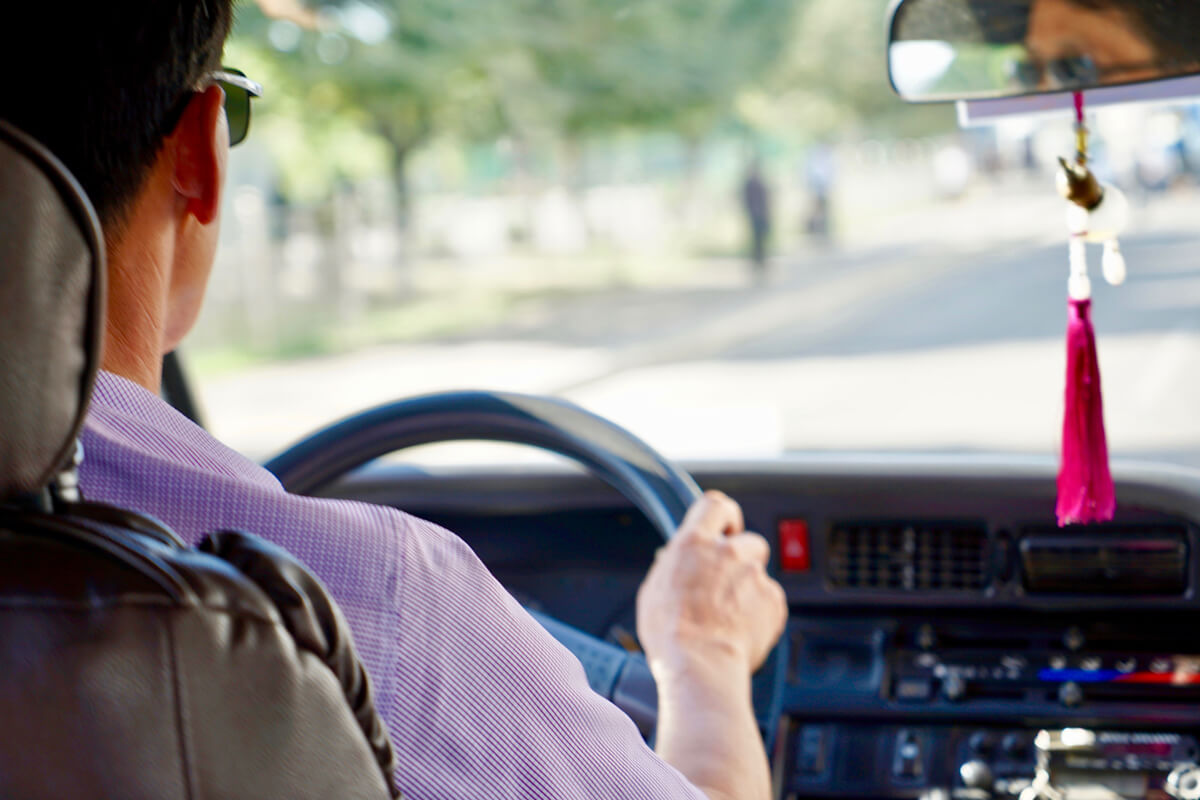
The two guides are passionate about Japan’s world heritages and dreamed of going sightseeing in Japan. They are both very kind and reliable people. We have built a relationship filled with so much trust that I can completely open up and have a heart-to-heart conversation with them. The thing that moved me the most was what didn’t show up in the photos or videos — the thoughtfulness and consideration that the guide Ms. Lee showed towards the driver Mr. Kim. He ate with us every time we had a meal, but he couldn’t stay with us for a drink since he had to finish eating faster than everyone else. This was because he had to get back to the vehicle as soon as possible and be on standby. As Ms. Lee watched him do that from the corner of her eye, she put her main dish in her tupperware, and made snacks that would go well with alcohol for Mr. Kim, who has to drive from early morning until the late evening. A person that can take food they looked forward to eating and prioritize it for someone else is extremely rare.

At the end of it all, when people ask me if I have ever been eavesdropped on, I reply back with a smile on my face and say the following: “Even if I say they don’t, I don’t think you would believe me”. From the beginning and until the end, I had asked many questions that could have been taken as rude, so I’m grateful to the driver and staff that took my questions seriously and provided me with genuine answers without ever showing even the slightest offense on their faces.

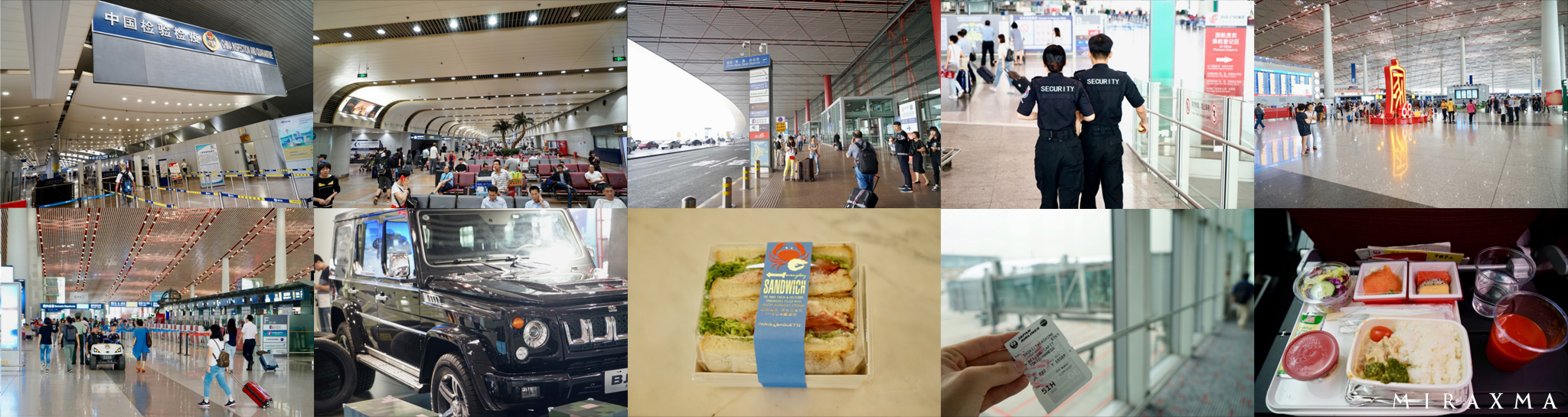
I arrived at Beijing airport. 10:00|11:00

After five days of not being able to use my wifi, I could finally access the internet!
Once I was able to, I noticed that I received a message from my Japanese friend. It said “Hey, It seems that a missile was launched this morning from DPRK. Are you sure you will be able to get back safely?”. I kept looking back on the few short hours I spent in the hotel and the airport and I just couldn’t process that information. And with my safe arrival to Japan, the day had ended.

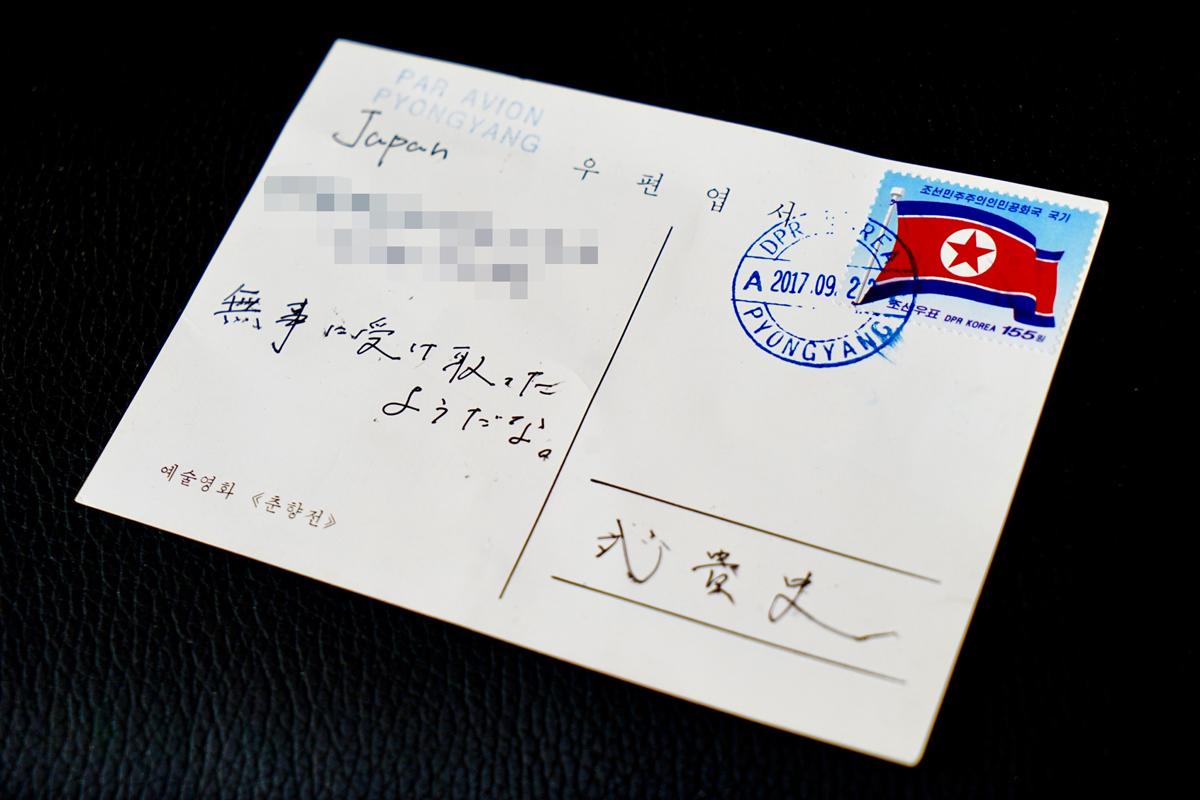
One postcard

Two weeks passed since I had returned back to Japan. I was able to get the postcard that I had sent to my Japanese address from Pyongyang.

Reflecting on what happened.

I was able to interact with many people in DPRK, most of whom were incredibly kind and genuine. It goes without saying that the eyes are the window to the soul. DPRK has a population of 25 million people, South Korea has about 50 million people. Excluding Pyongyang, most of the country is mountains and fields, nevertheless, there are tourist attractions all over the place. If the two Koreas were to ever reunify, we would surely be able to visit many new tourist sites.

History of Japan and DPRK

So far, this has been my record of the current DPRK. Now I would like to review some of the events in the history of Japan-DPRK's relations.

Aug. 29th, 1810 (Mon) - Sep. 2nd, 1945 (Sun)
During this time, the Korean Peninsula was a colony of Japan (The Empire of Japan), often referred to as the ‘Japan-Korea Treaty’ or ‘The period under Japanese rule.’

Jul. 7th, 1937 (Wed)
Along with the Marco Polo Bridge Incident, the Second Sino-Japanese War starts.

Dec. 13th, 1937 (Mon)
Nanjing Massacre. A massacre that involved the mass murder and looting of local noncombatants during the 2 months that the Japanese army occupied the Republic of China’s capital city, Nanjing. The death toll is still a mystery, however, as China declared, “The number of victims is proportional to the people's feelings.”

Sep. 1st, 1939 (Fri)
The German Army invades Poland, and as a result, Britain and France declared a war against Germany, triggering the start of World War II.

Dec. 8th, 1941 (Mon)
During the Second Sino-Japanese War, the Tripartite Pact was signed between Japan, Germany, and Italy. Japan attacked Pearl Harbor, where the US Navy was stationed, resulting in the Pacific War. The overall battle proved to be too much for Japan to handle and the Sino-Japanese War dragged on in a muddy mess.

Aug. 6th, 1945 (Mon)
America drops the atomic bomb on Hiroshima.

Aug. 9th, 1945 (Thu)
America drops an atomic bomb on Nagasaki.

Aug. 14th, 1945 (Tue)
Japan accepts the Potsdam Declaration.

Sep. 2nd, 1945 (Sun)
Signing/closing of worldwide World War II.
With Japan defeated, the Korean Peninsula is released from the Japanese colony. The North and South are later separated at the 38th parallel. The North fell under the military control of the Soviet army, while the Allied Powers took control of the South. In addition, discussions were held later that some of the mobilization and ill-use of Koreans during the wartime could be argued as ‘spontaneous’, and not ‘mandatory’.

Aug. 15th, 1948 (Sun)
Division of the Korean Peninsula and the inauguration of the first highest leader.
On the south side, the Republic of Korea led by President Lee Sung-Na is established. On September 9th 1948 (Thu) DPRK is established by the leader of Democratic People’s Republic of Korea, Kim Il-sung.

Jun. 15th, 1950 (Sun) - Jul. 27th, 1953 (Mon)
The outbreak of the Korean War - Conclusion of an armistice agreement.
Korea’s President Kim Il-sung, with consent and support of China’s President Mao Zedong and Russia’s Joseph Stalin, the 38th parallel line (the border) was crossed, to invade Korea. The entire Korean peninsula was turned into a war zone, and soon became the center of a large international dispute. Russia’s United Nations representative Yakov Malik proposed a ceasefire through radio broadcasting, and the armistice agreement is concluded without a decisive strike. The Armistice Agreement was signed by the United Nations Forces, the Korean Army and the Chinese Army.

Dec. 14th, 1959 (Mon) - Jul. 25th, 1984 (Wed) 
Repatriation of Koreans in Japan and immigration of Japanese wives.
Departure from Niigata port in Niigata prefecture facing the Japan Sea, closest to Korea. 93,340 people came to DPRK, 6,839 of whom were Japanese nationals, such as Japanese married women and children.

Around 1977 - 1983
The abduction of Japanese citizens by Koreans.
The number of missing persons in Japan was around 868 people. Later, there was a testimony of former agents and defectors, confirming 24 abduction victims. People ranging in ages from 13 to 52 years old were abducted at that time.

Nov. 29th, 1987 (Sun)
Korean Air Flight Bombing incident.
In these bombings, 115 passengers died. Kim Hyon-hui, a former agent of the act, attempted suicide by poison, but was kept alive by emergency treatment. Later he became a living witness.

Jan. 30th, 1991 (Wed)
Japan-DPRK Morning Summit Meeting.
"Japan-DPRK normal diplomatic negotiations" began on Wednesday, January 30th, 1991, but on November 5th, 1992 Thursday, it was interrupted during the 8th negotiation.

1995 - 2000
The Japanese government supported Koreans by donating rice.
By 1995-2000, the Japanese government provided about 170 billion yen (1.18 million tons) of rice to Korea. Former LDP secretary general secretary Tsutomu Nonaka and former Prime Minister Murayama commented, saying, “If you have enough rice, and your neighbor is suffering, helping them is a given.”

Sep. 17th, 2002 (Sat)
Japan’s Prime Minister 's first trip to the Japan-DPRK Morning Summit Meeting.
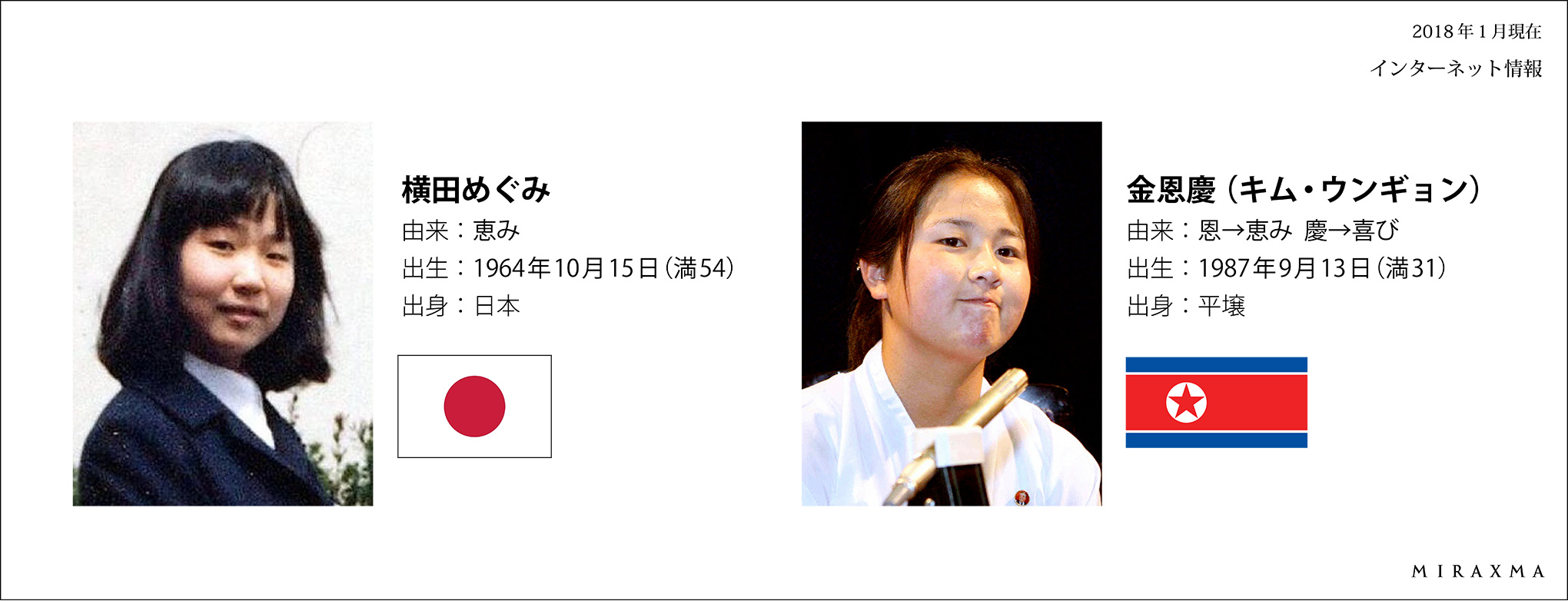
At the Hundred Flower Garden Invitation Offices in Pyongyang, a conversation was held with Japanese Prime Minister Junichiro Koizumi and General Kim Il-sung. Korea, who admitted and apologized for the abduction, announced the death of eight people, and the survival of four Japanese abductees. Among those who died, the death of Megumi Yokota, who was 13 years old at the time, and the existence of Ms. Megumi Yokota 's daughter, Ms. Kim Eun-gyong, was made clear. The husband is Mr. Kim Young Nam, who is a victim of the abduction, but said they divorced in March 1992, due to her husband's violence. 
Oct. 15th, 2002 (Tue)
Return of the five abductees.
Thanks to Koizumi’s negotiations, 5 abductees were successfully able to return to Japan.

May. 22nd, 2004 (Sat)
The 2nd Japan-DPRK Morning Summit Meeting.
A meeting was held once again with former Prime Minister Junichiro Koizumi and General Secretary Kim Il-sung at the Daido Jiang Guest House in Pyongyang. Food and medicine worth a rough total of 70 - 80 billion yen would later be offered.

Nov. 9th, 2004 (Tue) - Nov. 14th, 2004 (Sun)
The 3rd Japan-Korea Morning Practice Consultation.
After bringing back the remains of Megumi Yokota and conducting DNA appraisal, another person’s DNA was found. They also obtained sightings of Megumi Yokota after her official date of death.

May. 16th, 2006 (Tue)
First meeting with Yokota Megumi's father and her former husband's mother.
Megumi Yokota's 73-year-old father, Mr. Shigeru, and her brother, Mr. Tetsuya, 37 years old, and former husband Mr. Kim Young Nam’s mother, Ms. Choi Gye-Wol, 82 years old, met in a meeting room in Seoul Songpa-gu,

Jun. 28th, 2006 (Wed)
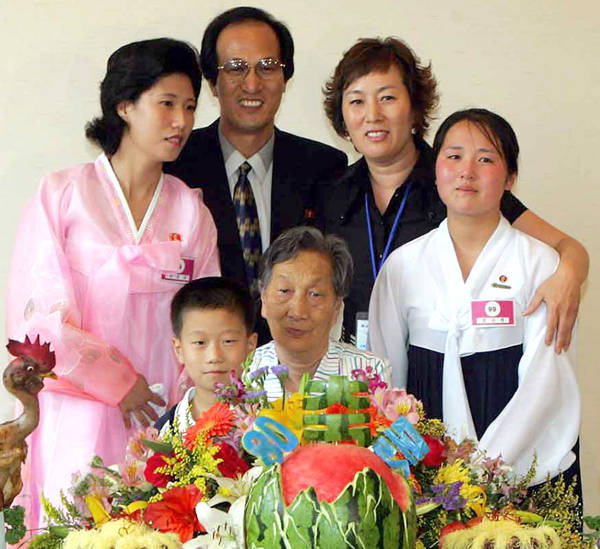
Mother and child reunion between Kim Young Nam, an abductee victim, and his mother.
At Mount Kumgang in Korea, Mr. Kim Young Nam and his mother (Choi Gye-Wol), and her sister (Kim Young-Ja) met again for the first time in 28 years. Kim claims that he had not been abducted, but was rescued by the Korean side when he was in distress at sea.
Jul. 5th, 2006 (Wed)
A "missile launch experiment" is carried out toward the Sea of Japan.
Seven Taepodong ballistic missiles were launched from Korea to the Sea of Japan.

The beginning of Japan’s proprietary sanctions.
Niigata Prefecture, facing the Sea of Japan, was the closest to the Korean Peninsula, and occasionally welcomed returning Korean residents to Japan, from 1971 to 2006, while a passenger liner named Man Gyong Bong was in service. However, in response to the missile launch experiment and the future nuclear test announced on Wednesday, July 5, 2006, measures were taken to prohibit port entry. With these measures, extensions to ban the port and additional sanctions continue.

Mar. 10th, 2014 (Mon) - Mar. 14th, 2017 (Fri)
First visit with Ms. Megumi Yokota's daughter Kim Eun-gyong.
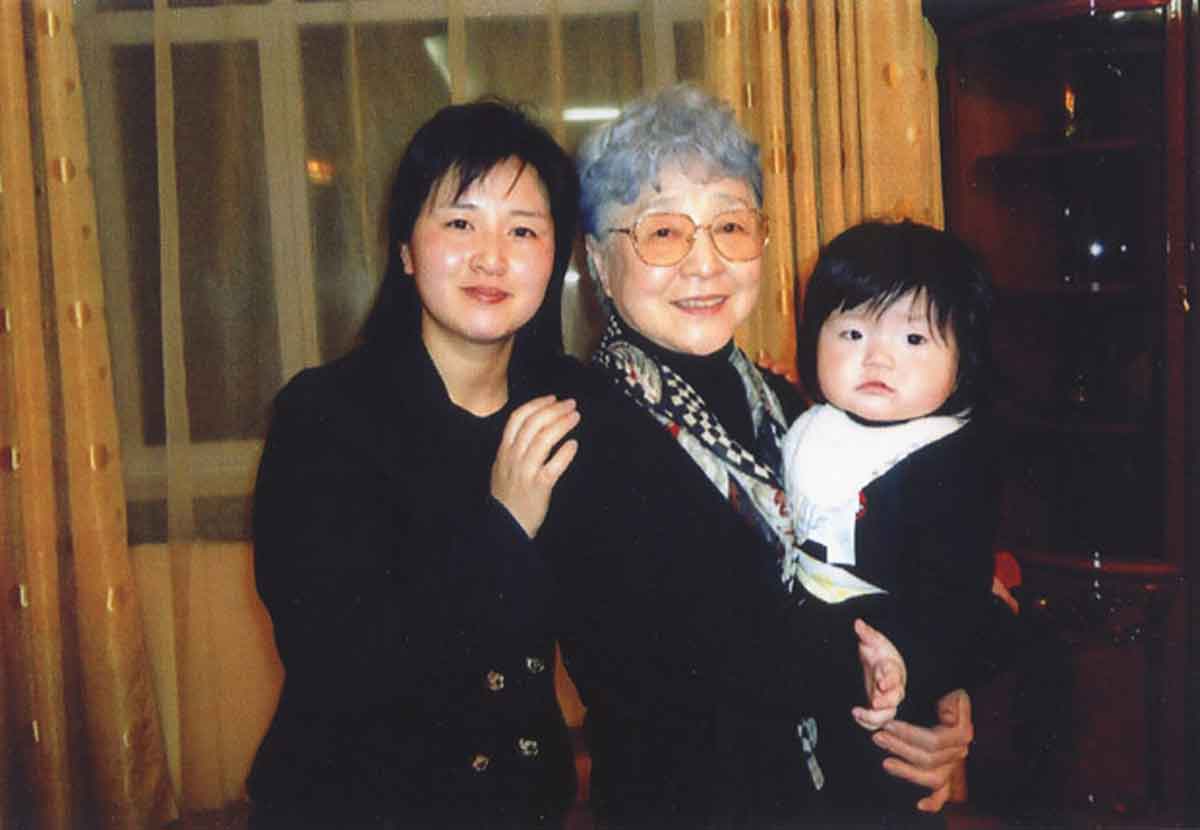
Ms. Megumi Yokota's parents (Shigeru and Sakie) and their grandson Kim Eun-gyong meet at Ulan Bator, the capital of Mongolia. They also meet their great-grandson.
Since 2014, Japan has lost diplomatic channels.


Tour of Niigata Prefecture Sep. 20th, 2017 (Wed) - Sep. 21st, 2017 (Thu)

“Certain things cannot be had without looking from another's point of view”

November 15th 1977 (Wed), I visited Niigata Prefecture to inspect the details about the abduction of a little girl.

41 years ago...

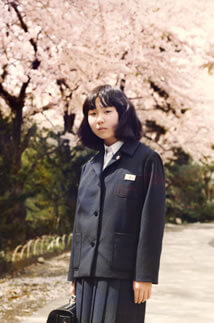
Her name is Megumi Yokota. At the time, she was a 13-year-old living near the coast, when she disappeared while walking to school. Later it turned out that a Korean agent had kidnapped her.

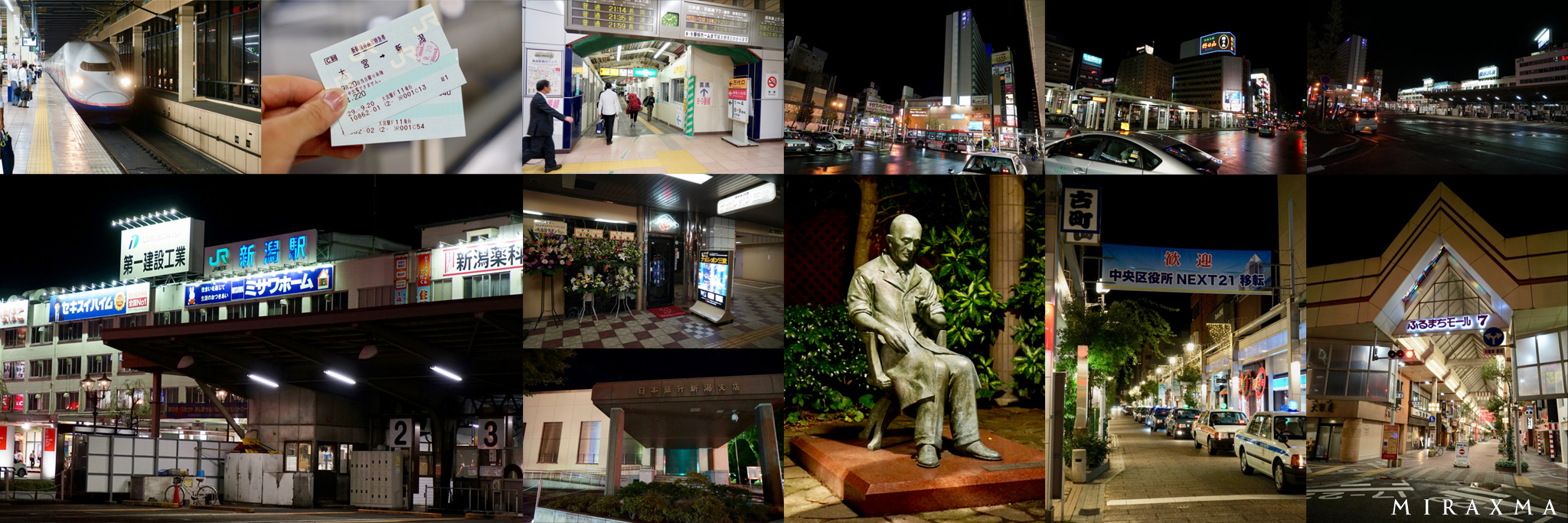
Arrival at Niigata Station Sep. 20th, 2017 (Wed) 21:05

Unless you know Megumi Yokota, it is not possible to understand what happened. I rode a couple of taxis, and asked for information. One thing I was able to find out was that there are many kind and friendly people in Niigata, including taxi drivers.
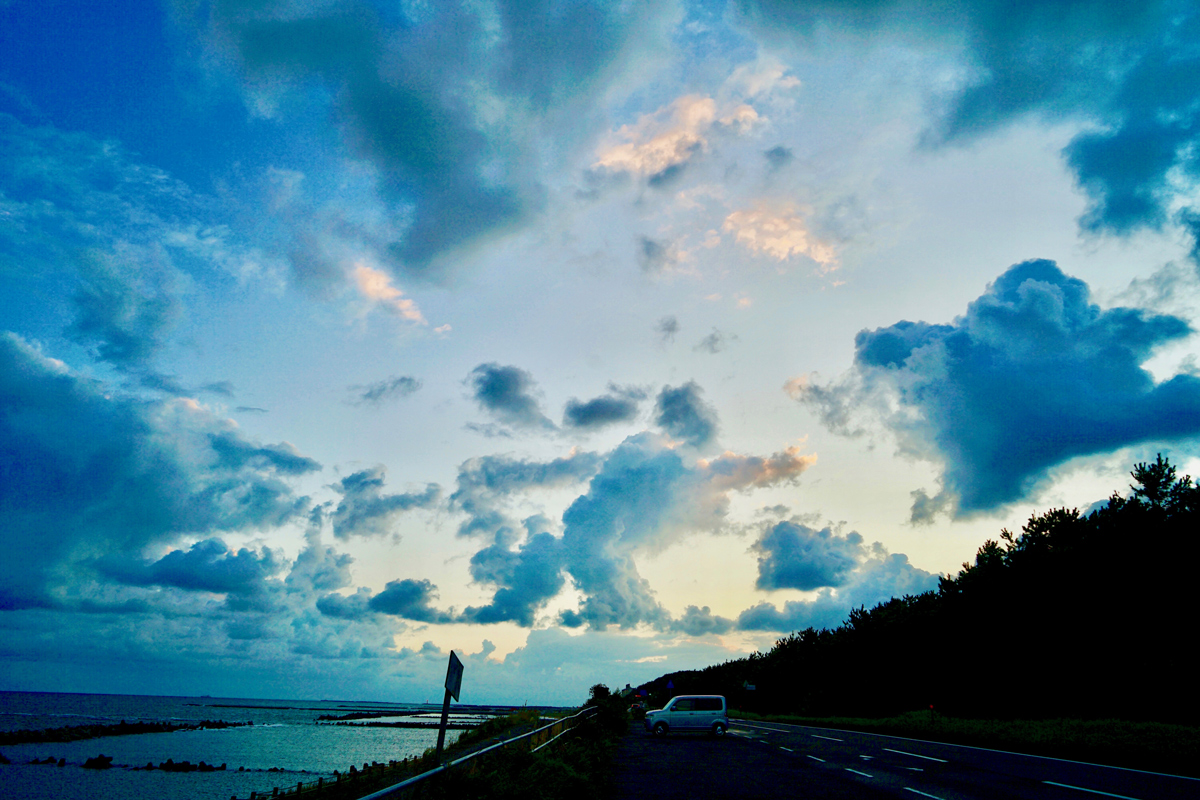
Sep. 21st, 2017 (Thu) 05:34
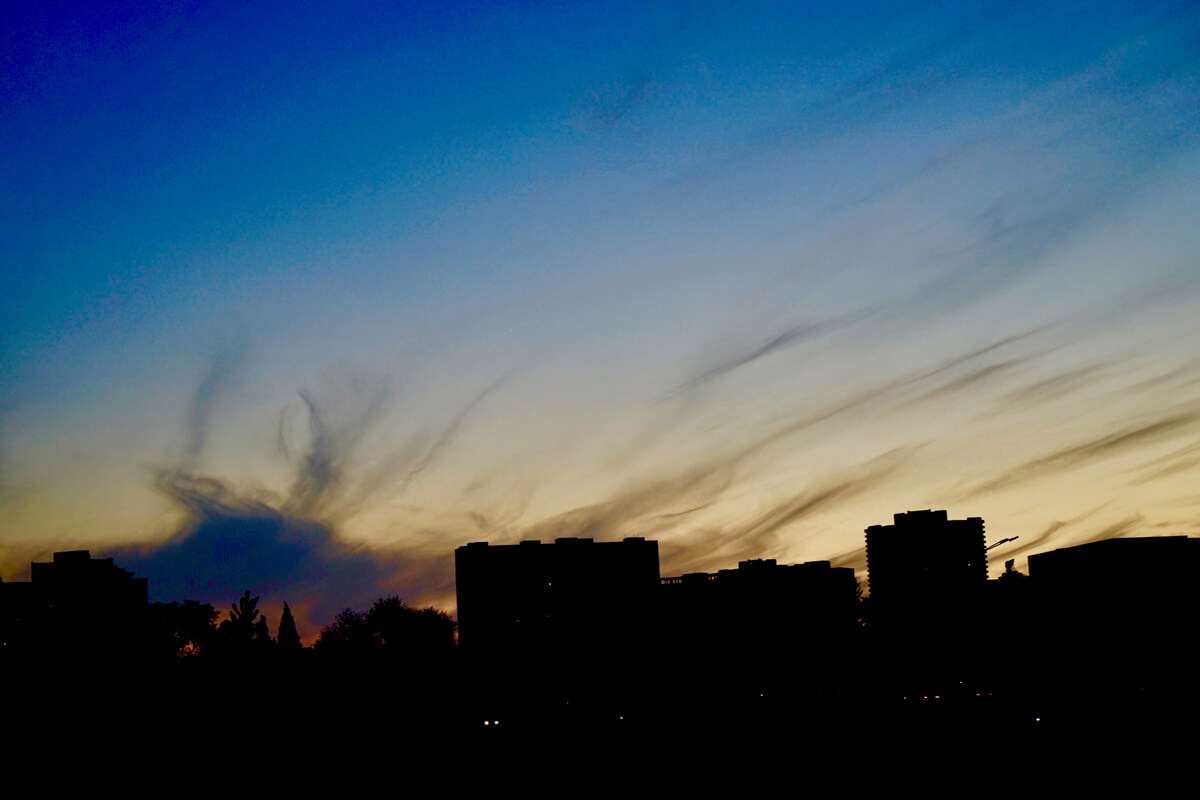
The clouds I saw early this morning resembled a person grabbing for a star.

What memories and thoughts had she brought to Korea at that time? If she cannot convey the message directly in words, where and how would she leave that message?

If I were in her position, I think I would leave a “message” somewhere, in a landmark, a person, or something in the sky, where only a certain person would be able to understand it. However, that doesn't mean I would ask for help. I would just be leaving the 'feelings of my heart', demonstrating my overwhelming sorrow.

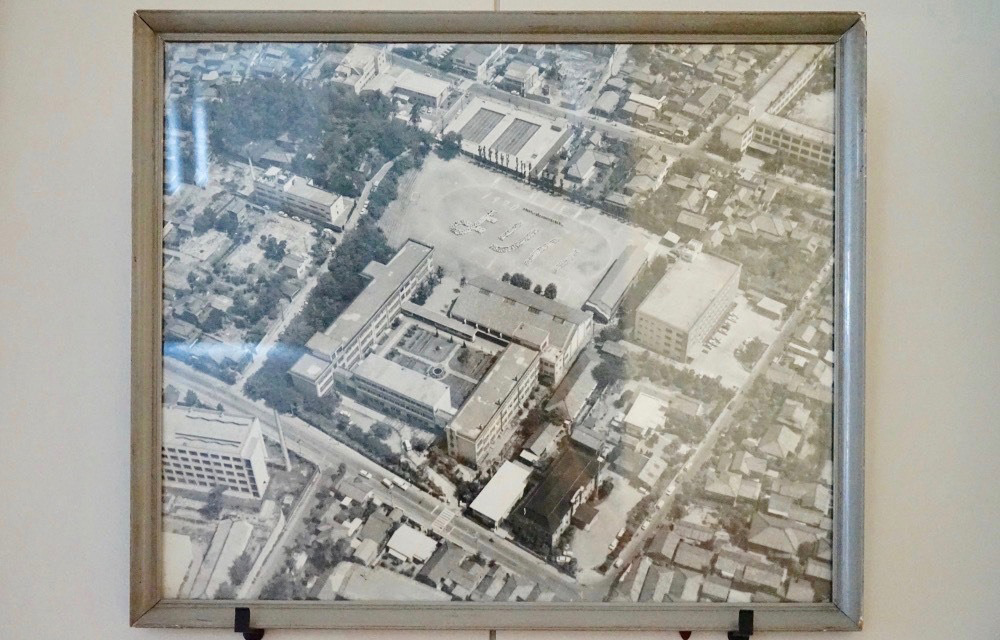
1970s/ Above the abduction site

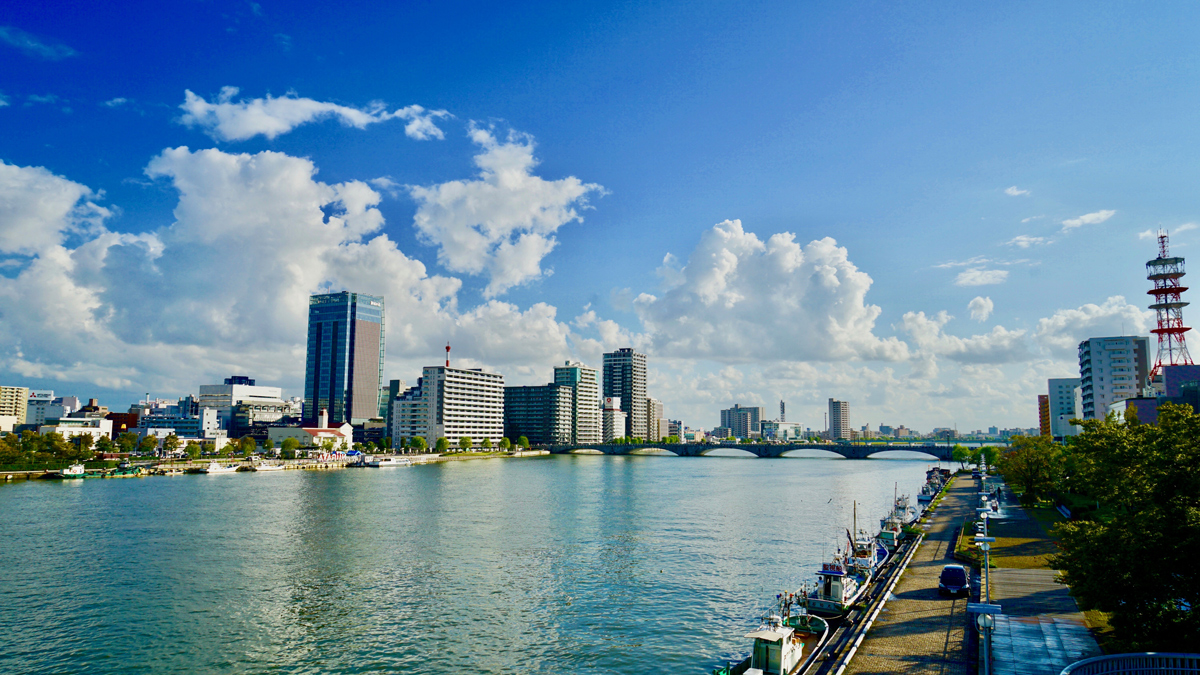
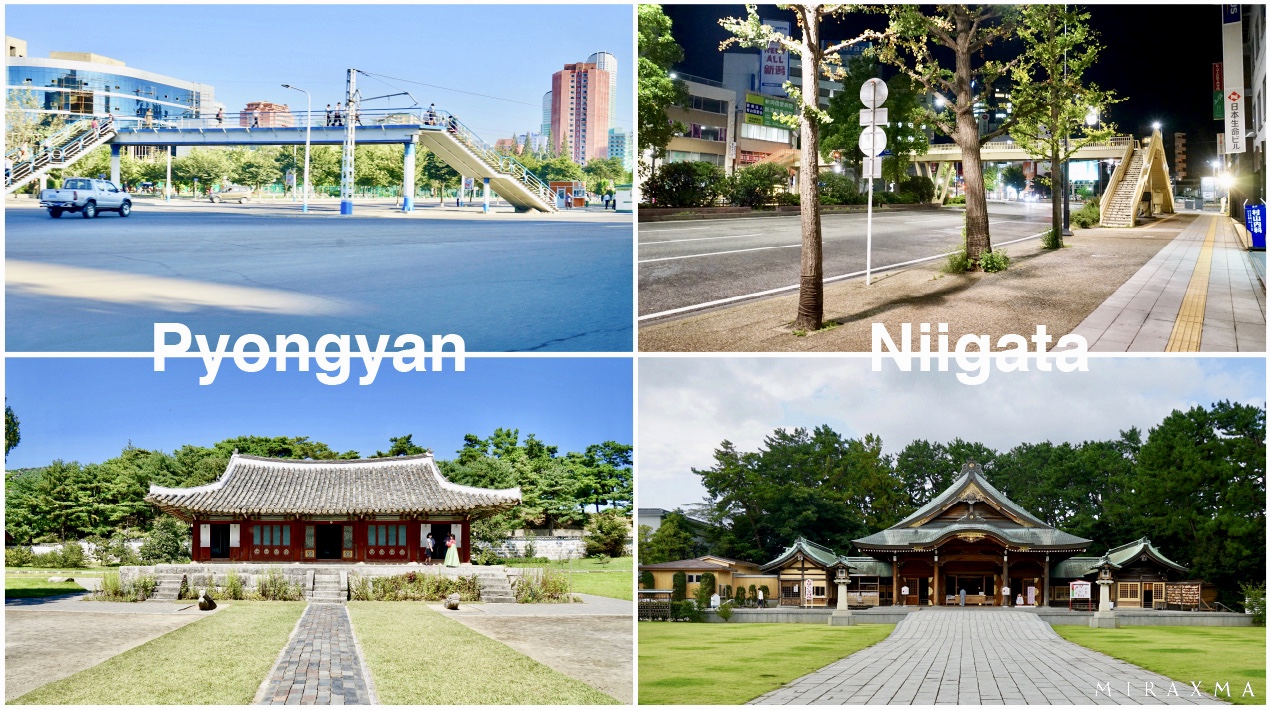
Comparison of current Korea and Niigata


Taedong River in Pyongyang (Okryu bridge, built in 1960) Shinano River in Niigata (Bandai Bridge, built in 1886)

Signs standing in Niigata

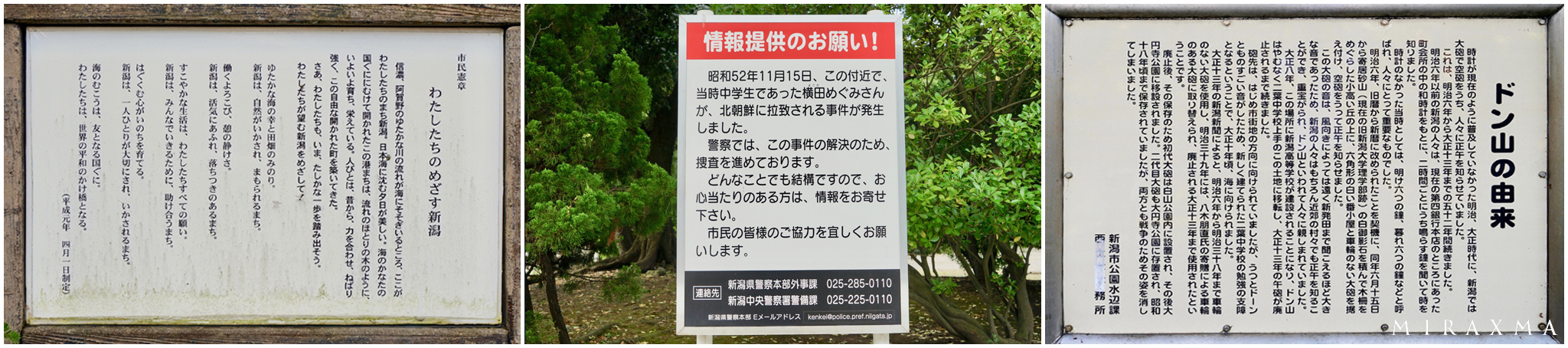
This signboard stands in the vicinity of the abduction site in Niigata prefecture.
On the title of the sign on the far left reads, "The Niigata we aim for,” and in the last sentence reads as follows: “Across the sea, we have friends. We will be a bridge of peace in the world. Established April 1st, 1990(Sun).” If the sentiment included in this sentence is serious, it should be done. The signboard in the middle, asks for information on an abduction. The one on the far right explains how a cannon fired blanks to let locals know it was noon 100 years ago when clocks were not regularly used.
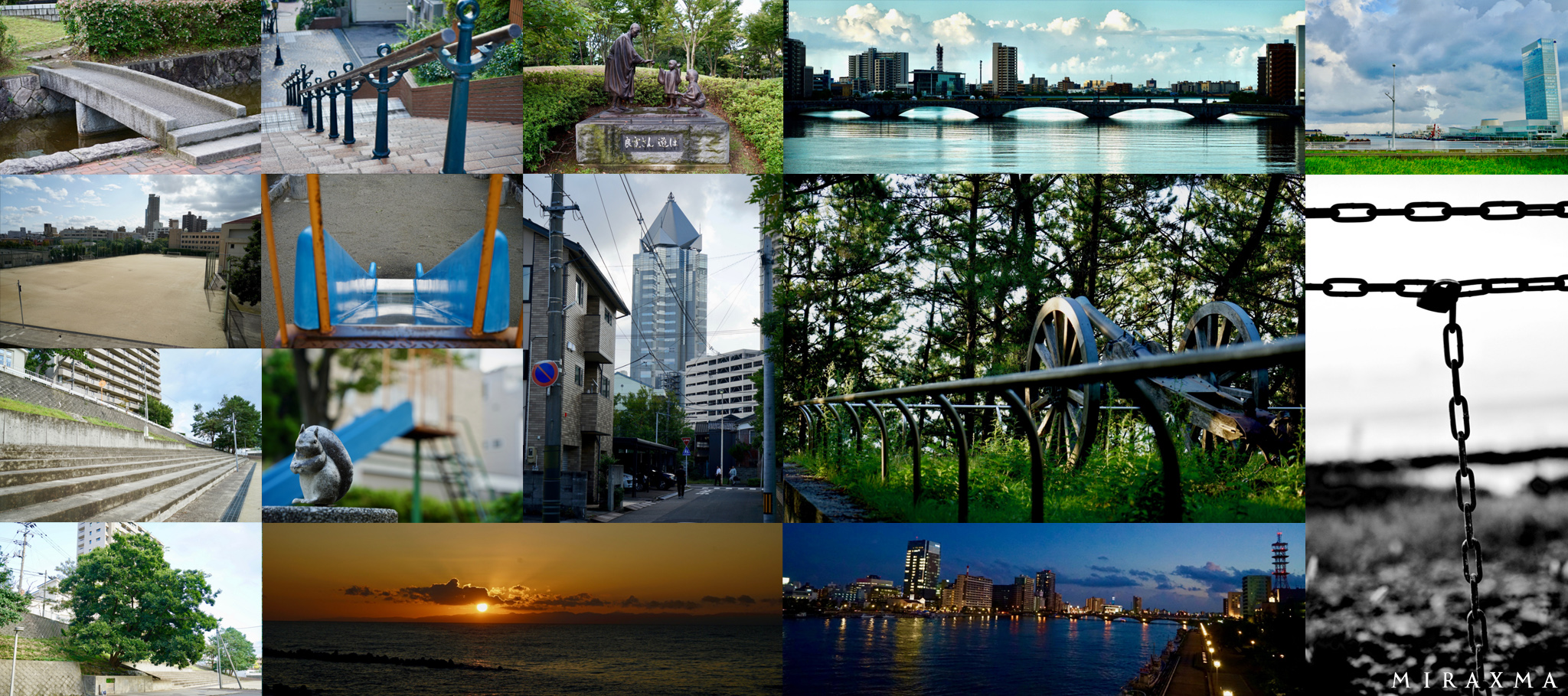
Lastly.

It took me seven months to finish writing this article. That is because I was filled with many emotions as I wrote - I found myself only erasing and rewriting everything over and over again. Since this article includes the topic of war, I learned just how difficult it is to write something that doesn’t hurt anyone.

Looking back on the issues surrounding separated families between Japan and Korea, and the atomic bomb that the United States dropped on Japan, I feel anger and sorrow, and mysteriously, I even feel the future.

That is because Japan and the United States are trying to build a new future together from a past filled with war.

This shows that it is impossible to regain trust once lost, but it is possible to build new trust. This can also be said for a future world that may include the reunification of Korea.

I do not know when or if I will ever experience a life-changing, extraordinary event — the kind that we so often think only happens to others. That is why I have started to feel appreciation for everything around me on a daily basis.

What I can do is to build relationships with citizens based on the local rules, in hopes of realizing a possible "family reunion" for families who have been waiting for over 40 years in Japan.

You can’t change the past, and you can’t change others. But you can change the future, and you can change yourself.
It is also possible to create opportunities for others.

To go even further, it would be worth stating, that people are creatures that evolve with their environment, and the same goes for words.

That is why we should never give up creating a "dialogue" with others because the power of words is the easiest way to reach a person's heart with.

Thank you very much for reading.

Finished February, 2018

Copyright © MIRAXMA All Rights Reserved.

portrait